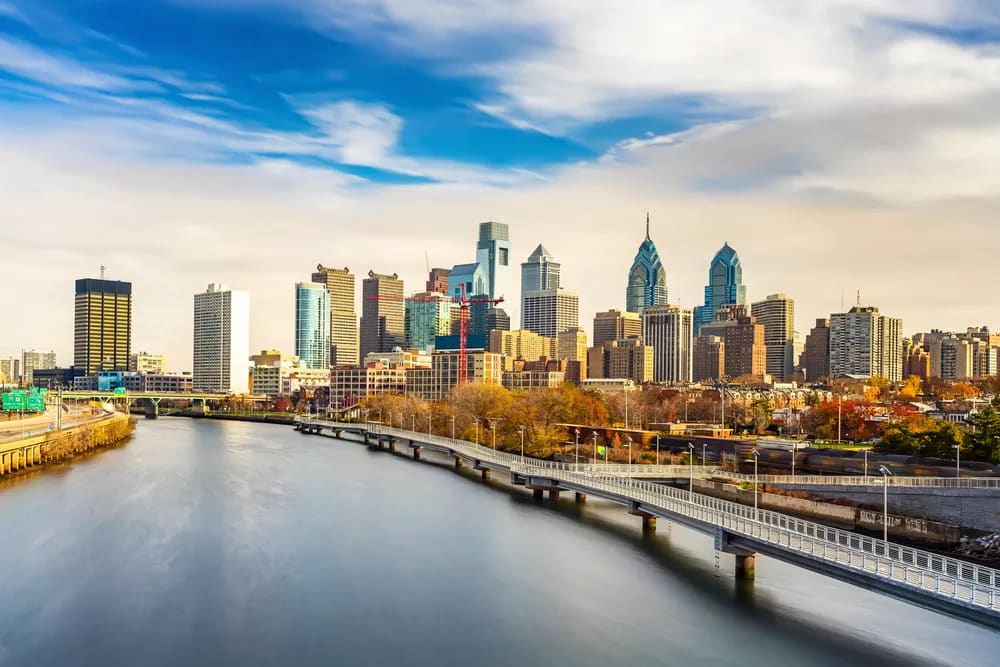
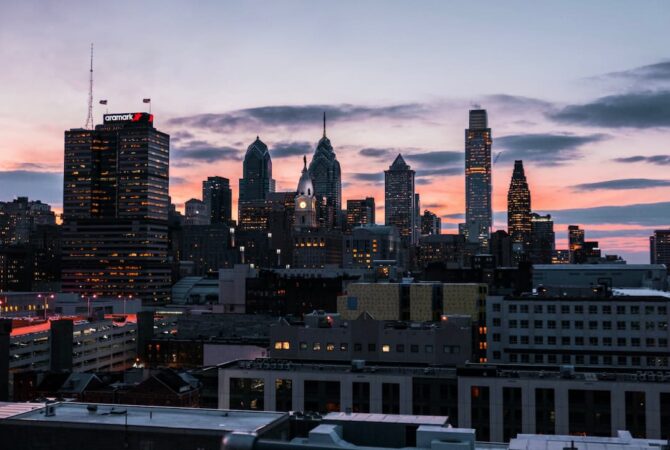
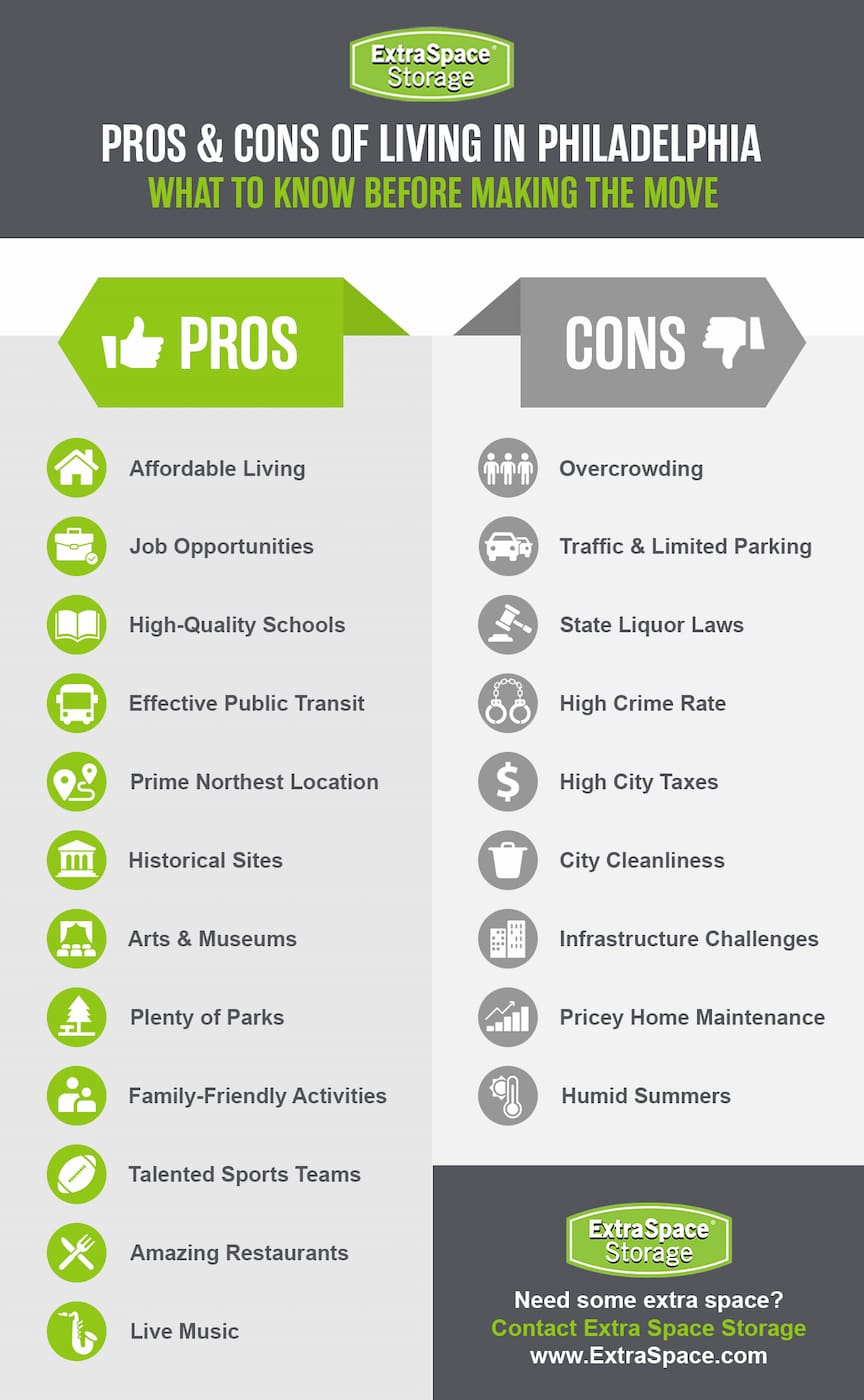
Philadelphia is a great place to live in the Northeast. This historic Pennsylvania city offers distinct communities, strong job opportunities, and top-tier secondary education options. Before moving, residents should understand that life in Philly comes with drawbacks, such as heavy traffic and a high crime rate—something that many current residents don’t like about living in Philadelphia. Read more pros and cons of living in Philadelphia below!
Quick Facts About Philadelphia
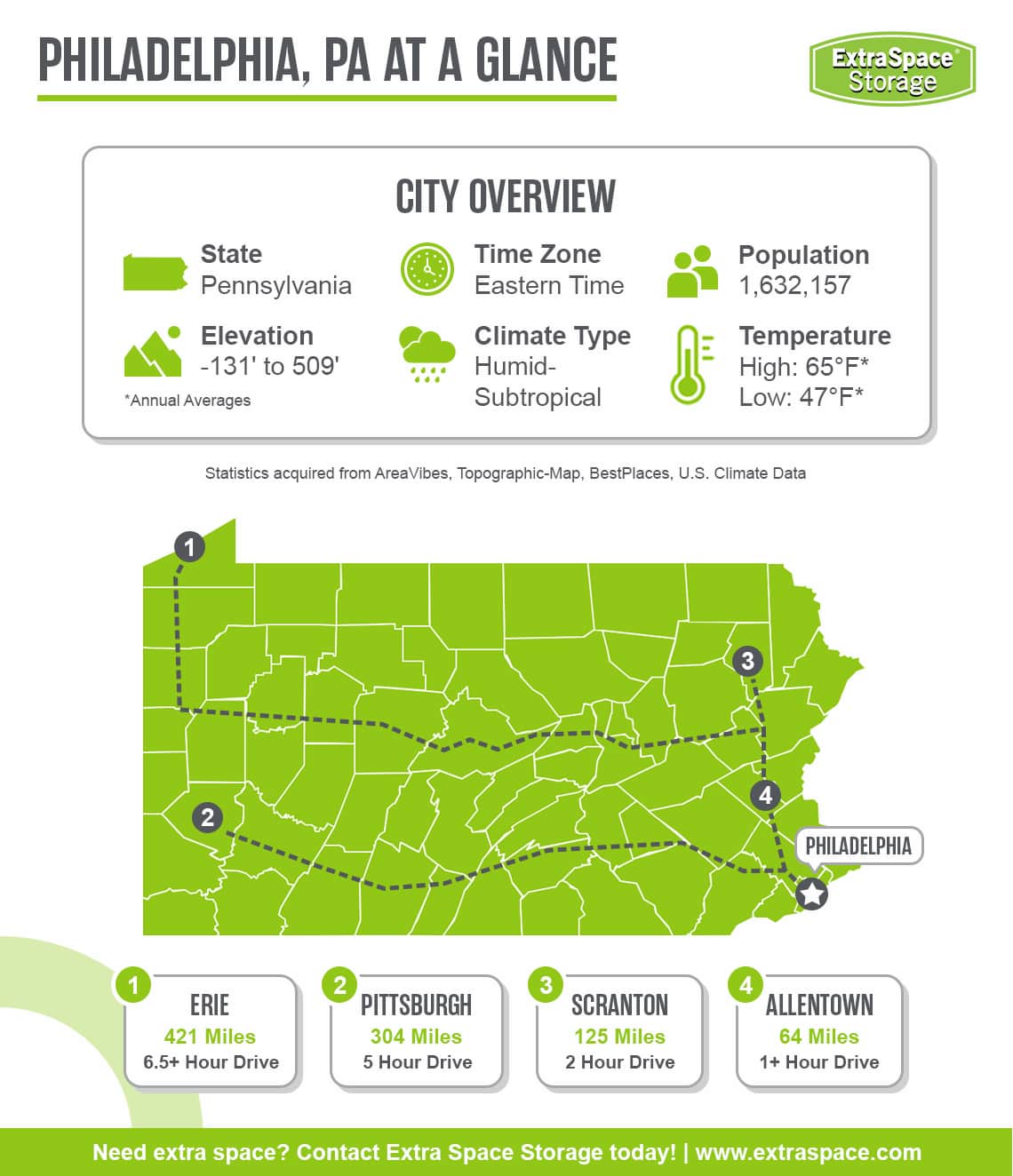
| Population | 1,581,531 |
| Average Home Price | $524,116 |
| Average Monthly Rent | $2,147 |
| Median Salary | $49,127 |
| Average Temperatures | Average summer high of 87°, average winter low of 26° |
Statistics from AreaVibes, Council for Community and Economic Research (C2ER), & BestPlaces
Pros of Living in Philadelphia
There are several benefits to living in Philadelphia, ranging from the city’s affordability to its many parks, museums, and other exciting attractions. Consider these pros of moving to Philly.
Pro: Affordable Living in the Northeast
If you want to live in a prime Northeast city with a less expensive price tag, look no further than Philly! Unlike other large metros with high costs of living, such as New York, Boston, and Washington, DC, the cost of living in Philadelphia remains only slightly above the national average.
Additionally, Philadelphia’s average cost of housing is significantly more affordable. The average home price in Philadelphia is just over $524,100, whereas homes in NYC, Boston, and DC typically cost over $1,000,000! Known as The City of Neighborhoods, Philly is home to more than 150 neighborhoods, each with its own character and history. New and established residents seeking budget-friendly homes in several affordable Philadelphia neighborhoods, including Fox Chase, Bustleton, and Manayunk.
Pro: Job Opportunities in Philadelphia
Looking for jobs in Philly? The city offers a variety of job opportunities across popular industries, such as healthcare, retail, finance, and more. Major Philadelphia companies include:
- Children’s Hospital of Philadelphia: One of the highest-ranking children’s hospitals in the nation
- Vanguard: Investment management company with multiple locations
- Aramark: Food service & facilities for clients in education, hospitals, stadiums, & more
- Comcast: Global media & telecommunications company & parent company of Xfinity, NBCUniversal, & Sky
- Urban Outfitters, Inc (URBN): Lifestyle & retail company owning popular retail brands like Anthropologie, FP Movement, Urban Outfitters, & more
Pro: High-Quality Philadelphia Schools
With a variety of universities to choose from, Philly is home to many universities spanning fields like nursing, film, and cybersecurity. Some of the top Philadelphia universities include:
- University of Pennsylvania (UPenn): One of the best colleges in the world & features 12 schools on one campus
- Drexel University: One of the best national colleges & a global R1-level research university
- Temple University: With over 30,000 students are enrolled, Temple University offers 600+ academic programs for graduate & undergraduate studies
- La Salle University: A private Catholic university with 42 undergraduate majors
- Thomas Jefferson University: Offers modern & historical buildings as part of the campus experience, as the institution is over 200 years old
- Community College of Philadelphia: Provides credit & noncredit courses across four campuses
Pro: Effective Philadelphia Public Transportation
If you don’t own a vehicle or prefer to utilize public transit, Philly makes it easy to get around the city. The SEPTA system has an extensive network of buses, light rails, and more, which offers easy commutes throughout Downtown Philadelphia and surrounding areas—including nearby cities like Trenton and Wilmington. In addition, frequent commuters can travel to and from Philadelphia neighborhoods such as Center City, Fishtown, and University City via the Market-Frankford Line (MFL) subway system and Broad Street Line (BSL). Not to mention, Philadelphia has bike score of 67, with Indego bike-share stations scattered throughout the city, dedicated bike lanes, and hundreds of miles of trails to take advantage of. Philadelphia is also one of the most bike-friendly cities in the country.
Pro: Prime Northeast Location
Life in Philadelphia means benefiting from close proximity to nearby regional destinations and cities. Philly’s central Northeast location makes it easy to plan quick weekend drives to nearby places like:
- Ocean City, NJ: 1.5 hours
- Pocono Mountains: 2 hours
- Baltimore, MD: 2 hours
- New York City, NY: 2.5 hours
- Washington, DC: 2.5 hours
Pro: Historical Sites & Landmarks in Philadelphia
Known as the birthplace of America and home to Independence Hall—where the Declaration of Independence and the U.S. Constitution were signed—Philadelphia is a hot spot for history buffs. Visit Philly’s Historic District and other landmarks and museums across the city, such as:
- Elfreth’s Alley to walk down the 300-year-old cobblestone streets
- The Betsy Ross House for a glimpse into the life of Betsy Ross & the making of America’s first flag
- African American Museum in Philadelphia to learn the stories of people of African descent through art, history, & more
- Independence National Historic Park to access popular historic sites, including the Liberty Bell Center, Independence Hall, Congress Hall, & Benjamin Franklin Museum
- National Constitution Center to get a rare look at historic artifacts, documents, interactive galleries, & more
- The Museum of the American Revolution to learn about the American Revolution, see first-person theatrical performances, and view thousands of historical artifacts
Pro: Performing Arts & Museums in Philadelphia
Philadelphia offers residents a perfect blend of arts and culture with several museums, galleries, and venues to visit. Popular spots include:
- Barnes Foundation for musical performances & artwork
- Philadelphia Museum of Art for world-class galleries showcasing collections of European, East Asian, & American art
- The Highmark Mann Center, for musical performances & festivals
- Rodin Museum, for walks through the outdoor gardens & views of sculptures
- Institute of Contemporary Art, for a look at innovative art exhibits
- Ensemble Arts Philly, for Broadway shows & performances by The Philadelphia Orchestra
Pro: Plenty of Philadelphia Parks
Stay active while exploring the many outdoor recreation spots throughout the city—stop by these top spots for outdoor activities in Philly!
- Visit Fairmount Park for colonial-era mansions, gardens, and go horseback riding.
- Go kayaking, fishing, and take a riverboat tour at Schuylkill Banks.
- Enjoy picnic areas, mini golf, a carousel ride Franklin Square.
- Find seasonal fun at Dilworth Park, like ice skating and water fountain play.
- Relax and socialize at Spruce Street Harbor Park in hammocks and restaurants with great views.
Pro: Family-Friendly Activities & Amenities in Philadelphia
Wondering if you should move to Philadelphia with your family? Not only does it have many family-oriented neighborhoods and amenities—Philly is one of the best cities for education! High-ranking school districts in Philadelphia, like Radnor Township or New Hope Solebury School District, serve many area neighborhoods and suburbs.
Enjoy these kid-friendly activities and attractions in Philadelphia!
- See bald eagles, red pandas, pumas, and more at Philadelphia Zoo.
- Explore mosaic installations and try making your own at Philadelphia Magic Gardens.
- Go ice skating and have a blast with other winter activities at Independence Blue Cross RiverRink.
- Discover interactive exhibits that showcase the power of learning through play at the Please Touch Museum.
- Visit The Franklin Institute for immersive STEM exhibits, shows, and demonstrations.
Pro: Talented Philly Sports Teams
Feel the energy from the crowds as sports lovers root for their favorite teams in The City of Brotherly Love! Here are some of the top Philadelphia professional sports teams:
- Philadelphia Eagles (NFL) at Lincoln Financial Field
- Philadelphia Phillies (MLB) at Citizens Bank Park
- Philadelphia Flyers (NHL), Philadelphia 76ers (NBA), or Philadelphia Wings (NLL) at Xfinity Mobile Arena
- Philadelphia Union (MLS) at Subaru Park
Pro: Amazing Restaurants in Philadelphia
While Philadelphia is famous for its cheesesteaks, that’s certainly not the only delicious food you’ll find in the city. Here are some of the restaurants for the best food in Philadelphia:
- Termini Bros Bakery for freshly baked Italian pastries
- Honey’s Sit ‘N Eat for a mix of Jewish & Tex-Mex homestyle cooking
- Kanella for Mediterranean cuisine
- Zahav for Israeli entrees
- Angelo’s Pizzeria for pizza in Philadelphia
- Sonny’s Famous Steaks for some of the best cheesesteaks in Philly
- Friday Saturday Sunday, Provenance, or Her Place Supper Club for fine-dining at a Michelin-star restaurant
Pro: Live Music in Philadelphia
Philadelphia’s thriving music culture adds energy and entertainment, making Philly’s nightlife a lively music and entertainment scene.
- Chris’ Jazz Cafe offers a relaxed lounge vibe & jazz performances
- World Stage Live hosts live performances from local & national artists
- Johnny Brenda’s features indie, rock, & punk performances
- Underground Arts is great for live music in an intimate underground atmosphere
- South Jazz Kitchen provides jazz performances with dinner
Get Everything You Need For An Easier Move to Philadelphia
Cons of Living in Philadelphia
While there are many positives, there are disadvantages of living in Philly to consider, like heavy traffic and taxes. Learn more about the cons of moving to Philadelphia below.
Con: Overcrowding
One of the largest cities in the U.S. and on par with Chicago’s population density, Philadelphia covers 135 square miles. City Center and other densely populated areas, such as Northeast Philly, North Philly, or West Philly, are often bustling with activity, experiencing heavy foot traffic, and crowded streets. For those wanting more space and a quieter pace, the Philadelphia suburbs are a great option.
Con: Heavy Traffic & Limited Parking
If you’re thinking of living in Philadelphia, be prepared for lengthy commutes and traffic. With a population over 1.5 million, Philly is one of the most congested cities in the U.S.—its average one-way commute time is about 33 minutes. For those living in the suburbs, commutes are often longer, especially during peak rush hours.
Finding parking in Philadelphia can be a challenge, as well. The Philadelphia Parking Authority monitors thousands of parking spaces around the city and, due to confusing signage and specific rules, regulations, and hours, it may be tricky to figure out where you can and can’t park.
However, Philadelphia is recognized as the most walkable city in the nation and has an efficient public transportation system, so it’s easy to get around without owning a vehicle.
Con: Pennsylvania Liquor Laws
Pennsylvania has some of the most restrictive liquor license laws in the nation, meaning it’s not always a convenient one-stop shop for those looking to purchase beer, wine, or liquor. Since the end of Prohibition in 1933, the Pennsylvania Liquor Control Board has mandated where certain alcoholic beverages can be sold. Hard liquor can only be purchased at state-owned Fine Wine & Good Spirits stores and select distilleries. Beer and wine can be purchased at a variety of places, but there are still quantity limits in place according to the type of license they have. Despite these restrictions, residents can still enjoy the thriving Philly nightlife scene at many of the area’s local cocktail bars, breweries, nightclubs, and more!
Con: Philadelphia Has a High Crime Rate
Like many large cities, safety is a major concern in the Philly area. Even though Philadelphia has seen a decline in crime, the city still has higher crime rates than the national average. In the last year, Philadelphia recorded a record low of 222 homicides, significantly down from the record high of 561. City leaders have prioritized public safety initiatives such as the P.I.E. strategy, which combines targeted policing with community programs and social services to reduce violence.
Con: High City Taxes
Living or working in Philadelphia may affect your regular budget. Philadelphia has some of the highest tax rates in the nation, with wage taxes being a large contributor. On top of regular federal and state income taxes, employers withhold additional wage taxes at a rate of 3.75% for Philadelphia residents, while non-residents who work in the city pay 3.44% of their earnings.
For many, however, the city’s excellent job market is worth it. Not only is a 23% growth rate projected over the next decade, but Philadelphians can also find great jobs in diverse industries, including life sciences, education, financial services, technology, advanced manufacturing, and more. Plus, Philadelphia is home to two Fortune 500 companies, Comcast and Aramark, which helps support the local economy and provide great jobs.
Con: Cleanliness in Philadelphia
Just like any big city, the cleanliness in Philly varies by area, with some experiencing more litter, street debris, and graffiti than others. The City of Philadelphia is taking steps to improve cleanliness, including expanded trash pickups, community cleanups, such as Philly Spring Cleanup and Love Your Park, vacant lot cleanup, and graffiti removal. City crews and volunteers have removed thousands of pounds of trash and cleared graffiti walls since these initiatives began.
Con: Infrastructure Challenges
As with any long-established city, Philadelphia faces many infrastructure challenges in a given year. Those considering moving to Philadelphia should particularly consider challenges that arise due to the city’s water system, which relies on aging cast iron pipes—dating back to anywhere from 1812 to 1879 and beyond. With several hundred water main breaks each year—peaking in January, the area’s coldest month—residents can find themselves in a range of situations. Though the main breaks alert system is reliable and typically quick to fix the break, residents can experience anything from temporary water shut-offs to intense situations—like recent experiences of sinkholes, their street getting iced, or dealing with 4 million gallons of water flooding nearby cars and basements.
That said, the city has secured a $125 million grant to upgrade its pipes. This has replaced 66 miles of cast iron mains, created 120 skilled jobs, and reduced methane emissions by 412 metric tons.
Con: Aging Rowhomes Can Mean Expensive Maintenance
Philadelphia’s housing market is dominated by rowhomes—about 70% of homes are rowhouses. While these historical homes add charm and character to neighborhoods, most Philadelphia rowhomes are more than 50 years old. This means homeowners may face costly repairs, like updating plumbing due to aging infrastructure or upgrading electrical systems due to technology advancements. To help cover renovation costs, Philadelphia offers city initiatives, such as the Philadelphia Neighborhood Home Preservation Loan Program, which allows homeowners to access low-interest loans to improve their homes.
Con: Humid Summers & Urban Heat
With a humid subtropical climate, Philly has hot, humid summers. July is the hottest month, with the average high around 87 degrees, though heat waves can push temperatures to 90 degrees with high humidity.
The City of Philadelphia does have tips and protocols in place for staying safe during the summer heat, such as staying hydrated, resting in the shade if working outside, wearing loose-fitting clothing, and more.
Should You Move to Philadelphia?
You should move to Philadelphia if you’re seeking fantastic outdoor recreation, a large selection of neighborhoods, and access to public transportation. Before deciding to move, consider your priorities, including your budget, commute, and crime rate.
Philadelphia may be the right fit for you if…
- You’re looking for a family-friendly atmosphere.
- You’re pursuing a career in media, retail, or finance.
- You want to take public transportation.
- You enjoy spending time outdoors.
- You love to spend time at local events.
You may want to consider moving to another city if…
- You’re looking for a less densely populated environment.
- You prefer a city with ample parking.
- You want to live in a city with lower taxes.
- You prefer a short commute time.
- You don’t want hot, humid summers.
Philadelphia Compared to Nearby Cities
If you’re wondering if Philadelphia is better than Pittsburgh—or other big cities like Baltimore and NYC—consider factors such as home prices, walkability, commute times, and employment.
| Factor | Philadelphia, PA | Pittsburgh, PA | Baltimore, MD | New York, NY |
| Average Monthly Rent | $2,147 | $1,599 | $1,676 | $5,703 |
| Average Home Price | $524,116 | $483,609 | $394,250 | $2,838,182 |
| Average Commute Time | 33 minutes | 24 minutes | 31 minutes | 41 minutes |
| Walk Score | 75/100 | 62/100 | 64/100 | 88/100 |
| Unemployment Rate | 5.4% | 3.4% | 4.7% | 4.2% |
| Major Industries | healthcare, retail, finance | education, healthcare, manufacturing | construction, education, manufacturing | healthcare, retail, finance |
Statistics from Council for Community and Economic Research (C2ER), BestPlaces, Walk Score, & AreaVibes
Frequently Asked Questions About Moving to Philadelphia
What salary lets you live comfortably in Philadelphia?
A comfortable lifestyle in Philadelphia is $48,554 for a single adult with no kids. With a median household income in Philadelphia of $49,127, residents can buy or rent a home in Philadelphia at an affordable price that allows for additional lifestyle preferences.
Is Philadelphia safe?
While Philly crime rates are only 2% safer than other cities nationwide, safety varies significantly by area. Neighborhoods closer to the city center and a few in the northern portion of the city experience more crime, while areas farther from the city center and in the suburbs tend to have lower crime rates. Like any large city, take the time to research the neighborhood before moving there.
How cold does Philly get?
When it comes to winter weather in Philadelphia, January is typically the coldest month with lows averaging around 26 degrees. There are occasional cold snaps that bring the temperature below 20 degrees. With its humidity, the city does see an annual average of 13 inches of snow. While winters can feel cold, they are milder compared to other Northeastern cities.
What state is Philadelphia in?
Located in Southeastern Pennsylvania along the Delaware and Schuylkill Rivers, Philadelphia is also the largest city in Pennsylvania, with an average population of nearly 1.6 million. With its central location in the Northeast, Philly is close to other major East Coast cities, including New York City, Baltimore, and Washington, DC.
Is Philadelphia a good place to live?
Philly is a nice place to live as it offers residents a mix of historic charm and modern city life. As the largest city in the state, Philadelphia is known for its walkable neighborhoods, variety of jobs, and many things to do, with access to iconic landmarks. Known as The City of Neighborhoods, Philadelphia provides big-city amenities with a distinctive neighborhood feel.
***
If you’re considering moving to Philadelphia, Extra Space Storage offers storage units in the area to make your move easier. Find self storage units in Philadelphia today!