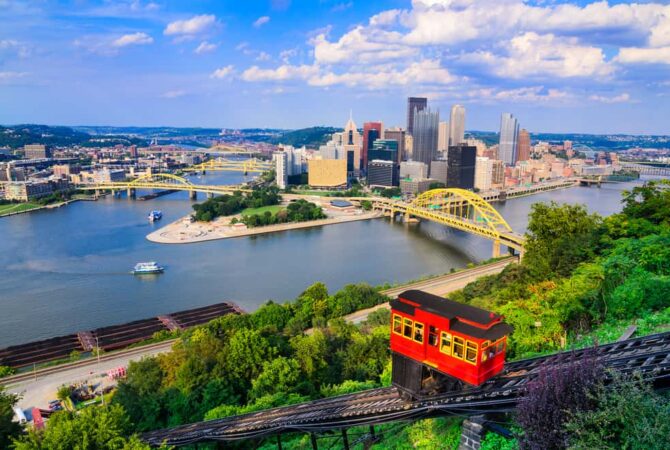
Pittsburgh is a great city to call home and one of the best cities for young professionals, retirees, and remote workers. Residents appreciate Steel City’s outdoor activities, strong job market, and affordable living—but many dislike its snowy winters and poor air quality. If you’re wondering what it’s like to live there, here are the pros and cons of Pittsburgh.
Quick Facts About Pittsburgh
| Population | 301,286 |
| Average Home Price | $483,609 |
| Average Monthly Rent | $1,599 |
| Unemployment Rate | 3.4% |
| Median Household Income | $50,536 |
Statistics from AreaVibes & Council for Community and Economic Research (C2ER)
Pros of Living in Pittsburgh
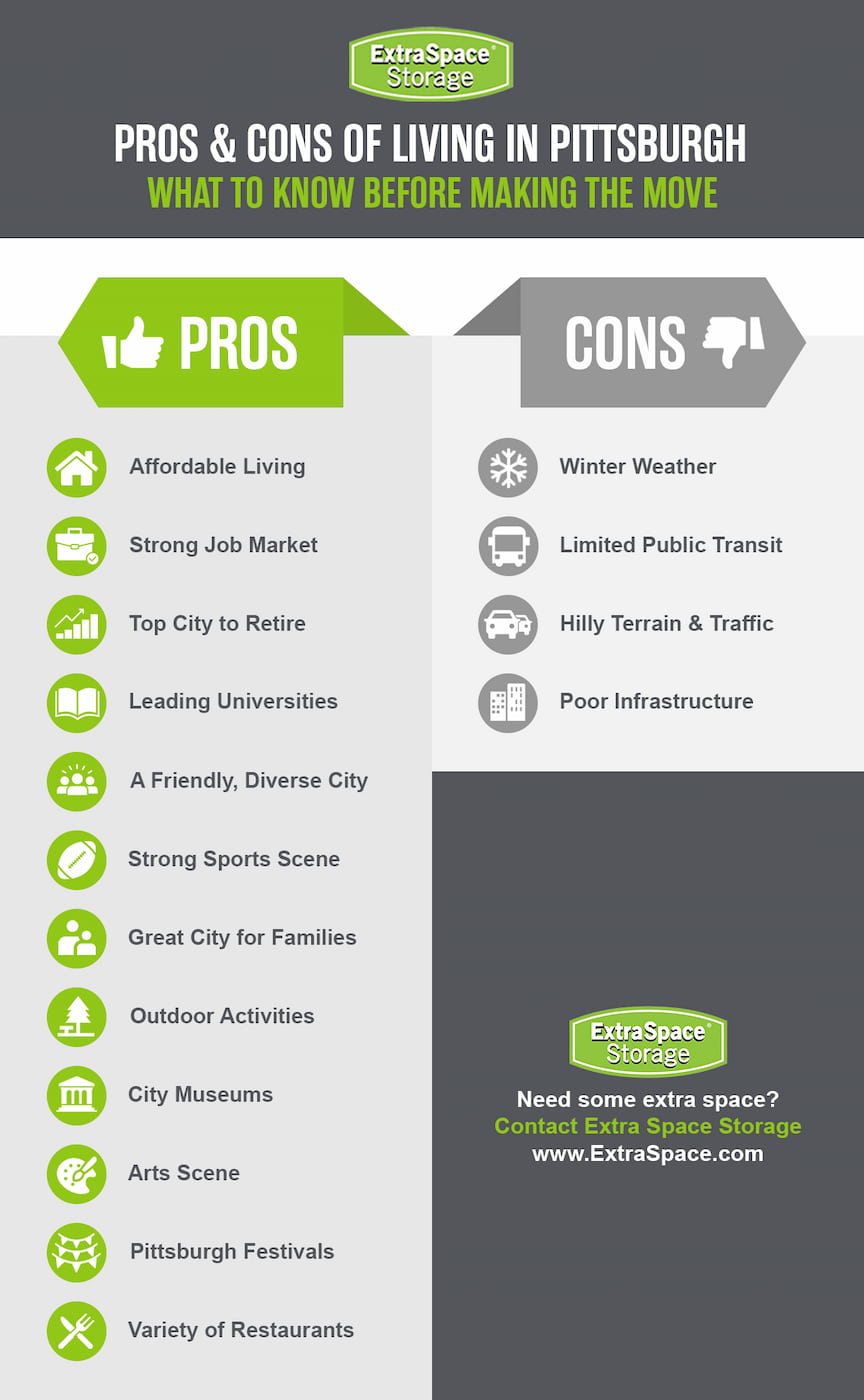
There are many benefits of living in Pittsburgh, including a strong job market, fun activities, and an affordable cost of living. Here are some reasons to move to Pittsburgh.
Pro: Affordable Pennsylvania Living
Though it’s one of the largest cities in Pennsylvania, life in Pittsburgh is more affordable than in cities like Philadelphia. In fact, the cost of living in Pittsburgh is 2% below the national average and only 3% higher than the state average, with savings on groceries, healthcare, and housing. The average home price is around $483,609—8% below the national average—while rent remains on par with the national average.
Pro: Strong Pittsburgh Job Market
With an unemployment rate of 3.4%—well below the national average—Pittsburgh’s economy is thriving. Job seekers can find opportunities across major industries like finance, healthcare, and energy. Top employers in Pittsburgh include the University of Pittsburgh, Giant Eagle, and Eat’n Park, while those pursuing health careers can look to Highmark Health, University of Pittsburgh Medical Center (UPMC), or UPMC Children’s Hospital of Pittsburgh. The Pittsburgh metro area is also home to Fortune 500 companies such as PNC Bank, United States Steel, and Alcoa.
Pro: Top City to Retire
Pittsburgh is one of the best cities for retirement, thanks to its affordable living, safe neighborhoods, and high-quality healthcare—including UPMC Shadyside, ranked the best hospital in Pittsburgh and second best in Pennsylvania. Retirees also benefit from significant tax advantages, as both retirement and Social Security income are exempt from state taxes.
Additionally, Pittsburgh offers a comfortable, engaging lifestyle for those looking to enjoy their retirement years, with everything from cultural attractions to community activities. The city has more than ten Healthy Active Living Senior Centers offering fitness equipment, arts and crafts, and social activities like BINGO. And if you love hitting the greens, there are plenty of golf courses in Pittsburgh, including Bob O’Connor Golf Course and the North Park and South Park golf courses.
Pro: Leading Pittsburgh Universities
Pursuing higher education in The ‘Burgh? The city of Pittsburgh is home to more than 29 colleges and universities. Consider pursuing your associate’s, bachelor’s, or master’s degree from one of the universities listed below.
- Carnegie Mellon University for a world-renowned research university with a focus on technology, science, & the arts
- University of Pittsburgh for a large public research university with a wide range of programs across many fields
- Duquesne University for a private, Catholic university with strong professional & graduate programs
- Robert Morris University for a mid-sized university with a focus on business, education, & health sciences
- Chatham University for a small, progressive liberal arts university with a strong focus on sustainability & experiential learning
- Point Park University for a creative & performing arts-focused education in the heart of Downtown Pittsburgh
Pro: A Friendly, Diverse City
Pittsburgh is a Certified Welcoming City known for its friendly atmosphere, making it easy for newcomers to feel at home. With more than 90 neighborhoods, each area has its own character and charm. Bloomfield, referred to as Pittsburgh’s Little Italy, blends Italian heritage with a variety of cuisines that reflect its growing cultural diversity. Oakland, meanwhile, is Pittsburgh’s most ethnically diverse neighborhood, with a lively atmosphere and cultural attractions that have earned it the nickname “Pittsburgh’s Second Downtown.”
Pro: Strong Sports Scene
Residents have plenty of Pittsburgh sports teams to follow, which leads to a large population of loyal fans! Here are some of the professional and college sports teams to cheer for:
- Pittsburgh Steelers (NFL) at Acrisure Stadium
- Pittsburgh Pirates (MLB) at PNC Park
- Pittsburgh Penguins (NHL) at PPG Paints Arena
- Pittsburgh Riverhounds SC (USLC) at Highmark Stadium
- University of Pittsburgh Panthers (NCAA D-I) for sports like football (FBS), basketball, & volleyball
Pro: Great City for Families
With high-ranking schools and family-friendly neighborhoods like Brookline, Squirrel Hill North, and Point Breeze, Pittsburgh is a great place to raise a family. Families in Pittsburgh proper are served by Pittsburgh Public Schools, while those in the surrounding suburbs have access to highly rated districts like Fox Chapel Area School District, Mt. Lebanon School District, and North Allegheny School District.
Beyond academics, there are plenty of family friendly things to do in Pittsburgh:
- Pittsburgh Zoo & Aquarium to see animals from around the world, like penguins, komodo dragons, & red kangaroos
- Children’s Museum of Pittsburgh for hands-on exhibits & interactive experiences
- National Aviary for up-close encounters with birds & to learn about wildlife conservation efforts
- Moonshot Museum to explore interactive exhibits about space exploration & the future of human spaceflight
- Pennsylvania Trolley Museum to discover the history of electric streetcars & enjoy rides on restored vintage trolleys
Pro: Lots of Outdoor Activities in Pittsburgh
Staying active in Pittsburgh is easy, thanks to abundant green space. The city boasts more than 3,800 acres across 176 parks, many with stunning views of the skyline. Here are the top spots for outdoor recreation in Pittsburgh:
- Emerald View Park for biking, dog walking, or hiking across three historic park areas—Grandview, Olympia, & Mount Washington
- Riverview Park for swimming, walking, or a visit to the Allegheny Observatory
- Frick Park for tennis, biking, or walking trails through one of Pittsburgh’s largest historic parks
- Point State Park for sweeping views of where the Allegheny, Monongahela, & Ohio Rivers meet
- Schenley Park for dog walking, disc golf, or hiking
Pro: Pittsburgh Museums
Pittsburgh is home to a thriving museum scene spanning art, science, and history. The Carnegie Museums network includes the Kamin Science Center, perfect for hands-on scientific exploration, and the Carnegie Museum of Natural History, home to world-class fossil and gemstone collections. History buffs can explore Pittsburgh’s rich past through the Heinz History Center network, which includes the Western Pennsylvania Sports Museum and the Fort Pitt Museum. For something a bit further afield, Meadowcroft Rockshelter and Historic Village—located about an hour outside the city—offers a fascinating look at one of the oldest known human habitation sites in North America.
Pro: Explore Pittsburgh Arts Scene
Pittsburgh is known for its vibrant arts scene, from world-class performing arts to galleries and community gatherings. The city is home to more than 500 arts organizations—including the Pittsburgh Arts Council, which hosts monthly events like The Creative Hive. Neighborhoods like Lawrenceville also offer galleries, studios, and events that highlight the creativity of local Pittsburgh artists.
- Pittsburgh Symphony Orchestra for world-class orchestral performances
- Pittsburgh Ballet Theatre for beloved productions like The Nutcracker & sensory-friendly performances
- Pittsburgh Public Theater for classic & contemporary plays
- City Theatre for new & emerging contemporary productions
- Pittsburgh Opera for celebrated operatic performances
- Carnegie Museum of Art for world-class art collections & special exhibitions
- The Andy Warhol Museum for iconic paintings, prints, & pop culture history
- Mattress Factory for immersive, site-specific artwork from artists around the world
Pro: Pittsburgh Festivals
Residents can have all kinds of fun at festivals and events year-round. From holiday celebrations to music festivals, here are some of the most popular events in Pittsburgh:
- Pittsburgh Mac and Cheese Festival, Greek Food Festival, and Pittsburgh Pierogi Festival for tasting a wide variety of local & international foods
- Pittsburgh Pride for a weekend of LGBTQ celebration culminating in the March & Parade
- Pittsburgh Juneteenth for celebrating freedom, Black culture, & community
- Millvale Music Festival for over 300 live musical performances
- Pittsburgh Winter Beerfest for sampling over 150 local & craft brews
- Little Italy Days for celebrating Italian culture with food, music, & more
- Kennywood Holiday Lights for Pennsylvania’s largest Christmas tree & more than 3 million holiday lights
Pro: Variety of Pittsburgh Restaurants
If you’re searching for great food in Pittsburgh, the city’s dining scene offers a mix of regional and ethnic influences. Here are a few Pittsburgh restaurants that are favorites among locals.
- The Nook for hearty breakfast favorites
- Primanti Bros. for the best sandwiches in Pittsburgh
- Alla Famiglia for some of the best Italian food in Pittsburgh
- GI-JIN for Japanese-inspired cuisine
- Eleven for contemporary American cuisine
- Dave and Andy’s Homemade Ice Cream for over 200 ice cream flavors
Get Everything You Need For An Easier Move to Pittsburgh
Cons of Living in Pittsburgh
The drawbacks of living in Pittsburgh include harsh winter weather and limited public transit. Consider these potential reasons not to live in Pittsburgh before deciding if this city is right for you.
Con: Pittsburgh Winter Weather
From December to February, temperatures in Pittsburgh drop below freezing, with January being the coldest month. With an average of 28 inches of snowfall per year, Pittsburgh may not be the right fit for those who prefer milder winters. That said, the winter season still has plenty to offer—residents can enjoy ice skating at The UPMC Rink, sledding at one of the city’s many parks, and a variety of other cold-weather activities throughout the season.
Con: Limited Public Transit
With a transit score of 55, public transit in Pittsburgh is limited, particularly outside of downtown. Pittsburgh Regional Transit operates buses, light rail, and incline systems that work well for residents living near the city center, but those in outlying neighborhoods or the suburbs often need to rely on a personal vehicle for their daily commute. The Bike Share Pittsburgh program also offers an alternative for short-distance travel.
Con: Hilly Terrain & Challenging Traffic
Pittsburgh is a city built around rivers and steep hills, with over 400 bridges connecting its many neighborhoods. While the hillside views and scenic skyline are part of the city’s charm, steep inclines, frequent bridge crossings, and winding roads can contribute to significant traffic congestion during morning and evening commutes. The terrain also makes walking and biking more challenging than in flatter cities.
Con: Poor Infrastructure
Pittsburgh’s hilly terrain, irregular intersections, and aging bridge network create a complex layout that can be difficult to navigate, particularly for newcomers. Years of weather-related wear and delayed maintenance have left many of the city’s roads and bridges in poor condition. However, Pittsburgh has been actively allocating additional funds for repairs in recent years, with upcoming infrastructure projects focused on creating new intersections and improving pedestrian safety throughout the city.
Should You Move to Pittsburgh?
You should move to Pittsburgh if you’re looking for a variety of career opportunities, top universities, and an affordable cost of living. Young professionals, families, and retirees can all find a place here. That said, it’s worth considering your lifestyle, transportation needs, and weather preferences before making the move.
Pittsburgh may be the right fit for you if…
- You work in finance, healthcare, or manufacturing and want access to top Pittsburgh employers
- You’re looking for spacious homes at affordable costs
- You enjoy cultural activities like visiting museums and attending theater performances
- You love spending time outdoors
- You want to live in a city with a thriving sports culture
You may want to consider moving to another city if…
- You want easy access to public transit
- You prefer snow-free winters
- You’re looking for a flat, walkable city without hilly roads
- You prefer cities with newer infrastructure
- You prefer a more spread-out, suburban layout over a compact urban environment
Pittsburgh Compared to Nearby Cities
Wondering if Pittsburgh is better than Philadelphia or other nearby cities like Baltimore or Cincinnati? To help you decide which is the best fit for you, compare Pittsburgh to other Mid-Atlantic and Midwest cities using the data below.
| Factor | Pittsburgh, PA | Baltimore, MD | Cincinnati, OH | Philadelphia, PA |
| Average Monthly Rent | $1,599 | $1,676 | $1,664 | $2,147 |
| Average Home Price | $483,609 | $394,250 | $446,938 | $524,116 |
| Average Commute Time | 24 minutes | 31 minutes | 23 minutes | 33 minutes |
| Walk Score | 62/100 | 64/100 | 49/100 | 75/100 |
| Unemployment Rate | 3.4% | 4.7% | 4.9% | 5.4% |
| Major Industries | Manufacturing, healthcare, finance, education | Healthcare, IT & cybersecurity, transportation, finance | Manufacturing, technology, finance, healthcare | Healthcare, education, finance, manufacturing |
Statistics from Council for Community and Economic Research (C2ER), BestPlaces, Walk Score, & AreaVibes
Frequently Asked Questions About Moving to Pittsburgh
What salary do you need to live in Pittsburgh?
A single adult with no children needs an estimated $47,745 per year to live comfortably in Pittsburgh. The city’s median household income is $50,536, meaning many residents are able to maintain a comfortable lifestyle.
Is Pittsburgh safe?
Pittsburgh is relatively safe compared to nearby cities of similar or larger size. While Pittsburgh’s crime rate is above the national average, it’s significantly lower than in cities like Philadelphia and Baltimore. Crime levels vary by neighborhood—Shadyside, Squirrel Hill North, and Lawrenceville are widely considered among the safest places to live in Pittsburgh.
How much snow does Pittsburgh get?
Pittsburgh averages about 28 inches of snowfall per year, with January typically being the snowiest month—often bringing a mix of snow and freezing rain. Pittsburgh gets more snow than Philadelphia or Baltimore, but considerably less than Cleveland or Buffalo.
What state is Pittsburgh in?
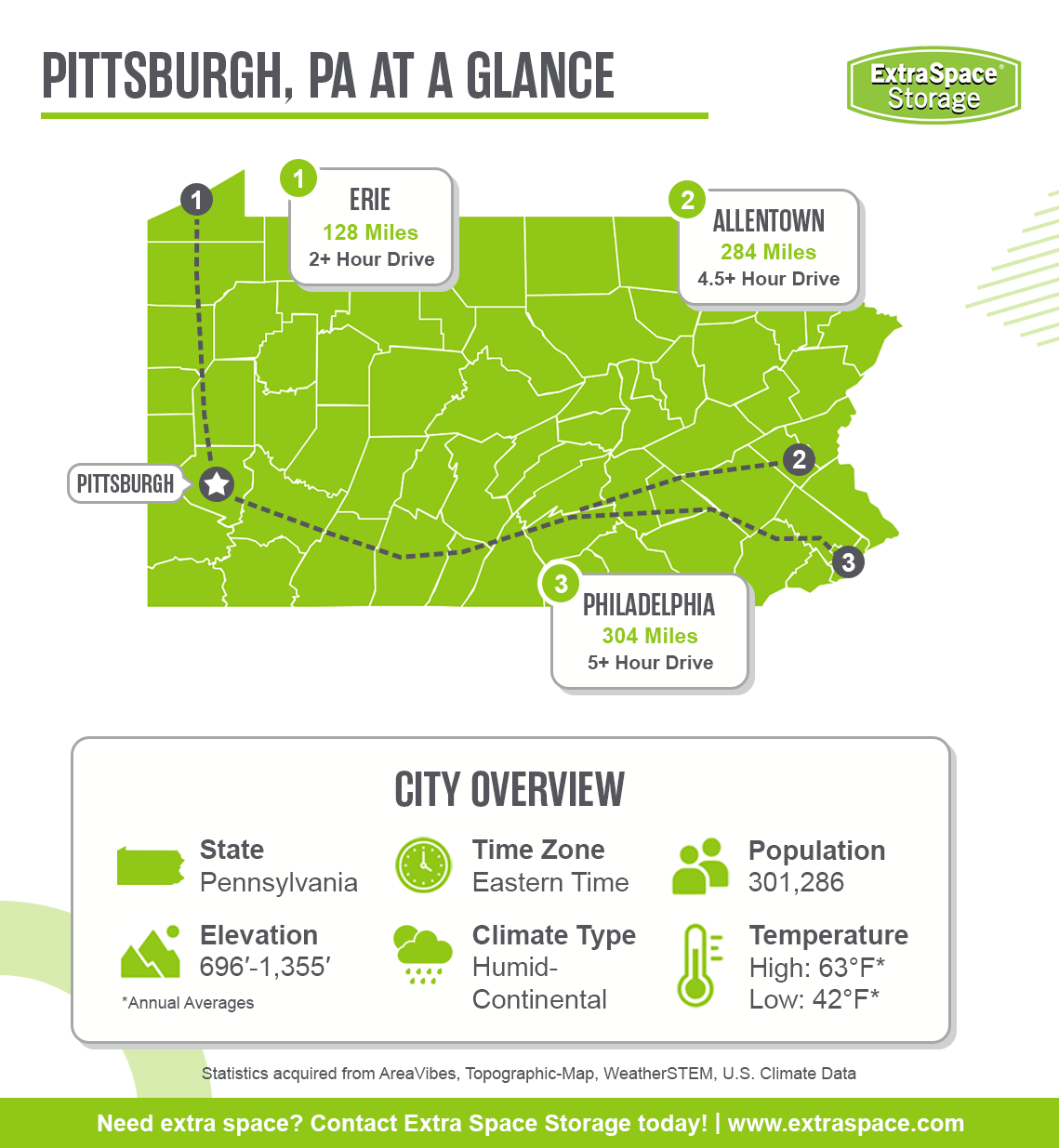
Pittsburgh is located in western Pennsylvania, near the borders of Ohio and West Virginia—a region sometimes called the Pittsburgh tri-state area. It’s within a two to three-hour drive of Cleveland, Akron, and Columbus, and about five to six hours from Philadelphia.
Is Pittsburgh a good place to live?
Pittsburgh is a great place to live, offering a variety of family-friendly neighborhoods, fun activities, and an affordable cost of living compared to other major cities. With a rich culture scene, beautiful rivers, scenic bridges, and a strong sense of community, it’s a city that residents are proud to call home.
***
Moving to Pittsburgh? Extra Space Storage has self storage facilities throughout The ‘Burgh that can help make your move easier. Rent a Pittsburgh self storage unit today!