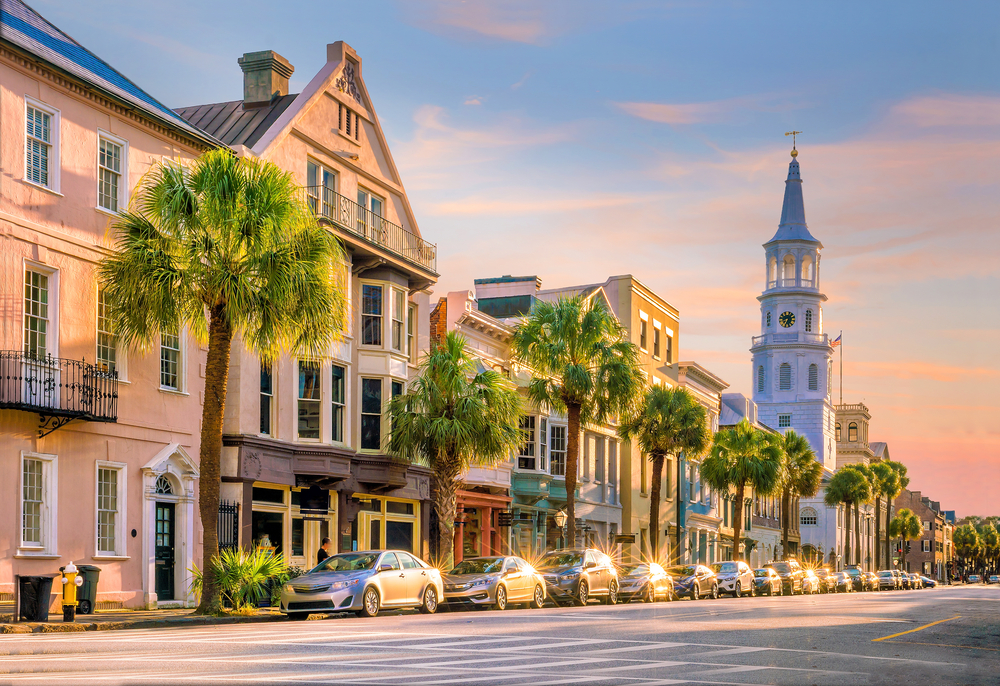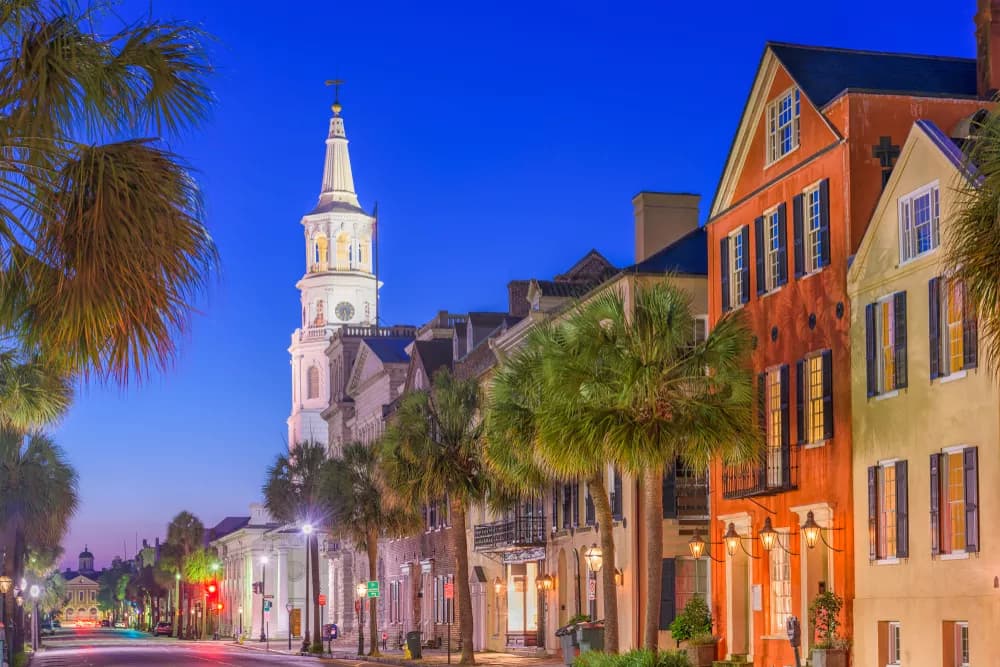
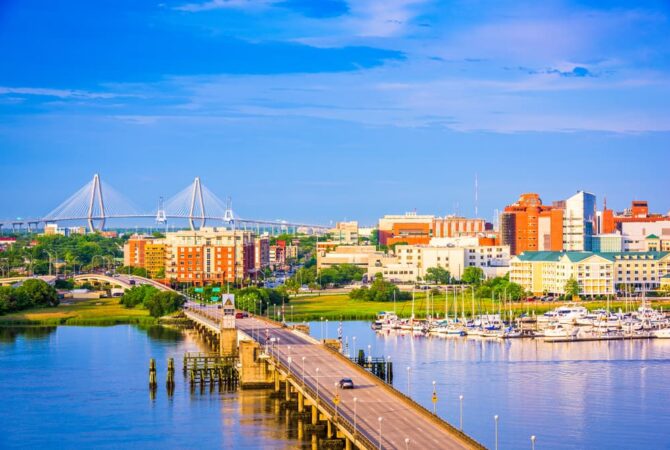
Charleston is one of the best places to live in the Southeast. People like this coastal South Carolina city’s beach access, strong economy, rich history, and welcoming culture, but others point to high housing costs, heavy tourism, and humid summers as drawbacks. If you’re wondering what it’s like to live in Charleston, SC, explore these 19 pros and cons before moving!
Quick Facts About Charleston
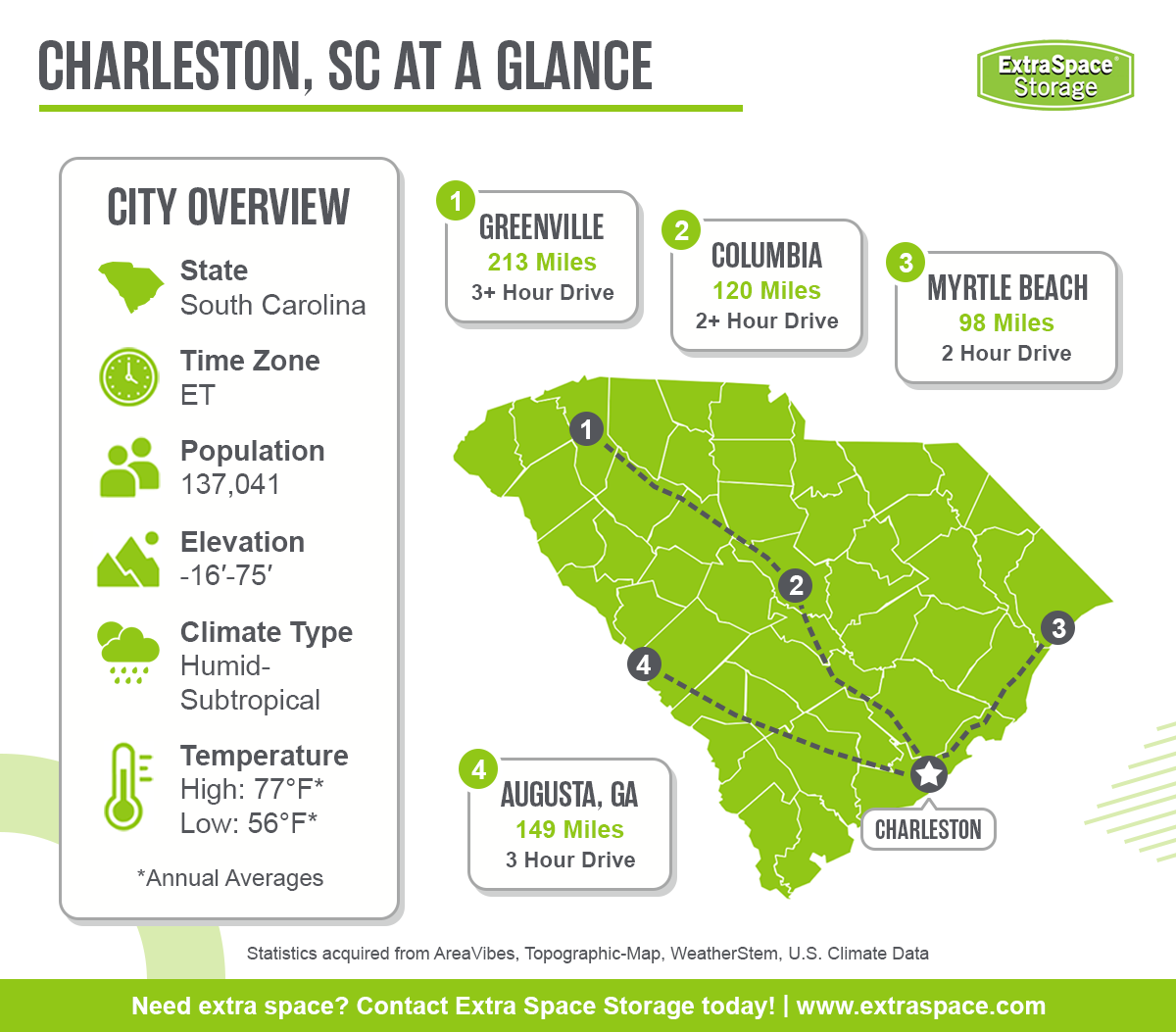
| Population | 137,041 |
| Average Home Price | $523,511 |
| Average Monthly Rent | $1,754 |
| Median Salary | $72,071 |
| Unemployment Rate | 2.3% |
Statistics from AreaVibes & Council for Community and Economic Research (C2ER)
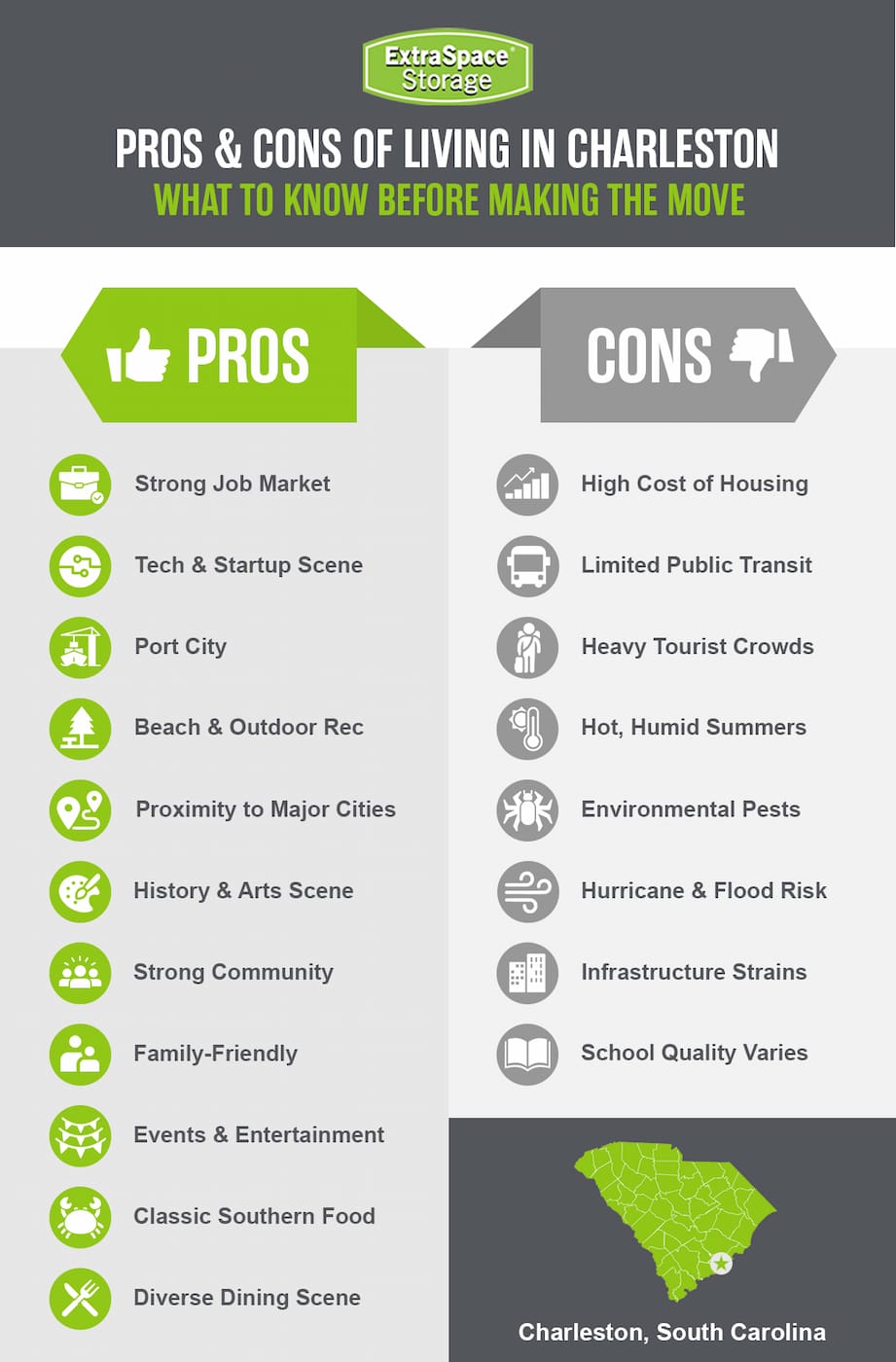
Pros of Living in Charleston
Benefits of living in Charleston include its abundant career opportunities, delicious Southern food, and coastal lifestyle. Learn more about why people move to Charleston below!
Pro: Strong Job Market
If you want to live in one of the best cities for jobs, consider moving to Charleston! Not only is the Holy City’s unemployment rate well below the national average at just 2.3%, but the median household income in Charleston is strong, with a per capita income 56% above the U.S. average—making it an ideal place to start or advance your career.
Key industries in Charleston include tech, tourism, aerospace, military, and automotive manufacturing. Here are some major employers in Charleston that provide stable career opportunities in these sectors and others:
- Bosch
- Boeing
- Joint Base Charleston
- Medical University of South Carolina (MUSC)
- Roper St. Francis Healthcare
- Charleston County School District
Pro: Growing Tech & Startup Scene
Nicknamed “Silicon Harbor,” Charleston is gaining recognition as a tech hub, with an output of over $51.7 billion from tech-based industries like software development, cybersecurity, IT, and more. In fact, Charleston has achieved multiple national tech rankings, such as being one of the top markets for women in technology and ranking among America’s top boomtowns.
Organizations like Chucktown Startups help support local entrepreneurs and startups—such as Charleston Planetarium and Odd Duck. New Charleston companies also benefit from collaborative support networks like the Charleston Tech Center and Harbor Entrepreneur Center, which both provide co-working spaces and other helpful resources.
Pro: Charleston Is a Port City
As one of the oldest port cities in the U.S., Charleston has long served as a major trading hub and is consistently ranked among the most productive ports in the world—supporting both the local economy and others around the world. Charleston’s maritime history and port city legacy can be explored in depth at the Patriots Point Naval & Maritime Museum in nearby Mt Pleasant.
The city’s coastal location also fuels a thriving seafood industry. Locals can pick up fresh catches at Charleston fish markets like Crosby’s Fish & Shrimp Co. and Marvin’s Seafood, or enjoy delicious oceanic cuisine at popular Charleston restaurants like Hyman’s Seafood and Delaney Oyster House.
Pro: Access to Charleston Beaches & Outdoor Recreation
One of the top reasons to live in Charleston is its pleasant year-round weather—which pairs perfectly with the city’s many beaches and other opportunities for outdoor recreation. Here are some great outdoor activities in Charleston:
- Isle of Palms, Folly Beach, Sullivan’s Island, & other top South Carolina beaches for swimming, surfing, & sunbathing
- Angel Oak Tree for an iconic, enormous live oak estimated to be over 400 years old
- James Island County Park for trails, disc golf, dog parks, & saltwater fishing in Charleston
- Wild Dunes Harbor Course for challenging rounds of golf with scenic coastal views
- Cypress Gardens for boat rides through blackwater swamps filled with local flora & fauna
- Charleston Outdoor Adventures for kayak rentals or guided tours through Charleston’s waterways
Pro: Proximity to Major Southern Vacation Destinations & Metros
A top East Coast city, Charleston is within easy reach of many popular destinations in the region. Several beaches and barrier islands like James Island, Kiawah Island, and Edisto Island are short drives away, making spontaneous travel a part of life in Charleston. Other top destinations—including South Carolina’s capital, Columbia, as well as Myrtle Beach and Savannah, GA—are around a two-hour drive from Chucktown. Even Atlanta is less than five hours away, making it accessible for a longer weekend trip, major concert, or sporting event!
Pro: Rich History & Arts in Charleston
Another major reason people move to Charleston is for its blend of preserved history and vibrant arts scene. Explore the city’s roots, appreciate local art and culture, and more at these top Charleston museums, historic sites, and creative spots:
- Rainbow Row for iconic pastel-colored homes & photo opportunities
- McLeod Plantation Historic Site for Gullah Geechee heritage & local history
- Charleston Museum for American history exhibits & natural history collections
- International African American Museum for African American history and learning about Charleston’s role in the transatlantic slave trade
- Gibbes Museum of Art & other top Charleston art galleries for paintings, sculptures, & rotating exhibitions
- Gaillard Center for symphony, ballet, & Broadway productions
- Spoleto Festival USA for an annual celebration of world-class performing arts, live music, theater, & dance
Pro: Strong Sense of Community in Charleston
Despite being a popular tourist destination, Charleston still has a charming, small-town feel rooted in Southern hospitality—with tight-knit communities and a slower pace of life than other bustling metros. New residents in Charleston often say it’s easy to make friends here, whether that’s with neighbors, coworkers, or strangers out on the town.
These bonds are strengthened by regular Charleston community events—like the Black History Month Celebrations at Boone Hall Plantation, Colour of Music Festival, and the variety of Charleston-area farmers markets. This blend of small-town charm and big-city amenities is one of the reasons that Charleston is among the best places to live in the South.
Pro: Charleston Is Family-Friendly
If you’re planning to move to Charleston with kids, you’ll be glad to know the Holy City has family-friendly neighborhoods with a close-knit feel—along with all kinds of fun ways to keep little ones entertained. Locals tend to value politeness, community involvement, and neighborly interactions, which makes it easy for families to feel welcome here.
The city also features numerous parks, recreation centers, trails, and waterfront spaces where families can spend time outdoors year-round. Some of the most popular family-friendly activities in Charleston include exploring sea life at the South Carolina Aquarium, roaming around Waterfront Park, spending time at the Children’s Museum of the Lowcountry, and hanging out at nearby beaches.
Pro: Lively Charleston Events & Entertainment
Chucktown offers a variety of festivals, bars, live music spots, and events that energize and enrich locals with culture and good times. Major annual events like the Charleston Wine + Food Festival, Southeastern Wildlife Exposition (SEWE), and the Charleston Jazz Festival draw visitors and locals alike for weeks of live performances, fantastic food, art, and cultural celebrations.
Plus, when the sun goes down, Charleston nightlife hubs like Upper King Street and Historic Downtown come alive with rooftop bars like The Rooftop, cocktail bars like Prohibition Charleston, and live music venues like the Charleston Pour House!
Pro: Classic Southern Food in Charleston
One of the biggest reasons to move to Charleston, SC is its exceptional dining culture that has ranked it among the top food cities in the U.S. Charleston is famous for Lowcountry cuisine, which often features fresh seafood, locally-sourced ingredients, and classic Southern recipes like shrimp and grits or she-crab soup.
You can enjoy these flavors during celebrations like the Lowcountry Oyster Festival and at some of the best restaurants in Charleston—like Magnolias, Poogan’s Porch, and S.N.O.B. For waterfront dining, restaurants like Pinky’s on the Beach and Islander 71 provide coastal meals to beachgoers and sightseers alike.
Pro: Diverse Dining Scene Beyond Southern Cuisine
But it’s not just about Southern cuisine in Charleston—Chucktown offers a diverse selection of restaurants, from upscale fine dining to international flavors. Here are a few other Charleston restaurants to check out:
- FIG for upscale, seasonal menus
- Chez Nous for European-inspired fine dining & wines
- Kultura for Filipino cuisine
- Frannie & The Fox for wood-fired Italian flavors
- Rodney Scott’s BBQ for good old-fashioned barbecue
Get Everything You Need For An Easier Move to Charleston
Cons of Living in Charleston
The disadvantages of living in Charleston include higher-than-average housing costs, summer heat, seasonal pests, and infrastructural challenges. Here are some potential cons of living in Charleston to help you decide if the city is right for you.
Con: High Cost of Housing in Charleston
Though living expenses in Charleston aren’t nearly as high as in larger coastal metros like New York City or Boston, local housing costs are competitive—and median rent prices are more than 12% higher than the U.S. average. Costs for utilities also run higher than average, which can present an additional financial burden. Charleston’s elevated housing prices are driven by the city’s popularity and growing population, which can make it harder for some families and young professionals to find affordable housing near job centers or in desirable neighborhoods.
However, it’s still possible to find affordable and safe neighborhoods to settle down in, and residents benefit from relatively low property taxes, as well. Plus, the city’s higher cost of living is a reflection of its quality of life—many believe it’s worth the price considering Charleston’s variety of great jobs, higher-than-average median income, and Southern coastal location.
Con: Limited Public Transportation in Charleston
Public transit options in Charleston are limited compared to larger cities, and owning a car is often necessary for commutes or errands outside of the downtown area. Residents note that relying on a car can also be challenging, given that parking is scarce in places like Downtown Charleston, and options that are available may be expensive.
That doesn’t mean no public transit is available—the Charleston Area Regional Transportation Authority (CARTA) offers bus routes to locations around the city, the Downtown Area Shuttle (DASH) provides free, convenient travel around the downtown area, and residents can also travel on the water by taking the Charleston Water Taxi. Plus, there are select areas around Charleston—particularly in and around downtown—that are highly walkable and bikeable, making it possible to get around these neighborhoods without relying on cars or public transit.
Con: Heavy Tourism & Seasonal Crowds
As one of the best cities to visit in the U.S., Charleston’s rich history, beaches, charm, and international airport draw millions of visitors each year, making tourism in Charleston a huge component of the local economy. Unfortunately, this also means that during peak tourism seasons like spring and fall, traffic increases, streets can become crowded, and downtown becomes busy. This influx of visitors can strain infrastructure, inflate the general cost of living, and contribute to congestion on the roadways, especially near historic districts with lots of tourist sites and waterfront areas.
However, this tourism supports local businesses and creates a lively, year-round calendar of Charleston events and festivals that visitors and locals alike can enjoy. Plus, for many residents, the city’s energy during peak months is a part of its charm!
Con: Hot, Humid Summers in Charleston
Charleston’s subtropical climate is a draw for many outdoor lovers—but that can change when summer arrives. Especially during June, July, and August, hot and muggy conditions are normal, and humidity can frequently push the heat index to uncomfortable levels if you’re not used to it. Summers also bring the rain—about 48 inches annually, compared to the U.S. average of 38 inches—which can sometimes make outdoor plans unpredictable.
On the other hand, Charleston’s warm, humid climate helps sustain the area’s lush landscapes and long growing seasons, while providing great conditions for spending time by the water. Whether you love paddling at sunrise, sunset beach walks, or weekend trips to Folly Beach, Charleston’s warmth keeps outdoor adventure available much longer than cities with cooler climates!
Con: Lots of Bugs
Charleston’s warm weather and abundant water sources attract more than tourists—they create ideal conditions for bugs. Many locals report abundant mosquitoes, palmetto bugs, and other pests, especially during the summer months. Ultimately, insects are a part of life in coastal South Carolina, and not every newcomer finds it easy to adjust.
Luckily, contacting Charleston pest control companies can help combat invasive bugs, and following basic preventative measures can keep bugs from finding a place in your home. The Charleston Mosquito Control Program also works hard to limit the levels of mosquitoes in the area.
Con: Hurricane & Flood Risks
Charleston’s coastal location places it squarely in a high-risk zone for hurricanes, storm surges, and flooding. Major storms can push water inland and cause widespread flooding in lower-lying neighborhoods, and many homeowners in flood zones pay significantly higher flood insurance premiums or have to buy separate policies to cover their properties. New flood maps and rising insurance rates also contribute to elevated housing costs in the area.
Fortunately, the city is taking measures to mitigate flood loss with initiatives like the Basin Flood Action Program, which divides the city into basins and prioritizes flood mitigation based on neighborhoods most at risk. Additionally, the city provides general resources for homeowners to help protect their homes from flooding, with tips like improving lot grading, installing flood vents, and elevating major appliances onto blocks.
Con: Charleston Traffic & Infrastructure Strain
Charleston’s rapid growth and heavy tourism have put increasing pressure on its roads, bridges, and drainage systems, leading to frequent congestion across the area. Rising sea levels and intense rainstorms also strain infrastructure, leading to further congestion along detour routes.
However, city leaders are investing in a range of infrastructure projects to improve these conditions, including interchange upgrades, drainage projects, and a bike-pedestrian bridge over the Ashley River.
Con: Quality of K-12 Public Schools in Charleston Varies
While there are excellent individual schools in Charleston and surrounding counties, residents feel that public school quality is inconsistent and often depends on the affluence of its associated neighborhood. South Carolina as a whole ranks low in national assessments of public education—around 43rd among the states—and Charleston families with school-age kids may find that top public options are limited, prompting many to consider private schools.
Keep in mind that there are still plenty of great schools in the Charleston County School District, including:
Many families also supplement their kids’ educations with charter schools and educational programs.
Should You Move to Charleston?
You should move to Charleston if you want a warm, coastal city with historic charm and a slower pace of living. When paired with the area’s growing job market and vibrant social scene, it’s easy to see why Charleston is an attractive city for people of all ages. Before relocating, it’s worth weighing factors like your budget, tolerance for heat and humidity, transportation needs, and general lifestyle preferences. Keeping these considerations in mind can help you decide whether life in Charleston, SC is right for you.
Charleston may be the right fit for you if…
- You enjoy warm weather and coastal living.
- You work in tourism, tech, military, aerospace, or automotive manufacturing.
- You value history, culture, and a strong food scene.
- You want a friendly, community-oriented place to live.
- You like living near other major cities.
You may want to consider moving to another city if…
- You’re on a tight housing budget.
- You dislike heat, humidity, or bugs.
- You want less tourism and fewer crowds.
- You’re looking for a wide range of top-tier public schools.
- You prefer a faster pace of living.
Charleston Compared to Nearby Cities
Wondering if Charleston is better than Myrtle Beach, Savannah, or Charlotte? Compare Charleston with these major cities in the region to decide which destination best fits your needs.
| Factor | Charleston, SC | Myrtle Beach, SC | Savannah, GA | Charlotte, NC |
| Average Monthly Rent | $1,754 | $1,176 | $1,282 | $1,573 |
| Average Home Price | $523,511 | $369,238 | $370,120 | $401,923 |
| Average Commute Time | 22 minutes | 17 minutes | 20 minutes | 25 minutes |
| Walk Score | 40/100 | 43/100 | 44/100 | 26/100 |
| Unemployment Rate | 2.3% | 3.4% | 5.3% | 3.5% |
| Major Industries | Aerospace, technology, tourism, military | Tourism & hospitality, healthcare, manufacturing, technology | Aerospace, healthcare, entertainment, manufacturing | Finance, manufacturing, technology, logistics |
Statistics from Council for Community and Economic Research (C2ER), BestPlaces, Walk Score, & AreaVibes
Frequently Asked Questions About Moving to Charleston
Is Charleston a good place to live?
Charleston is considered a very good place to live, thanks to its beautiful beaches, historic charm, strong job market, delicious cuisine, and abundant amenities—which attract young professionals and families. Charleston’s warm weather, coastal lifestyle, and tax-friendliness also make it one of the best cities for retirement!
Is Charleston safe?
Charleston is safer than 63% of South Carolina cities and 28% of cities in the U.S. Additionally, there are a variety of affordable and safe neighborhoods in Charleston that are worth considering, like West Ashley, Wagener Terrace, and Stiles Point—all of which have high safety ratings, relatively budget-friendly housing prices, and a variety of fun things to do.
How far is Savannah from Charleston?
Charleston is approximately 100 miles northeast of Savannah, or around a two-hour drive away. Many Charleston residents enjoy taking quick trips to Savannah to explore its historic architecture, riverfront views, art galleries, and boutique shopping.
Why is Charleston so expensive?
Charleston’s higher-than-average housing costs—a result of increasing demand tied to the city’s desirable location and growing popularity—is the main reason why it’s more expensive to live in. On top of this, the city’s limited land among water and islands makes new development competitive and time-consuming to create, which inflates related infrastructure costs more. However, the city’s housing averages are just 3.4% higher than the national average, and living expenses in Charleston are nearly on par with the rest of the nation, so its position as being more expensive than the average U.S. city is a little misleading.
That said, the median household income in Charleston sits at just under $72,100—which is significantly higher than both state and U.S. averages. This helps offset costs, especially considering a salary of $54,000 would generally be enough for a single adult with no children to live comfortably in Charleston.
Does it snow in Charleston?
It rarely snows in Charleston, and when it does, it’s typically too warm for it to accumulate. Considering Charleston’s subtropical climate, it’s no surprise that the city only receives around 0.4 inches of snow each year. The average low temperature in Charleston is around 39°F in January, the coldest month of the year for the city. With temperatures usually staying above freezing, snow is considered an anomaly.
***
Moving to Charleston, SC? Extra Space Storage has facilities located throughout the Charleston metro and across the U.S. to help ease your transition. Rent Charleston self storage today!