Helpful Relocation Resources for San Francisco, CA Newcomers
Relocating to San Francisco, CA? Whether you're still choosing a moving date or have already got the keys, this guide has moving cost estimates, storage choices, tips for hiring movers, a first 30-day moving checklist, and a directory of local services to help ease your transition. Here's what you need to know for your San Francisco move.

Planning Your Move to San Francisco

Cost of Movers in San Francisco, CA
Find out what hiring movers costs in San Francisco when moving locally or long-distance. Explore hourly moving rates and what to expect for planning your move.

Best Movers in San Francisco, CA
Check out our recommendations for the best moving companies in San Francisco, CA.

Find Free & Cheap Moving Boxes in San Francisco, CA
Learn where to find free and cheap moving boxes near you in San Francisco—and where to recycle them!
San Francisco Self Storage & Moving Day Logistics
Between apartment lease gaps, home closings, and staging needs, self storage can be a practical option when moving to San Francisco. Find out how storage can help you during your move and find a facility near you.
Self Storage in San Francisco
Extra Space Storage has multiple storage facilities in San Francisco, near the neighborhoods of Mission District, Union Square, Visitacion Valley, and more. Our units come in sizes ranging from 25 to 300+ square feet, along with features and amenities like drive-up access, vehicle storage, and climate control to help keep your items secure and accessible.
Choosing the Right Storage Unit in San Francisco
When selecting a storage unit in San Francisco, consider the following storage factors before reserving:
Climate Control: San Francisco's coastal climate brings a rainy winter season and foggy summers. Climate-controlled units, which typically stay between 55 and 80 degrees, helping protect wooden furniture, books, artwork, and documents from humidity and temperature swings. → Climate-Controlled Storage Guide
Unit Size: 5x5 (several boxes in varying sizes); 5x10 (studio apartment); 10x10 (1-bedroom home); 10x20 (2 or 3-bedroom home); 10x30 (large home's contents or a small vehicle). → Storage Unit Size Guide
Access & Security: Look for extended or 24-hour gate access—which provides flexibility for your busy schedule—as well as security measures like electronic gate access, on-site management, and video surveillance to help keep your belongings safe. → 24-Hour Access Storage
Lease Flexibility: Month-to-month storage leases mean you aren't locked into a long-term lease, which is useful when moving timelines change. Units can be upgraded or downsized as needed.
How to Use Storage In Between Homes
San Francisco self storage can cover a gap between your lease ending and your move-in date, hold your belongings during a closing delay, or let you move into your new home gradually in phases. → Learn More About Storage for Moving
Explore San Francisco: Neighborhoods, Cost of Living, & What to Expect
San Francisco's neighborhoods and suburbs vary in housing type, cost, and transit access. Use these guides to compare areas before making an offer on a house or signing a lease.
Cost of Living in San Francisco
San Francisco's cost of living is about 66% higher than the national average, with housing as the largest driving factor. See the full breakdown in our San Francisco cost of living guide.
Pros & Cons of San Francisco
Each city has its own set of pros and cons, from housing costs to parking. Before you move, consider the advantages and trade-offs of living in San Francisco to help decide if it's the right city for you.
Things to Know About San Francisco
What is life like in San Francisco? Find out the important information, from typical weather patterns and public transit options to iconic attractions, hidden gems, and outdoor recreation in San Francisco.
Best Neighborhoods in San Francisco
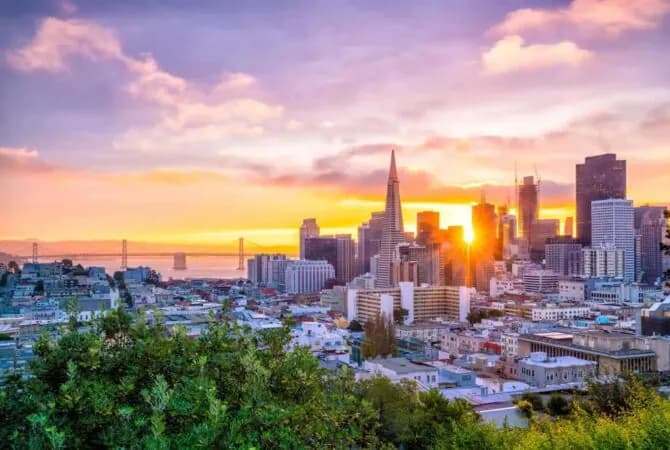
Safe, Affordable Neighborhoods in San Francisco
Even with its higher cost of living, San Francisco has several neighborhoods that offer relative affordability and a safe place to call home—including Excelsior, Outer Sunset, and Bernal Heights.
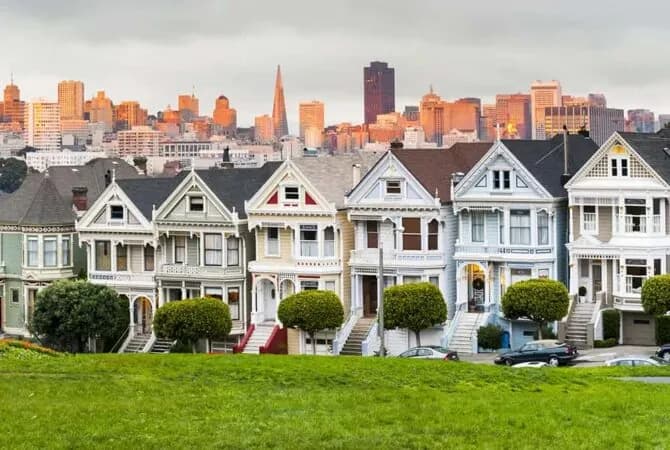
Best Neighborhoods in San Francisco for Singles & Young Professionals
San Francisco's young professionals thrive in neighborhoods like Mission District, Nob Hill, and SoMa, where the city's lively arts and food scene, great walkability, and tech and startup culture make it easy to build community and advance a career.
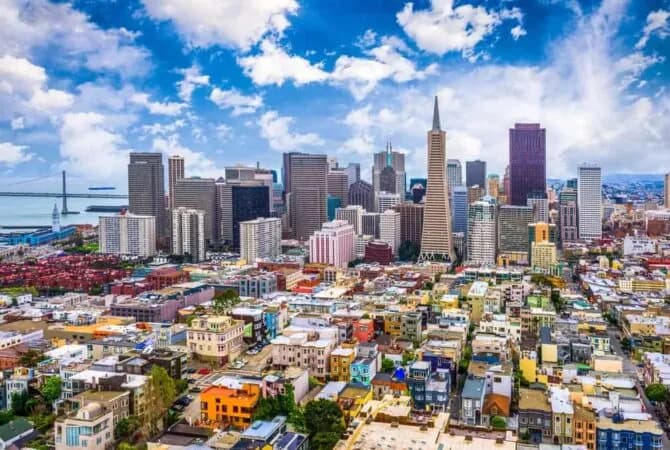
Best Neighborhoods in San Francisco for Families
Families with children will love San Francisco's family-friendly neighborhoods like Inner Sunset, Noe Valley, and Pacific Heights—thanks to great local schools, high safety ratings, and a strong sense of community.
Local Resources for New San Francisco, CA Residents
This section covers the first tasks to handle as a new San Francisco resident—from government setup and school enrollment to healthcare, transit passes, financial and legal steps, emergency preparedness, and employment resources.
Government & Administrative Setup in San Francisco
California sets short deadlines for new residents to update their license and vehicle registration, so start with the California DMV, then arrange utilities and local services.
Driver's License | California requires new residents to get a California driver's license within ten days of establishing residency. Book an appointment through the DMV. The Class C licensing fee is $46. → California DMV |
Vehicle Registration | Register a vehicle within 20 days of becoming a California resident or of bringing it into the state. Gasoline-powered 1976 and newer vehicles, except for motorcycles, typically need a smog certification from a California smog station, and vehicle verification is required. Submit your application and fees on time even if you are still gathering the title or smog certificate. → California Vehicle Registration |
Voter Registration | Register online at registertovote.ca.gov at least 15 days before an election. If you miss the deadline, you can register conditionally and vote in person at your county elections office or a vote center on Election Day or up to 14 days before. → San Francisco Department of Elections |
Utilities Setup | San Francisco's primary electricity and natural gas provider is PG&E. Water, sewer, and electricity services are managed by San Francisco Public Utilities Commission (SFPUC). Trash, recycling, and compost are managed by Recology San Francisco. The main internet providers in San Francisco are AT&T Fiber, Sonic, and Astound Fiber, while the main cable provider is Xfinity. |
Pet Registration | San Francisco requires dogs to be licensed. California law also requires rabies vaccination for dogs. Contact San Francisco Animal Care & Control for licensing details. |
School & Family Resources in San Francisco
The San Francisco Unified School District (SFUSD) runs the city's public schools, and the city also funds early learning and child care assistance for younger children. Residents also have access to charter and private schools, as well as higher education institutions.
K–12 Public Schools | San Francisco Unified School District (SFUSD) serves San Francisco residents, with over 100 schools throughout the city. Find a school near you through the SFUSD School Finder. |
School Enrollment | New San Francisco students can enroll throughout the school year—applications can be dropped off at the Enrollment Center office, emailed to enrollinschool@sfusd.edu, or submitted through the ParentVUE portal. You'll need your child's birth certificate, immunization records, proof of home address, and a parent or guardian photo ID. |
Charter & Private | The California Department of Education maintains a statewide school directory covering public, charter, and private schools. Look up a specific school by name, or use the advanced search function to filter by area and school type. |
Higher Education | San Francisco colleges and universities include UC San Francisco, San Francisco State University, the University of San Francisco, City College of San Francisco, and Academy of Art University. California requires you to live in the state for at least one year with intent to stay to qualify for resident tuition rates. |
Child Care | San Francisco's Early Learning For All program is run by the Department of Early Childhood, providing free or affordable child care and preschool for San Francisco families with children age five and younger. Subsidized child care and development programs are also funded at the state level through the California Department of Social Services and the California Department of Education. Families can call the Children's Council of San Francisco at 415-343-3300 to check eligibility and find care. |
Healthcare in San Francisco
Residents searching for healthcare can find help at many San Francisco hospital systems and a network of urgent care locations. Use each system's provider finder or your insurer's directory to confirm network coverage.
Major Health Systems | Major San Francisco health systems include Zuckerberg San Francisco General Hospital and Trauma Center, UCSF Health, Kaiser Permanente, and Sutter Health. |
Finding a PCP | Search your health insurer's provider directory, or use the provider finders listed above to find a primary care provider who accepts your plan. Major California insurers include Kaiser Permanente, Anthem Blue Cross Blue Shield of California, and Health Net. |
Urgent Care | Several systems operate urgent care locations throughout San Francisco, including UCSF Health Urgent Care. Check each network for walk-in availability and hours. |
Mental Health | San Francisco has multiple 24-hour suicide prevention hotlines, including the Suicide & Crisis Lifeline (call or text 988) and the 24/7 Crisis Line at 415-781-0500. For a mental health or substance use crisis in San Francisco, call 628-217-7000 (available 24/7). The San Francisco Behavioral Health Access Line, 888-246-3333, also connects residents to care 24 hours a day. |
Pharmacy | National chains like Walgreens and CVS, as well as grocery store pharmacies like Ralphs, operate multiple San Francisco locations. |
Transportation in San Francisco
Muni, BART, Caltrain, and ferry services primarily run San Francisco transportation. Many residents pay for several of them with one Clipper card.
Toll Pass Setup | The Golden Gate Bridge uses all-electronic tolling with no cash lanes, and tolls are collected southbound only, into San Francisco. You can pay with a FasTrak account, a License Plate Account, a one-time payment, or a mailed toll invoice. To open a FasTrak account, go online or call 1-877-229-8655. You can also register a License Plate Account directly with the Golden Gate Bridge. Rates change on a published schedule. |
Key Toll Roads | The Golden Gate Bridge charges a toll southbound into the city. Other Bay Area bridges also charge tolls—see Bay Area FasTrak for rates and payment options. |
Public Transit | The San Francisco Municipal Transportation Agency (SFMTA) runs Muni buses, a light rail system, historic streetcars, and cable cars. A single adult ride is $2.85 with Clipper. Ages 18 and under ride Muni free. BART, Caltrain, and San Francisco Bay Ferry connect to the wider Bay Area, and Clipper works across Bay Area transit systems. |
Airport Access | San Francisco International Airport (SFO) has its own BART station, and the AirTrain connects the terminals. Oakland International Airport (OAK) also serves the Bay Area. |
Major Roadways | US-101, I-80, and I-280 are the main highways into San Francisco. US-101 leads to the Golden Gate Bridge, and I-80 crosses the Bay Bridge. |
Financial & Legal Setup in San Francisco
California’s state income tax has nine brackets. Use this section to get your finances in order and your insurance coverage set up.
State Income Tax | California has a progressive state income tax with nine brackets—from 1% to 12.3%, plus an additional 1% on taxable income over $1 million. Update your withholding with your employer, including California Form DE 4 alongside your federal W-4. |
Homestead Exemption | California does not have a state homestead property tax exemption. However, homeowners can claim the Homeowners' Exemption, which reduces a home's assessed value by $7,000. File with the San Francisco Assessor-Recorder by February 15 for the full exemption; claims filed between February 16 and December 10 receive 80%. |
Homeowners Insurance | Earthquake coverage is a separate policy, and most are offered through the California Earthquake Authority. Wildfires are covered by most home insurance policies in San Francisco. Flood damage is not covered by standard homeowners or earthquake policies, so check your flood zone with FEMA flood maps to see if you should consider a separate policy. |
Vehicle Insurance | California's minimum liability limits are $30,000 per person and $60,000 per accident for bodily injury, and $15,000 for property damage. |
Address Updates | Update your address with the IRS (Form 8822), Social Security Administration, banks, health insurer, DMV, voter registration, and USPS. |
San Francisco Emergency Preparedness & Safety
San Francisco experiences severe weather such as earthquakes, wildfires, and flooding. Save these numbers and sign up for local alerts early in your move, since earthquake preparedness is part of life in the Bay Area.
Emergency | 911 |
San Francisco Non-Emergency | San Francisco Police Department: (415) 553-0123. For city services, call 311. |
Poison Control | 1-800-222-1222 |
State and National Crisis Line | San Francisco Behavioral Health Access Line: 888-246-3333. Mental health or substance use crisis: 628-217-7000. San Francisco Suicide Prevention: 415-781-0500. You can also call or text 988. |
Emergency Alerts | AlertSF is the city's official emergency alert system. Text your ZIP code to 888-777 or register online. Wireless Emergency Alerts arrive on your phone with no sign-up. |
Natural Disaster Info | Earthquakes are the main natural hazard to prepare for in San Francisco, and AlertSF also sends tsunami and flood watches and warnings. The San Francisco Department of Emergency Management publishes preparedness guidance. |
FEMA Flood Map | Check your property address to see if you're in a FEMA flood-prone area. |
Employment Resources in San Francisco
San Francisco's economy includes technology, finance, and healthcare, along with a range of public-sector and nonprofit employers. You can use these San Francisco workforce resources to look for job listings and in-person help at workforce centers.
Major Industries | Technology, finance, and healthcare are some of the major industries in San Francisco. The city's Office of Economic and Workforce Development supports local workforce and business programs. |
Top Employers | Major employers include Salesforce, Lyft, Gap Inc., Levi Strauss & Co., and UCSF. |
Job Search Tools | National job boards such as LinkedIn, Indeed, and Glassdoor list San Francisco openings. |
State Job Portal | CalJOBS is California's online job search and resume resource, run by the Employment Development Department (EDD). |
Unemployment Benefits | File for unemployment benefits online through the EDD. |
Professional Networking | The San Francisco Chamber of Commerce is a local business association that advocates for local businesses and hosts networking events. |
Staffing & Temp Agencies | Boutique, national, and international staffing agencies like 80Twenty, Scion Staffing, and Insight Global have San Francisco offices. |
San Francisco Community Resources & Amenities
Public Library: The San Francisco Public Library has a Main Library and 27 neighborhood branches. A library card is free for anyone living in California—apply online or in person, then show a valid photo ID in person at any location. Your card provides digital access to books, magazines, movies, music, and online learning.
Parks & Recreation: San Francisco is a combined city and county, and its city parks are managed by San Francisco Recreation & Parks. Federal sites such as the Presidio and the Golden Gate National Recreation Area are managed separately.
Neighborhood Associations & Civic Resources: For city services and neighborhood issues, call 311 or visit SF311.
Local Media: Local news sources include the San Francisco Chronicle, The San Francisco Standard, SFGATE, and various local radio and television stations.
Quinn Johnson
Quinn Johnson is a moving expert and author for Extra Space Storage. He's moved over 15 times, including internationally, and helped countless others between their own homes. He's happy to lift some boxes for a friend as long as he's paid in pizza. As a writer and content creator for Extra Space Storage since 2019, Quinn shares helpful moving tips and info to alleviate the common stresses of moving.