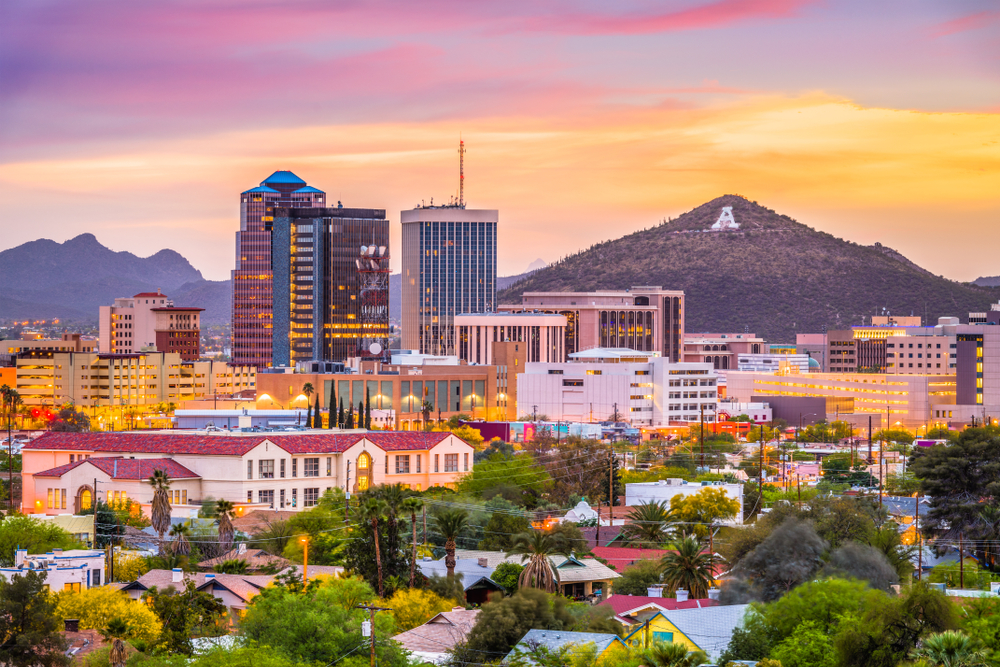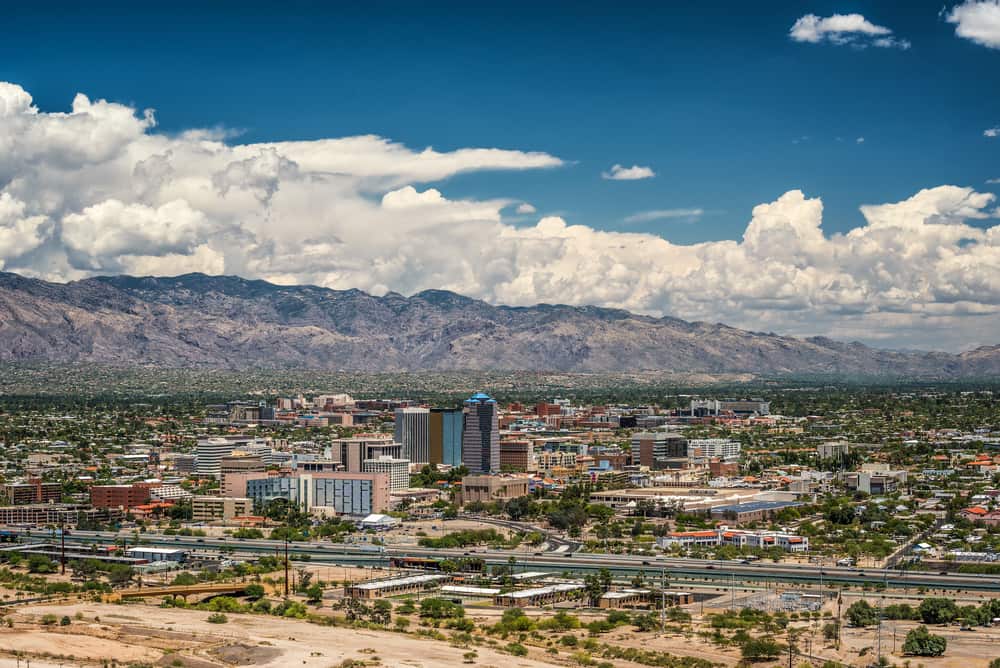
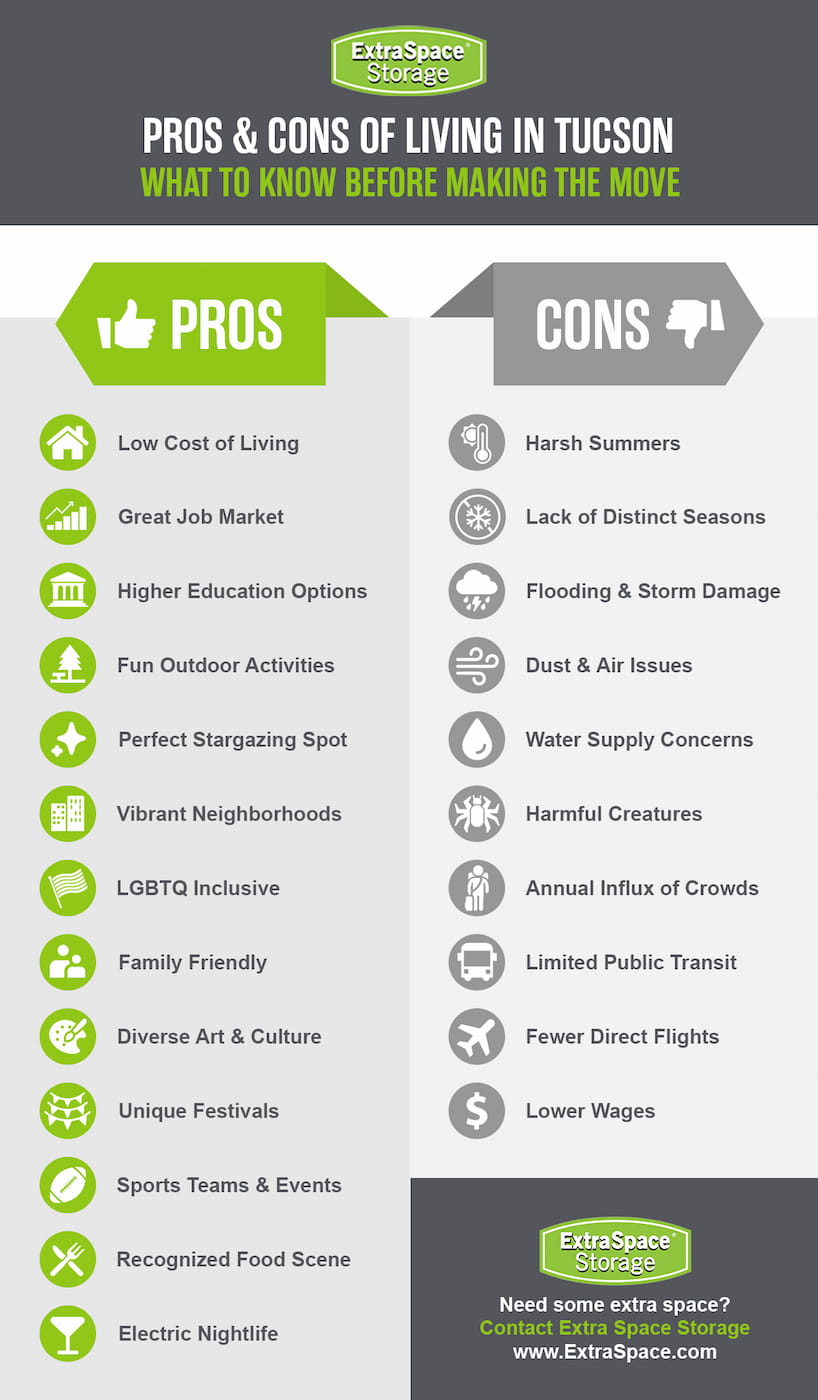
Tucson is a great place to live for those seeking an affordable Southwestern city with a vibrant cultural scene and plenty of outdoor adventure. Residents love T-Town’s tight-knit neighborhoods and Sonoran Desert activities, though the intense heat and lower-than-average wages are common complaints. If you’re considering making the move, check out these pros and cons of living in Tucson!
Quick Facts About Tucson
| Population | 564,632 |
| Average Home Price | $515,550 |
| Average Monthly Rent | $1,535 |
| Average Commute Time | 22 minutes |
| Average Days of Sunshine | 286 |
Statistics from AreaVibes, Council for Community and Economic Research (C2ER), & Best Places
Pros of Living in Tucson
There are many benefits of living in Tucson, including incredible restaurants, fun activities for all ages, and tons of outdoor recreation. Read these pros of living in Tucson!
Pro: Tucson’s Low Cost of Living
Tucson’s cost of living is nearly on par with the national average and well below nearby Arizona cities like Phoenix and Scottsdale, making it a relatively affordable option for residents of all ages. Healthcare offers the biggest savings, with costs running nearly 10% below the national average. The housing market also offers notable savings, with the average home price in Tucson sitting about 3% below the national average. Plus, Arizona’s property taxes are some of the lowest in the country—allowing Tucson homeowners to keep more money in their pockets.
Pro: Great Job Market
With an unemployment rate of 4.8%, which is below the national average, Tucson is an ideal destination for those looking to start or grow their career. The University of Arizona offers plenty of job opportunities in higher education for both recent college graduates and seasoned professionals. There are also several large companies with a presence in the Tucson area—including IBM, Texas Instruments, Honeywell Aerospace, Roche Tissue Diagnostics, and Intuit Inc.—providing great options for those seeking work in other industries. Plus, Tucson is one of the best cities for remote work and an ideal place for startups and small businesses, with business assistance resources like Startup Tucson and the University of Arizona Center for Innovation available to help them thrive.
Pro: Plenty of Higher Education Options
The Tucson area is home to several higher education institutions, so you’ll have no trouble finding the right school for you. These are colleges and universities in Tucson where you can obtain a high-quality education:
- University of Arizona, one of the top colleges in Arizona, offering undergraduate & graduate programs in fields ranging from accounting to animal science
- Pima Community College, an affordable two-year school with programs in business, education, carpentry, & more
- Carrington College, a private college where you can prepare for careers in a variety of medical fields
- Arizona College of Nursing – Tucson, a private institution offering hands-on nursing training
Pro: Fun Outdoor Activities in Tucson
Tucson’s year-round sunny weather and unique location amidst both mountains and the Sonoran Desert provides the ideal setting for outdoor enthusiasts. The city is also a fantastic place for dog owners, with no shortage of pet-friendly trails, parks, and open spaces. Here are some of the best outdoor activities in Tucson and its surrounding areas:
- Saguaro National Park for hiking, camping, & seeing the nation’s largest species of cacti
- Arizona-Sonora Desert Museum for desert gardens, wildlife exhibits, & hands-on learning experiences
- Catalina State Park for hiking, biking, & horseback riding along scenic mountain trails
- Ventana Canyon Club & Lodge for two 18-hole golf courses set against the backdrop of the Catalina Mountains
- Sabino Canyon for stunning desert views, wildlife spotting, & scenic outdoor exploration
- Tucson Botanical Gardens for seasonal events, plant exhibits, & gardening inspiration
- Amphitheater Pool & El Pueblo Pool for swimming & cooling off during Tucson’s hot summers
Pro: The Perfect Spot for Stargazing
Thanks to Tucson’s desert location, high elevation, and generally dry, cloudless skies, it’s one of the best places in the country for stargazing. With minimal light pollution—especially if you’re willing to travel a little outside the city—you can catch clear views of constellations, meteor showers, and even the Milky Way on the right night. These are some of the best places near Tucson for stargazing:
- Empire Ranch for wide-open skies with minimal light pollution
- Coronado National Forest for remote mountain areas perfect for dark sky viewing
- Douglas Spring Trailhead for a quiet desert spot with clear night skies
- Mount Lemmon & Catalina Highway for higher elevation with expansive views above the city lights
- Kitt Peak National Observatory for a premier astronomy site with public night observing programs & powerful telescopes
Pro: Vibrant Tucson Neighborhoods
Whether you’re looking for a family-friendly neighborhood to settle down in or an exciting area for young professionals, The Old Pueblo appeals to residents in all different stages of life thanks to its diverse selection of neighborhoods. Here are a few popular options to consider:
- Sam Hughes for college students attending nearby schools like the University of Arizona
- Dunbar Spring for families & young adults seeking a walkable area near downtown
- Catalina Foothills for families & retirees looking for a Tucson suburb with top-rated schools & easy access to outdoor recreation
- Armory Park for history buffs seeking antique homes & nearby historic landmarks
Pro: Tucson Supports the LGBTQ Community
With an “All-Star City” score from LGBTQ advocacy organization Human Rights Campaign’s 2025 survey, Tucson is a top destination for LGBTQ individuals and allies. Tuc-Town is also home to several great LGBTQ organizations. Here are some opportunities to get involved:
- Southern Arizona Senior Pride responds to the needs of 55+ LGBTQ citizens and their younger allies.
- Tucson LGBT Chamber of Commerce helps individuals find LGBTQ-friendly jobs or business opportunities in Tucson.
- Tucson Interfaith HIV/AIDS Network supports Tucson residents with HIV or AIDS, including those in the LGBTQ community.
- Tucson’s Commission on LGBTQ Issues works to promote the welfare of the community at the local level.
Pro: The Old Pueblo Is Family-Friendly
From trampoline parks to live theater performances, there’s no shortage of family-friendly things to do in Tucson. For fun with your little ones, check out these family activities in Tucson:
- Children’s Museum Tucson for hands-on exhibits, interactive programs, & sensory-friendly experiences for kids
- Jumping Cholla Trampoline Park for active fun, open jump sessions, & summer camps
- UA’s Flandrau Science Center & Planetarium for immersive exhibits, space shows, & STEM learning
- The Gaslight Theatre for family-friendly musical comedies & live stage performances
- Reid Park Zoo for wildlife encounters, a carousel, & a zoo railway ride
- Pima Air & Space Museum for exploring aircraft, aerospace history, & interactive exhibits
Pro: Diverse Displays of Tucson Art & Culture
Reflecting the city’s diversity, Tucson’s art and cultural scene ranges from displays of Mexican and Native American art to lively theatre performances and more. Explore these events, attractions, and performance spaces to experience Tucson culture:
- All Souls Procession for elaborate floats, unique cultural performances, & a meaningful tribute to loved ones
- DeGrazia Gallery in the Sun for Southwestern & regional art with rotating exhibits
- Tucson Museum of Art for Indigenous art collections, rotating exhibits, & community events like First Thursday
- Mission San Xavier del Bac for historic architecture, intricate artwork, & deep cultural significance
- Arizona Theatre Company for professional productions & a vibrant theatre scene
- The Rogue Theatre for classic & modern plays in an intimate black-box setting
Pro: Unique Tucson Festivals
Tucson’s festival scene is as diverse as the city itself, with events celebrating everything from literary arts to local cuisine. Here are some of the most popular events in Tucson:
- Tucson Meet Yourself Festival for Southern Arizona traditions, live music, dance, & local food vendors
- Tucson Festival of Books for author panels, book signings, & literary events
- Agave Heritage Festival for cultural exhibits, agave tastings, & hands-on planting experiences
- Tucson Gem & Mineral Show for stunning minerals, fossils, & one-of-a-kind jewelry
- Tucson Folk Festival for folk music from local, regional, & national performers, plus a songwriting competition
- Tucson Jazz Festival for world-class jazz performances in Downtown Tucson
Pro: Variety of Sports Teams & Events
If you love sports, life in Tucson provides opportunities to enjoy them year-round. From hockey to football, here are sports teams in Tucson to cheer on and sporting events to attend:
- Tucson Sugar Skulls (IFL) & Tucson Roadrunners (AHL) at the Tucson Convention Center Arena
- FC Tucson‘s men’s (USL2), women’s (WPSL), & academy teams at Kino North Stadium
- Cologuard Classic, a PGA TOUR Champions event & fundraiser to promote colon cancer awareness & local youth sports
- Arizona Wildcats (NCAA D-I), with basketball at McKale Center, football (FBS) at Casino Del Sol Stadium, & more
- The Arizona Bowl, a national bowl game that takes place at Casino Del Sol Stadium & supports local businesses in the Tucson community
Pro: Nationally Recognized Food Scene
Tucson is a foodie’s paradise! In fact, Tucson is one of only two UNESCO Cities of Gastronomy in the U.S., which means you’ll never be without great options for places to eat. These are some Tucson restaurants to try out:
- JoJo’s Restaurant for creative brunch & globally inspired dishes
- Agustin Kitchen for fresh seafood & upscale American favorites made with French techniques
- The Blacktop Grill for casual comfort food & street food classics like hot dogs & Mexican street corn
- El Torero for shareable Mexican plates & flavorful bar bites
- The Parish for Southern-inspired cuisine & Creole-style flavors
- Gourmet Girls for gluten-free baked goods & desserts like cakes, sweet breads, & cookies
- Dante’s Fire for late-night food & cocktails
Pro: Tucson’s Nightlife Is Electric
Tucson has a wide range of bars, clubs, breweries, & other entertainment venues for those seeking a fun night out on the town! Check out these Tucson nighttime activities:
- Sky Bar Tucson for stargazing, craft cocktails, & a unique outdoor nightlife experience
- The Shelter Cocktail Lounge for retro vibes, classic martinis, & pinball machines
- Rialto Theatre for live music from rising artists
- Unscrewed Theater for improv comedy shows, classes, & interactive entertainment
- Playground Bar & Lounge for rooftop drinks & dancing in a lively downtown atmosphere
- Crooked Tooth Brewing Co. for local craft beers in a relaxed rustic brewery setting
Get Everything You Need For An Easier Move to Tucson
Cons of Living in Tucson
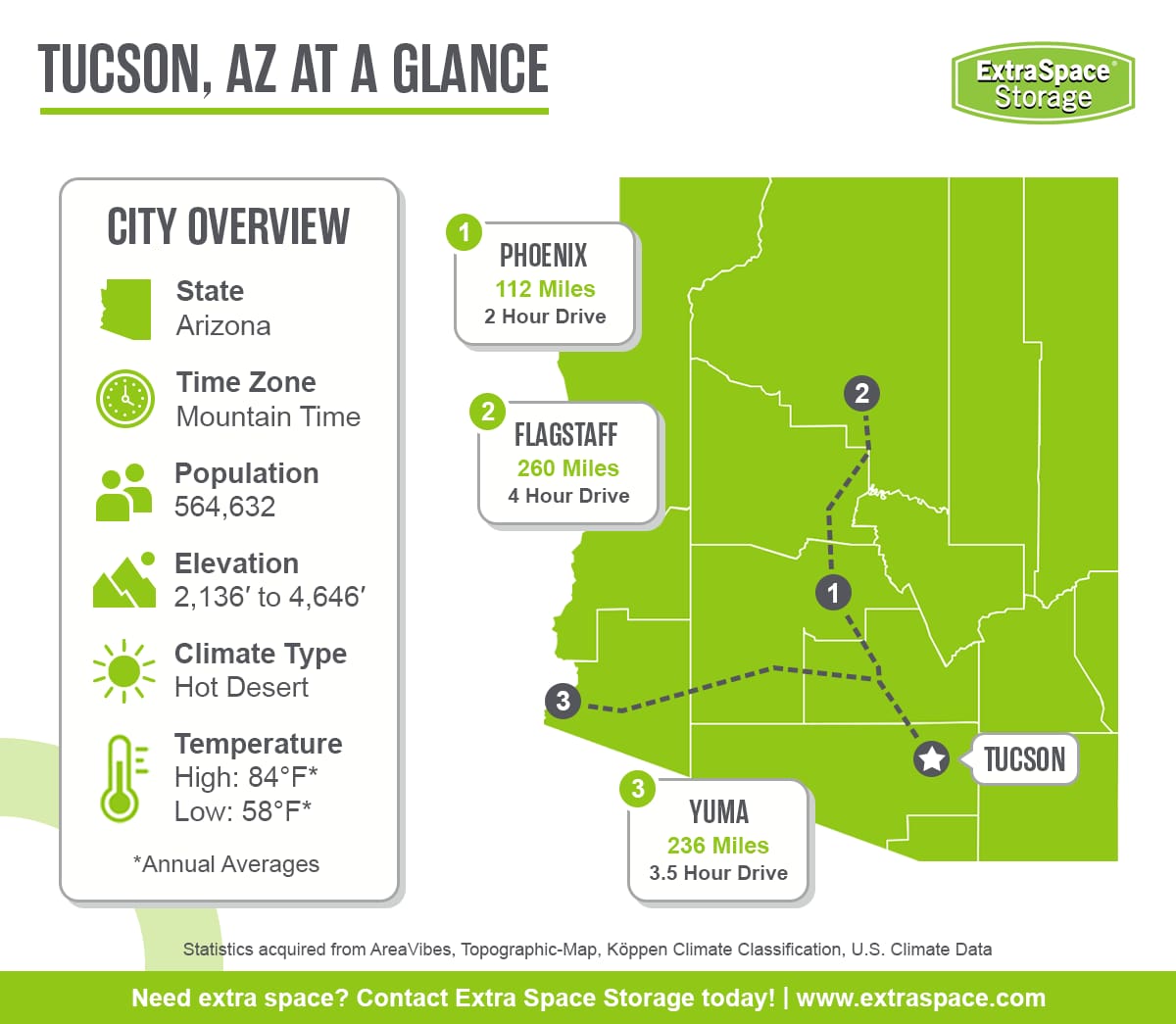
Potential disadvantages of living in Tucson include limited transit, harmful pests, and hot summers. Learn more about the cons of moving to Tucson below.
Con: Harsh Tucson Summers
Summers in Tucson typically bring extreme heat, with an average daily high temperature of around 99 degrees. While the dry climate may feel more tolerable than humid heat, temperatures can still limit outdoor activities during the day, pushing many residents to plan outings in the early morning or evening. The intense sun can also lead to higher energy bills from air conditioning. However, one upside to Tucson’s hot sunshine is that it makes solar energy a practical way to help offset cooling costs. To stay cool in the heat, remember to hydrate, plan heat-safe activities, and wear loose, light-colored clothing.
Con: Lack of Four Distinct Seasons
If you enjoy the traditional rhythm of four distinct seasons, like colorful fall foliage or snowy winter days, you may find Tucson’s climate a bit repetitive. The city experiences long, hot summers and mild winters, so seasonal changes are more subtle than in many other parts of the country. While the surrounding Sonoran Desert has its own beauty, Tucson lacks the lush greenery many people expect from other U.S. cities, with a landscape that is brown, dry, and sparsely vegetated for most of the year. That said, Tucson’s winters are comfortable and generally snow-free, with average daily lows around 44 degrees and rarely dipping below 33 degrees—making it an appealing place for those who prefer consistently warm weather.
Con: Monsoon Season Flooding & Storm Damage
Monsoon season in Tucson—typically from June to September—brings intense thunderstorms, strong winds, and sudden downpours that can lead to flash flooding in low-lying areas due to the desert’s slow-absorbing soil. These storms may also cause power outages, downed trees, and travel disruptions, making it important for residents to stay alert and plan accordingly. Check out Tucson’s National Weather Service to track the severity of storms and limit travel during these times as much as possible. If you’re caught on the road in monsoon season during heavy rains, reduce your speed and avoid areas with flooding. While the weather can be unpredictable, the seasonal rains offer a refreshing break from the summer heat, providing opportunities to enjoy cooler indoor activities like visiting local museums or catching a movie during stormy afternoons.
Con: Dust Storms & Air Quality Issues
Tucson also experiences haboobs (dust storms), especially during summer monsoon season. However, being aware of this can help you plan properly and mitigate potential harm from these weather events. These storms can dramatically reduce visibility, disrupt travel, and worsen air quality by blowing large amounts of desert dust into the atmosphere. This wind-driven dust can trigger respiratory issues for residents with asthma or allergies. If you’re caught out on the road during a dust storm, find a safe place to pull off the road, turn off all lights (including your hazards), and stay put until it’s safe to drive again.
Con: Water Supply Concerns
Tucson faces ongoing water supply challenges tied to drought conditions and shortages along the Colorado River, and PFAS (also known as “forever chemicals”) have been detected in parts of the local groundwater supply. To address these concerns, the city has taken several steps to manage its water resources more sustainably. Tucson relies heavily on aquifer storage and recovery programs that store imported water underground for future use, helping strengthen long-term supply. Tucson Water also encourages conservation through rebate programs that help residents save money on water-efficient appliances and landscaping upgrades. Additionally, the city operates a reclaimed water system that treats and recycles wastewater for irrigation at parks, golf courses, and other non-drinking uses—reducing overall demand on potable water sources.
Con: Harmful Creatures
The City of Tucson is home to several venomous creatures, like black widows, scorpions, Gila monsters, and rattlesnakes. Reptiles are typically found in outdoor recreation areas, like hiking trails and state parks. When you’re in these spaces, make sure to wear protective clothing and stay on trails—and if you do experience a venomous bite or sting, remain calm and seek medical attention immediately.
While scorpions and spiders can be encountered on the trails, you may also find them in your yard or even your home, but you can take measures to help mitigate their presence in these areas. Pest control experts recommend keeping your yard free of clutter and sealing any gaps or cracks around your home. There are also pest control specialists like Tucson Pest Control and Rattlesnake Solutions Tucson around the city to help you get rid of these unwanted guests.
Con: Annual Influx of Crowds
Tucson’s mild winter climate is known to attract tourists, leading to large crowds in certain areas and increased traffic on the roads—which can make it a challenge for local residents to go about their daily routines. For this reason, residents may need to plan for longer commute times during peak tourist season. That said, Tucson tourism is a significant aspect of the local economy, particularly through revenue for restaurants, small businesses, and the hospitality industry.
Con: Tucson Public Transit Is Limited
With a low transit score, public transportation options in Tucson are relatively limited, and most residents depend on their cars to get around. That said, the city does still offer some options, including:
- Sun Tran, Tucson’s free-to-ride bus system
- Sun Link Streetcar, offering 23 stops across Downtown Tucson & the city’s entertainment districts
- Tugo Bike Share & the city’s bike-friendly paths—like the Rillito River Path & the scenic Tucson Loop
Con: Fewer Direct Flights Compared to Larger Cities
While Tucson has a convenient regional airport, it offers fewer direct flights than larger metropolitan areas. This can make travel less flexible and more time-consuming. Many trips out of the Tucson area require layovers through bigger hubs like Phoenix, Dallas, or even Denver, which can add to overall travel time and costs. Because of this, some Tucson residents may choose to drive about two hours to use the larger Phoenix airport for more flight options and lower fares.
Con: Lower-Than-Average Wages in Tucson
Workers in the Tucson metro area tend to earn less than the national average, with an average hourly wage of about $29.91 compared to $32.66 nationally. Tucson’s median household income also trails behind both Arizona and U.S. averages, which can make it more difficult for residents to keep up with rising living costs. The good news is that healthcare and housing costs still sit below the national average, so residents’ dollars stretch further in Tucson than in many other cities.
Should You Move to Tucson?
You should move to Tucson if you’re drawn to sunny weather, outdoor recreation, and a laid-back Southwestern lifestyle with a relatively affordable cost of living. That said, Tucson may not be the right fit for everyone—especially if you’re sensitive to extreme heat or rely heavily on public transportation. Before making the move, consider your budget, lifestyle, weather preferences, and transportation needs.
Tucson may be the right fit for you if…
- You prefer year-round sunshine and warm winters over cold, snowy weather.
- You love outdoor recreation like hiking, biking, and exploring desert landscapes.
- You’re looking for a city with a vibrant arts, food, and cultural scene.
- You want a more affordable cost of living compared to larger Southwest cities.
- You work in industries like education, aerospace, healthcare, or technology.
You may want to consider moving to another city if…
- You prefer cooler climates or four distinct seasons.
- You rely heavily on public transportation to get around.
- You’re uncomfortable living near desert wildlife like scorpions or snakes.
- You want a faster-paced lifestyle with big-city amenities.
- You prioritize a competitive job market with wages on par with the national average.
Tucson Compared to Nearby Cities
Wondering if Tucson is better than Phoenix, Albuquerque, or El Paso? For help deciding which location is best for you, compare Tucson with nearby cities below!
| Factor | Tucson, AZ | Phoenix, AZ | Albuquerque, NM | El Paso, TX |
| Average Rent Price | $1,535 | $1,815 | $1,600 | $1,156 |
| Average Home Price | $515,550 | $616,137 | $428,432 | $348,519 |
| Average Commute Time | 22 minutes | 25 minutes | 21 minutes | 23 minutes |
| Walk Score | 43/100 | 41/100 | 43/100 | 40/100 |
| Unemployment Rate | 4.8% | 3.8% | 3.7% | 4.0% |
| Major Industries | Aerospace, bioscience, manufacturing, education | Financial services, technology, manufacturing, healthcare | Digital media, aerospace, healthcare, renewable energy | Manufacturing, defense, emerging technology, international trade |
Statistics from Council for Community and Economic Research (C2ER), Best Places, Walk Score, & AreaVibes
Frequently Asked Questions About Moving to Tucson
Does Tucson have state income tax?
Tucson residents are subject to Arizona’s state income tax, which uses a flat rate structure—2.5% for individuals and 4.9% for corporations. There is no additional city income tax in Tucson.
Is Tucson safe?
Tucson has a higher crime rate than many cities, ranking safer than just 6% of Arizona cities and 7% of U.S. cities. However, crime rates vary significantly by neighborhood—areas like Armory Park, Sam Hughes, and Old Fort Lowell are among Tucson’s safest neighborhoods. As with any city, it’s a good idea to research specific areas before making a move.
Does Tucson get snow?
Snow in Tucson is rare, but not impossible. The city’s desert climate means winters are typically mild, and snowfall only occurs occasionally during colder storms. Some winters see no snow at all, and when it does fall, it usually melts quickly.
What state is Tucson in?
Tucson is located in southern Arizona, nestled in the Sonoran Desert about 68 miles north of the U.S.-Mexico border. It’s the second-largest city in Arizona after Phoenix—which is about a two-hour drive northwest.
Is Tucson a nice place to live?
Tucson is a great place to live, offering a unique mix of desert landscapes, outdoor recreation, and cultural attractions. The city boasts easy access to hiking, biking, and stargazing, plus a rich arts and food scene. While summers are hot and wages trail the national average, Tucson’s affordable housing, sunny weather, and laid-back pace of life make it an appealing choice for those seeking a balance of city amenities and outdoor adventure.
***
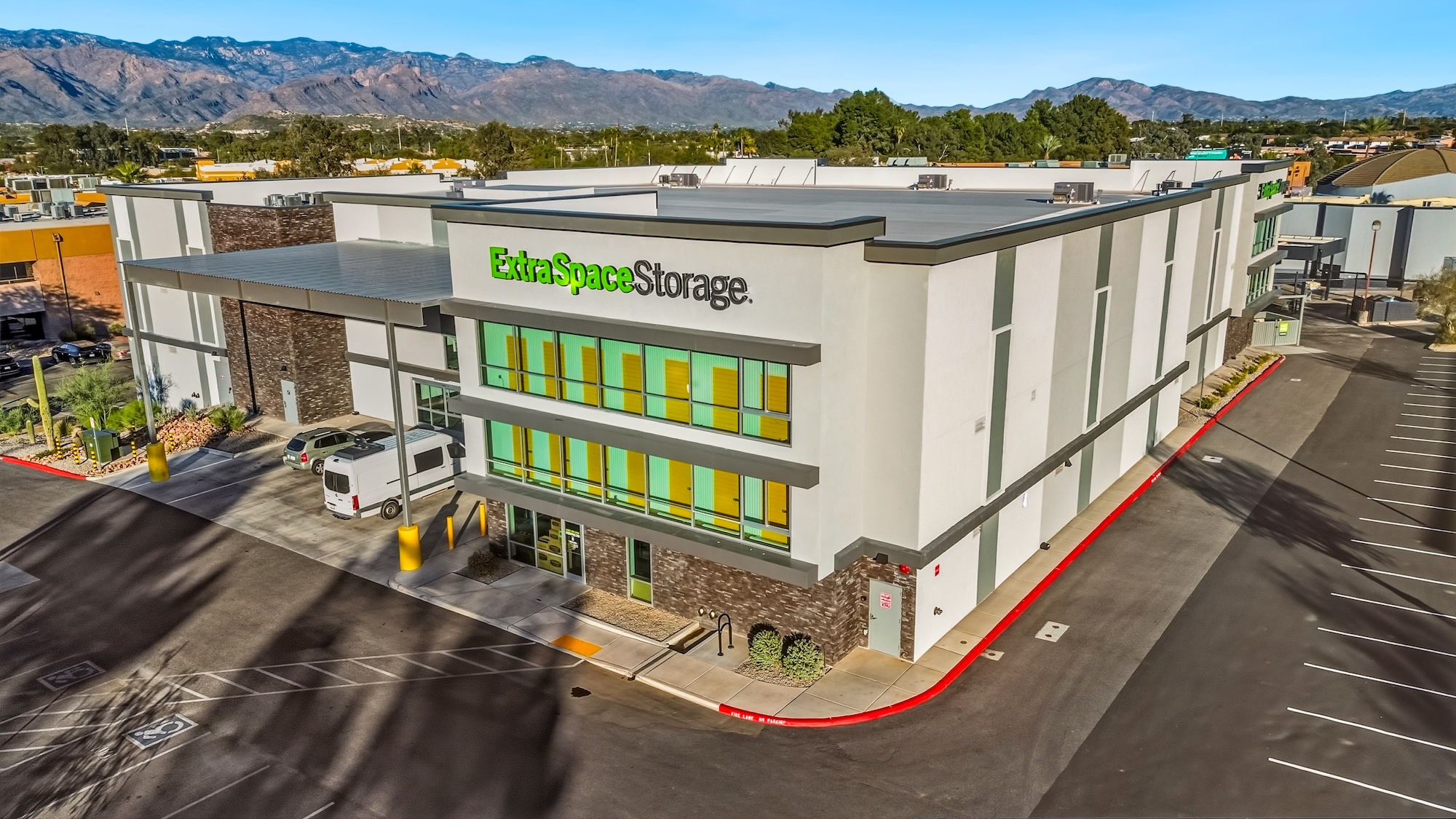
Moving to Tucson? Extra Space Storage provides self storage facilities in and around The Old Pueblo to make relocating easier. Find a Tucson storage facility near you!