Moving Guide
Local vs. Long-Distance Moves: Key Differences & What to Expect

Moving to a new home is an exciting yet challenging journey. One of the first questions to ask is whether your move is local or long-distance. Understanding local vs. long-distance moving can help you plan better, budget accurately, and reduce stress. Use this guide to learn which type is the right move for you.
Understanding Local vs. Long-Distance Moves
Understanding the differences between local and long-distance moves can help ensure a smooth transition. Below is a quick reference table summarizing the key factors that differentiate the two types of moves.
Factor | Local Move | Long-Distance Move |
Distance | Typically within 50-100 miles | Usually over 100 miles or across state lines |
Cost Structure | Charged hourly based on labor | Charged based on weight and distance traveled |
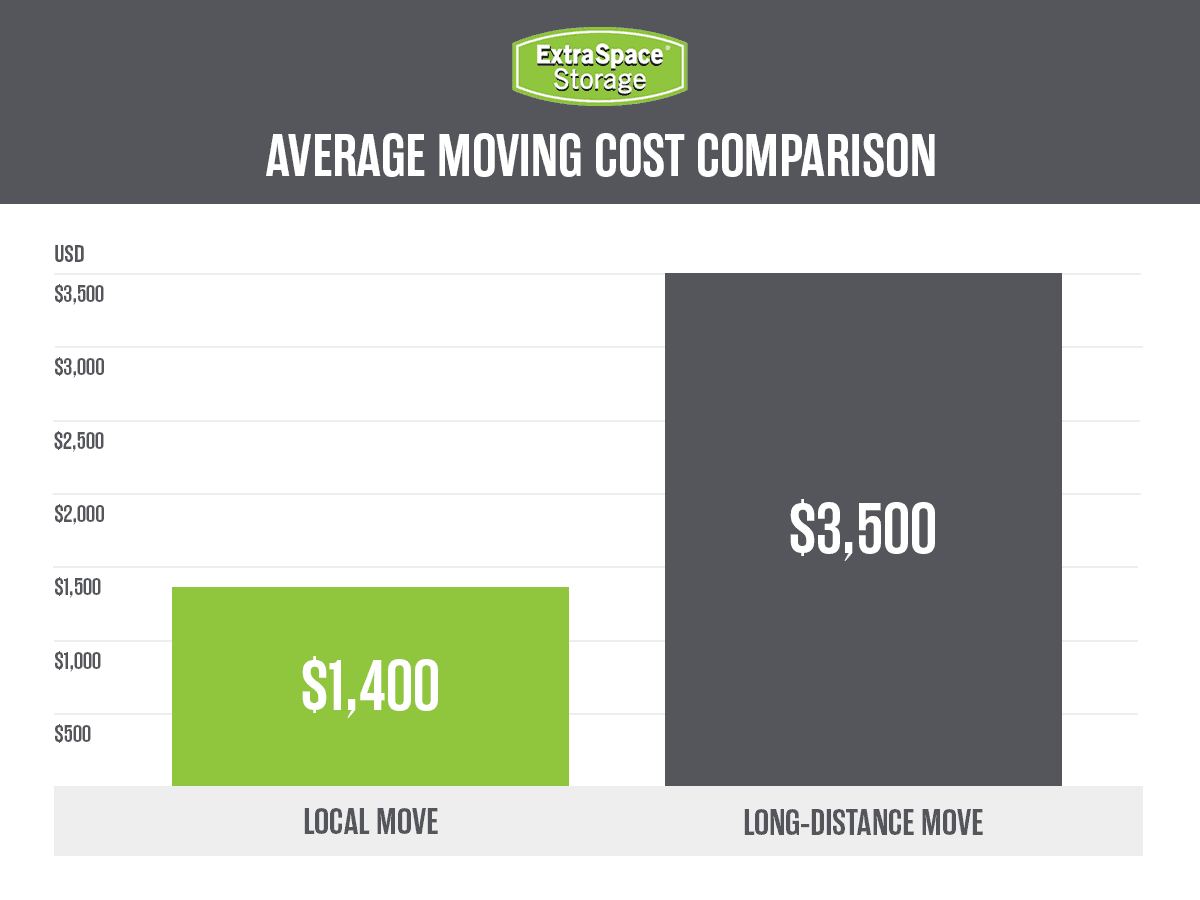
Typical Cost | ~$1,400 (for a 3-bedroom home) | ~$3,500 (for a 3-bedroom home) |
Duration | Usually completed in one day | Can take several days to weeks |
Regulations | Governed by state laws | Governed by federal FMCSA regulations |
Logistics | Simple, often one moving crew | Complex, may involve multiple crews and storage |
Scheduling | More flexible timing options | Requires coordination for long-haul travel |
Risk of Damage | Lower risk due to short transit | Higher risk due to longer transit and handling |
Storage Needs | Rarely needed | Often required for transitional storage |
Planning Required | Less complex, can be last-minute | Requires extensive planning and organization |
Whether you’re moving just across town or across the country, knowing these distinctions will help you plan effectively. Local moves tend to be faster and more flexible, while long-distance relocations require more coordination but can be managed smoothly with proper preparation.
No matter the distance, careful planning and a positive mindset can make your move a seamless and stress-free experience!
What Is Considered a Local Move?
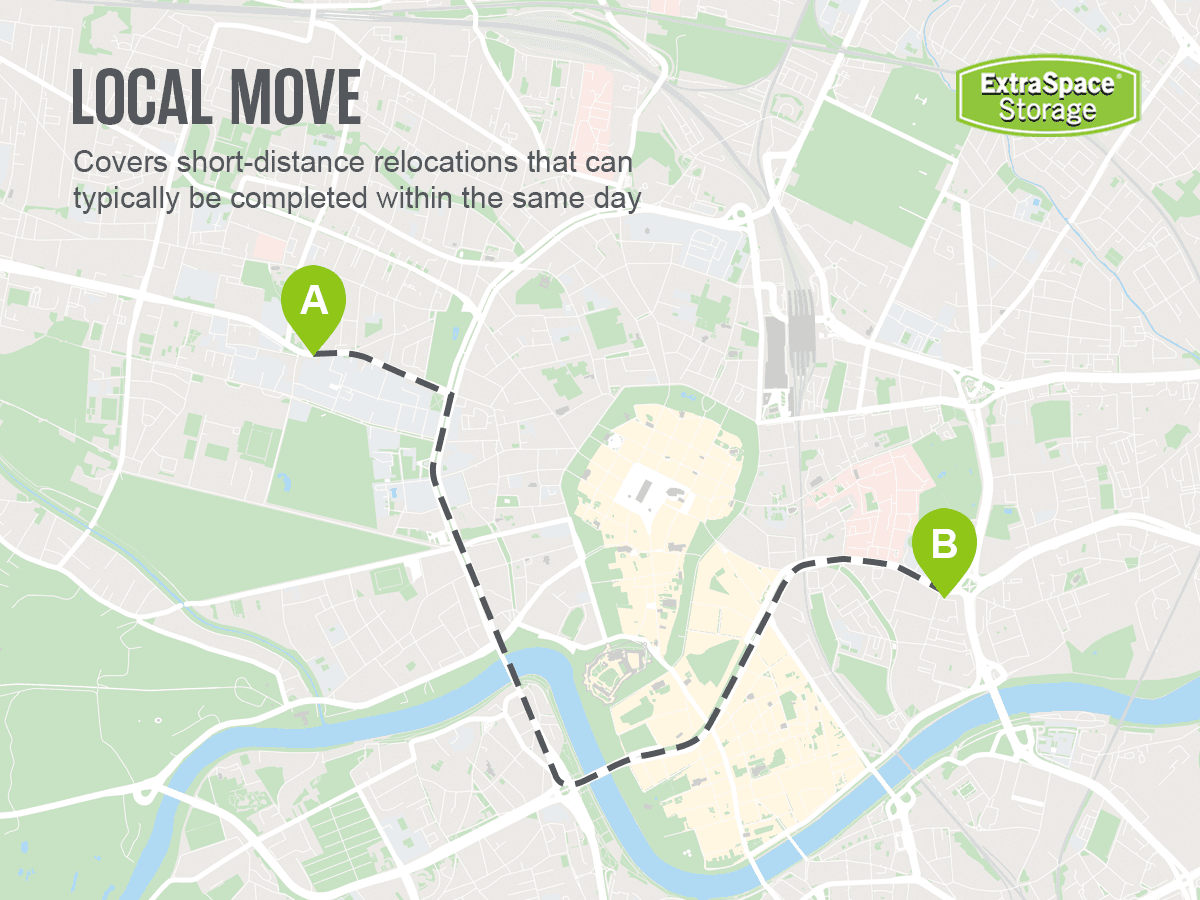
A local move—also known as an intrastate move—generally refers to a relocation over a relatively short distance, typically within the same city or region. In the moving industry, local moves typically stay within one state and are often defined by a specific mileage radius. Most moving companies consider anything within about a 50 to 100-mile radius of your current location to be a local move. The key idea is that a local move covers short-distance relocations that can typically be completed within the same day. If you’re moving across town or even a few towns over, you’ll likely be dealing with a local move.
What Is Considered a Long-Distance Move?
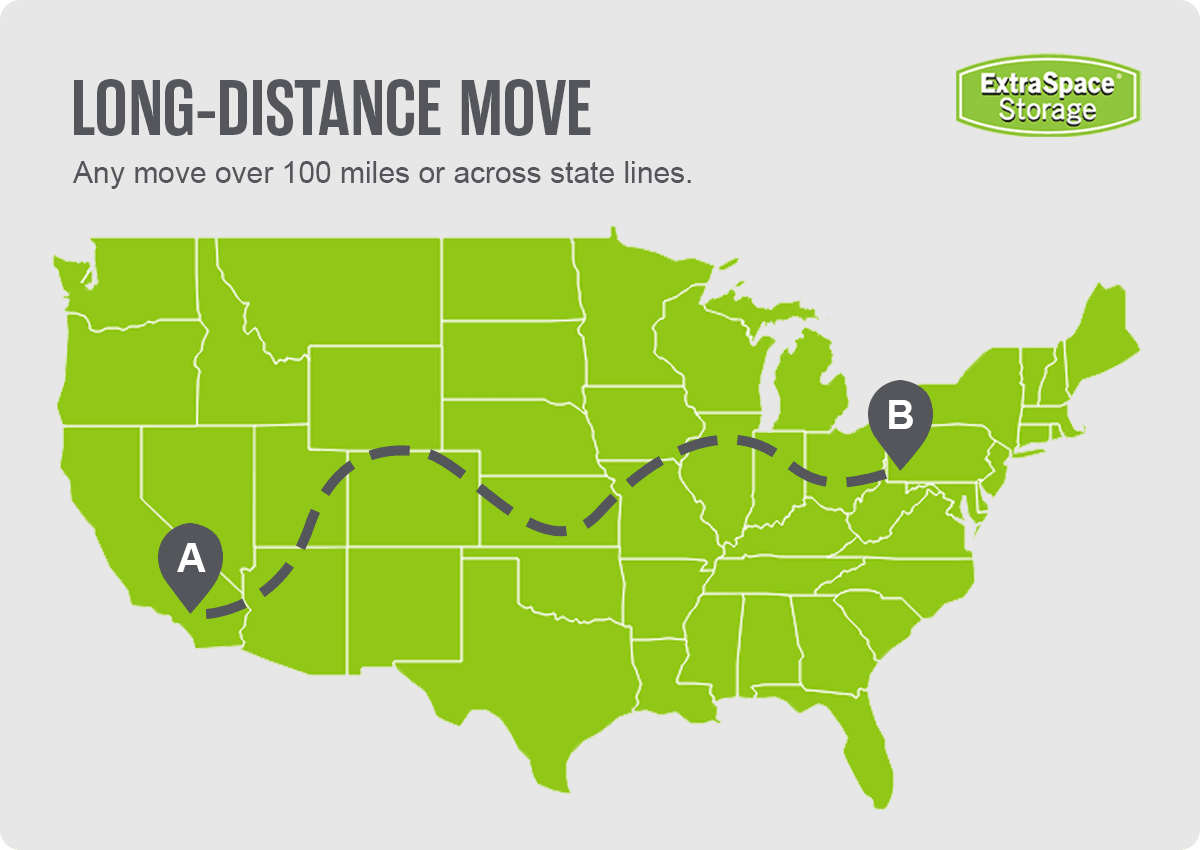
By contrast, a long-distance move involves a greater travel distance, often crossing state lines or spanning hundreds or thousands of miles. Generally, any move over about 100 miles or one that crosses into another state is considered long-distance. Moving from one state to another—or an interstate move—automatically falls under long-distance moving, even if the mileage isn’t huge. For example, relocating 30 miles from Kansas City, KS to Kansas City, MO would be an interstate move due to the state border crossing. Long-distance moves typically require more planning and coordination, because your belongings will be traveling a lot farther.
Cost Differences Between Local & Long-Distance Moves
Now that we’ve defined each type, let’s compare key factors that differ between local and long-distance moving. One of the biggest differences you’ll encounter is how much the move costs, and how those costs are calculated. Distance plays a major role in pricing, so local and long-distance moves are priced quite differently.
Understand Local Moves Pricing
For local moves, movers usually charge by the hour. You pay for the time it takes and the number of movers involved. For example, if a crew of three people spends five hours moving you locally, you’ll be billed for those labor hours and any travel fee for the truck’s drive time. Short distance also means less fuel and less wear on the truck, which keeps costs relatively lower. In fact, local moves generally cost less overall than long-distance moves because the crew isn’t spending long hours on the road.
Look at Long-Distance Pricing
Even with the best cross-country moving companies, the pricing for long-distance moves is typically based on the weight or volume of your shipment and the distance traveled. Instead of an hourly rate, you’ll likely get a flat quote that factors in how much stuff you have—often measured in pounds—and how many miles the move will cover. The heavier your belongings and the farther they go, the more it will cost. Additional services like professional packing, special crating for delicate items, or insurance coverage can add to the total as well.
Know the Typical Cost Range
The exact dollar amount will depend on your situation, but long-distance moves are of course more expensive on average. Long-distance moves might cost roughly double what a local move of the same size would, due to the extra distance and logistics involved. Keep in mind your moving labor calculations are just averages—your costs can vary based on home size, services, and season.
Understand the Difference
With local moving, time is the main factor—how long the crew works. With long distances, fuel, distance, and shipment weight drive the cost. Also, long-distance moves often entail bigger trucks, interstate tolls, potential overnight stops, etc., which all get factored into the price. Local moves usually charge hourly rates and have lower overall cost, long-distance moves factor weight and distance into rates and have a higher total cost. If you’re moving locally, cutting down the hours—by packing ahead, for example—can save money. Whereas for long moves, reducing the amount of belongings you ship will have a bigger impact on cost.
Moving Time Frame & Duration
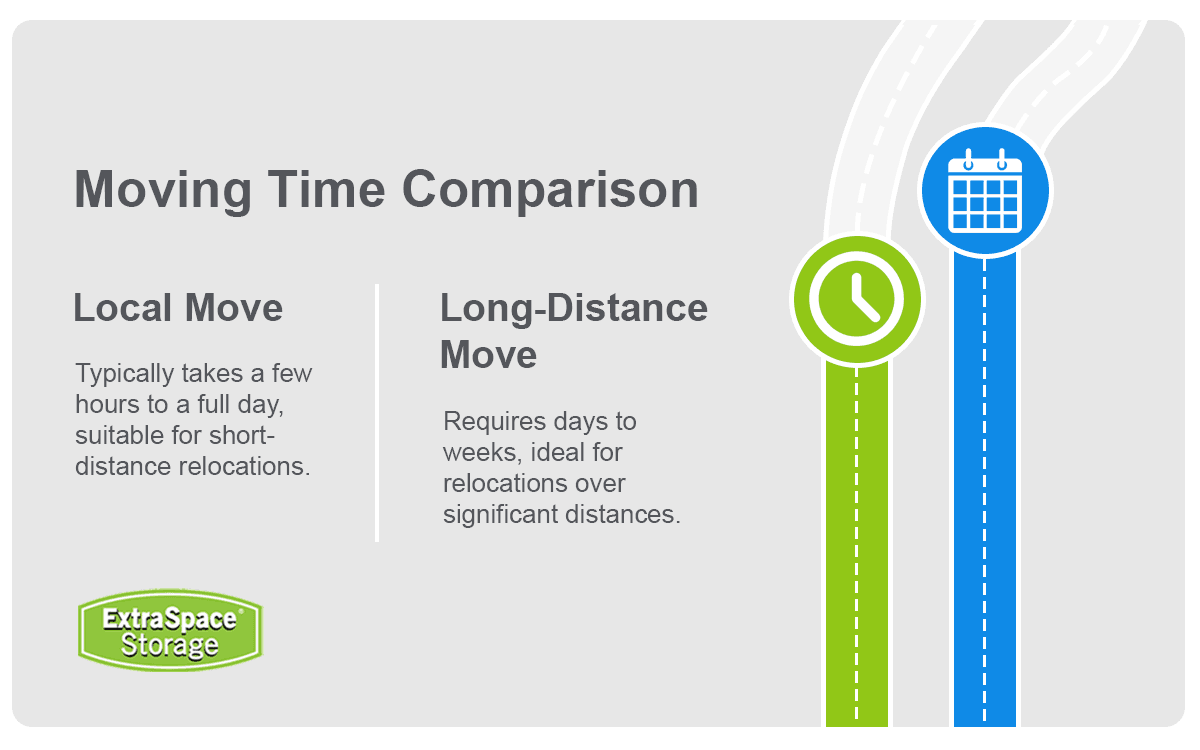
Time is another aspect where local and long-distance moves diverge. Simply put, local moves take less time—often just a single day—whereas long-distance moves can span several days or even weeks from pick-up to drop-off.
Local Move Timing
A typical local move can often be completed within a morning or afternoon. You might have the movers load up your furniture and boxes in the morning and unload everything at your new place by late afternoon or evening the same day. Even if you have a lot of stuff, the proximity means they can do it in one go—or maybe a couple of short trips back and forth. Because of this condensed timeline, you usually don’t have to worry about being without your belongings for long. If something goes wrong or you forgot an item, it’s easy enough to make a quick extra trip. Local moves also offer flexibility in scheduling—you might even be able to choose an exact start time that’s convenient, since the mover doesn’t have to account for multi-day travel.
Long-Distance Move Timing
With a long-distance move, expect a longer overall timeline. The loading of the truck might happen on one day, but then the truck has to travel hundreds or thousands of miles. Depending on the distance, it could be several days up to a couple of weeks before the moving truck arrives for delivery at your new home. For example, say you're a student moving back home or headed to college in a cross-country move from New York to California—this might involve 5-7 days of transit on the road. Movers also often give a delivery window rather than a single guaranteed date, to account for possible delays like traffic, weather, or truck issues. This means you’ll need to plan to be without the bulk of your belongings for a little while. Many people pack a suitcase of essentials to keep with them so they can live out of that until the moving truck shows up.
Scheduling Differences
The scheduling for long-distance moves is usually more complex. The movers might have to coordinate with other shipments or ensure compliance with driver hours-of-service regulations. In contrast, for a local move, the same crew that loads your things in the morning will drive straight to your new home and unload, all in one continuous process. Long-distance moves might even involve transfer points—for instance, your items could be loaded into a 18-wheeler trailer with others’ and then unloaded into a warehouse or onto a smaller truck near the destination before final delivery. All this adds time. In essence, local moves have quick turnarounds, and long-distance moves requires patience. Knowing this, if you’re moving long-distance, prepare for a bit of a wait. And if you’re moving locally, you can often expect to be sleeping in your new place surrounded by your furniture the very same night.
Logistics & Planning
The logistics of executing a local move versus a long-distance move can feel like two different worlds. Let’s break down how the planning and coordination typically differ.
Scale of the Move
Moving companies have access to different moving truck sizes for cost efficiency. Long-distance relocations often involve large moving trucks carrying your goods across state lines or even across the country. These big rigs are equipped to handle heavy loads over long hauls and may carry multiple customers’ shipments in one trailer. Local moves, on the other hand, might use smaller box trucks or vans that can easily navigate city streets and make multiple trips if needed. The sheer scale is different—a cross-country move might consolidate belongings from several families in one 18-wheeler to maximize efficiency, whereas a local move might dedicate one small truck just to you for a few hours.
Calculate your moving truck size
Crew & Coordination
For local moves, usually one team handles everything—the same movers load your items, drive to the new location, and unload. It’s a straightforward point-to-point operation. In fact, with a short distance move, you might even have the flexibility to make multiple small trips yourself or with the movers for special items.
In contrast, long-distance moves often require careful orchestration. The moving company might have one crew pack and load your belongings, a different driver transport them, and another crew unload at the destination. Sometimes an origin agent and a destination agent coordinate hand-off. As a result, communication and planning are critical to choosing the right moving company, so nothing gets lost in the shuffle.
Routing & Transport
Local movers usually take a direct route across town to your new home. Logistics are simple—maybe dealing with some traffic or parking, but it’s a one-day journey. Long-distance movers must plan the travel route across states, schedule fuel stops, comply with highway regulations, and possibly arrange overnight stops. If the move is international, it gets even more complex. All this routing has to be planned so that your belongings arrive within the promised window.
Contingencies
Because local moves are simpler, there are fewer logistical risks—if a truck breaks down, another can usually be sent quickly from the local depot. In a long-distance scenario, the truck traveling cross country might face unexpected delays like road closures, storms, or mechanical issues far from base. Professional long-distance movers are prepared for this, but as a customer you should be aware that the logistics have more moving parts. Some moving companies use tracking systems so they know where your shipment is en route, and they plan for contingencies.
DIY Differences
If you’re doing a DIY move, logistics differ greatly by distance. A DIY local move might be as easy as renting a small moving vehicle for a day and shuttling back and forth. A DIY long-distance move means driving a loaded rental truck for many hours a day, navigating highways, and perhaps towing a car behind the truck. That’s a big undertaking and needs significant planning, which is a major benefit for those wondering if they should hire cross-country movers.
Find Affordable Self Storage Near You
Extra Space Storage has over 4,000 locations across the U.S. with friendly customer service, advanced security features, and affordable month-to-month rates.
- Save up to 40% off online
Regulations & Legal Considerations
Another key difference between local and long-distance moves lies in the rules and regulations that govern them. Moving within one state versus across state lines can involve different laws and oversight, which in turn affects what your movers must do.
Intrastate Move Regulations
Local moves are regulated at the state level. Each state in the U.S. may have its own rules for moving companies operating within that state. For example, states often require moving companies to have a state license or registration, and they may mandate insurance coverage minimums or arbitration processes for disputes. However, compared to interstate moves, the regulations are generally less complex. There’s no single federal law that covers all local moves—it’s “localized” oversight. Typically, for a local move, your contract and protections will be defined by state consumer protection laws and whatever terms you agree on with the mover. For instance, a state might have a public utilities commission or transportation department that oversees moving services within the state and handles complaints. But as a customer, you might not notice much bureaucratic process—you just hire a reputable local mover and go through their standard contract.
Interstate Move Regulations
Long-distance interstate moves are regulated by the Federal Motor Carrier Safety Administration (FMCSA), an agency of the U.S. Department of Transportation. The FMCSA sets strict rules that licensed interstate moving companies must follow. These include providing you with certain documents like the “Your Rights and Responsibilities When You Move” booklet, offering specific types of liability coverage, and giving binding or non-binding estimates under defined conditions. All interstate movers must be registered with the U.S. DOT and have a USDOT number. The FMCSA rules are there to protect consumers from fraud and ensure fair practices across state lines. So when you do a long-distance move, you should expect a bit more paperwork.
State vs. Federal Oversight
The FMCSA does not regulate moves that don’t leave a state. Those are left to each state’s authorities. Some states have very rigorous rules, others less so. For example, one state’s motor carrier department might require movers to carry certain insurance and get permits for moves over a certain distance within the state. If you’re moving long-distance, make sure your moving company is properly licensed for interstate moves. If you’re moving locally, ensure they are licensed for intrastate moves in your state if required.
Impact of Regulations on You
Regulations can affect things like how disputes are handled and what happens if something is damaged. Interstate moves give you the option to purchase full value protection for your goods and the mover’s liability is defined by federal law. Local move contracts might have different terms so be sure to always read your contract. The good news is, if you stick with well-known licensed movers, they’ll guide you through the necessary paperwork whether local or long-distance. Just be aware that a long-distance mover might ask you to sign a few more forms and will be following federally mandated procedures, whereas a local mover’s process might be a bit more informal.
Challenges & Considerations for Each Type of Move
Every move has its hurdles, but the nature of those challenges can differ depending on distance. Consider these tips on handling common challenges for local vs. long-distance moving.
Packing & Damage Risk
No matter the distance, good packing is essential to protect your belongings. However, long-distance moves amplify this importance. Items will be in transit longer, potentially over bumpy roads or even transferred between trucks, increasing the chance of damage if not well packed. Local moves still require careful packing, but since the transit time is short, your boxes and furniture won’t endure as much jostling. You might even get away with transporting a few delicate items in your own car for safekeeping. Packing for long-distance moves, on the other hand, mean everything must be boxed up securely, padded, and strapped down. Consider using extra cushioning for fragile items, and consider investing in quality moving boxes and moving tools. If you hire professional packers for a long move, they often use specialized techniques knowing the load will travel far. With proper packing, your items can survive a journey of any length. Moving companies handle cross-country shipments of valuables like artwork and furniture all the time—it’s all about preparation.
Emotional & Personal Challenges
Moving stress is a natural feeling, no matter what kind of relocation you're dealing with. A local move, while stressful, usually doesn’t involve as big a life change. You might be staying in the same area, keeping your same job, schools, and friends. A long-distance move often means uprooting your life—new city, new community, perhaps a new culture or climate. This can be emotionally taxing—especially if you're moving with children. There’s the challenge of saying goodbye to familiar places and worrying about settling in somewhere new. It’s normal to feel anxious about a long-distance relocation. To stay optimistic, focus on the exciting fresh start you’re getting. Make a plan to say proper goodbyes and maybe even schedule visits back or set up video calls with loved ones to ease the transition. Remember, moving is a beginning as much as an end—a local move is a small step, and a long-distance move is a leap, but both lead to a new chapter in your life.
Fatigue & Physical Demands
Any move can be physically demanding if you’re doing heavy lifting or lots of trips. In a local move, you might be able to spread the work out over a couple of days (pack one day, move the next, then unpack) or enlist friends to help for a short sprint. With a long-distance move, especially if driving a truck yourself, you could be on the road for many hours. Fatigue from a multi-day drive is a real consideration, so plan for rest. If you’re driving a rental truck cross-country, schedule breaks, and don’t push yourself to drive while exhausted. It might even be worth shipping your car or using a professional driver. Stay hopeful by keeping your eyes on the prize—each mile brings you closer to your new home adventure.
Storage Needs
An unexpected cost of moving, timing doesn't always line up perfectly—especially during long-distance moves. Maybe you have to move out of your old place by a certain date, but your new home isn’t ready yet. In such cases, you might need temporary storage for your belongings. If you anticipate a gap, discuss storage options with your mover. Using short-term storage while moving can relieve a lot of stress and provide peace of mind.
Tips to Overcome Moving Challenges
Whether moving near or far, some strategies help across the board:
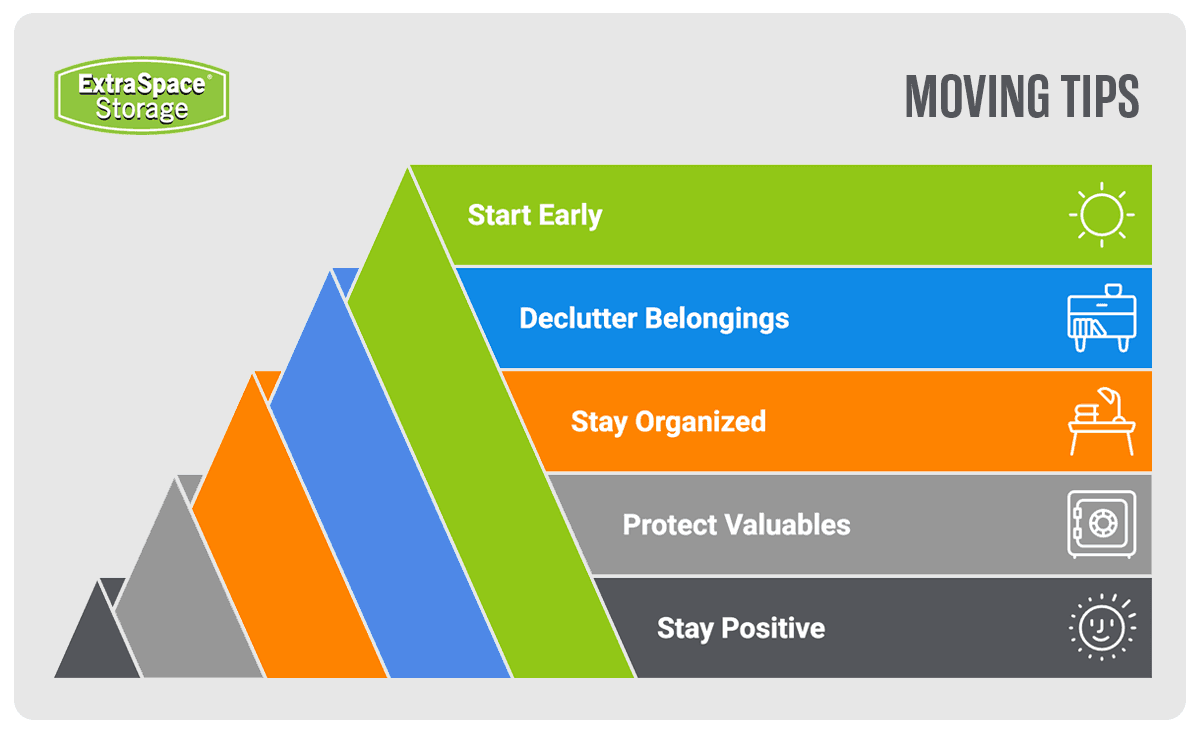
Start planning and packing early. The more time you give yourself, the less intense the last-minute rush will be.
Declutter your belongings before you pack—especially if it's for a last-minute move. A local move might tempt you to “just take everything since it’s not far,” but you’ll still benefit from offloading junk. For a long-distance move, cutting clutter can significantly reduce the weight (and cost) you’ll ship.
Stay organized with a moving day checklist. Long-distance moves require tracking more details (e.g., travel arrangements, delivery windows, etc.), so write it all down in a cross-country moving checklist.
Keep important documents, medications, and valuables with you, not in the moving truck. This is crucial for long distance since you won’t see the moving truck for days. But even in a local move, you don’t want to lose track of essentials in a sea of boxes.
Maintain a positive outlook. Turn up some music while packing, think about how you’ll set up your new space, and celebrate small milestones—finished packing the kitchen? Treat yourself to a nice takeout dinner! A positive mindset will carry you through the tough moments.
When to Choose Local Movers vs. Long-Distance Movers
Given all these differences, how do you decide what type of service you need? In many cases, the nature of your move is obvious from distance alone. But if you’re on the cusp or have special circumstances, here are some insights on when one approach might be preferable over the other.
Distance Determines the Category
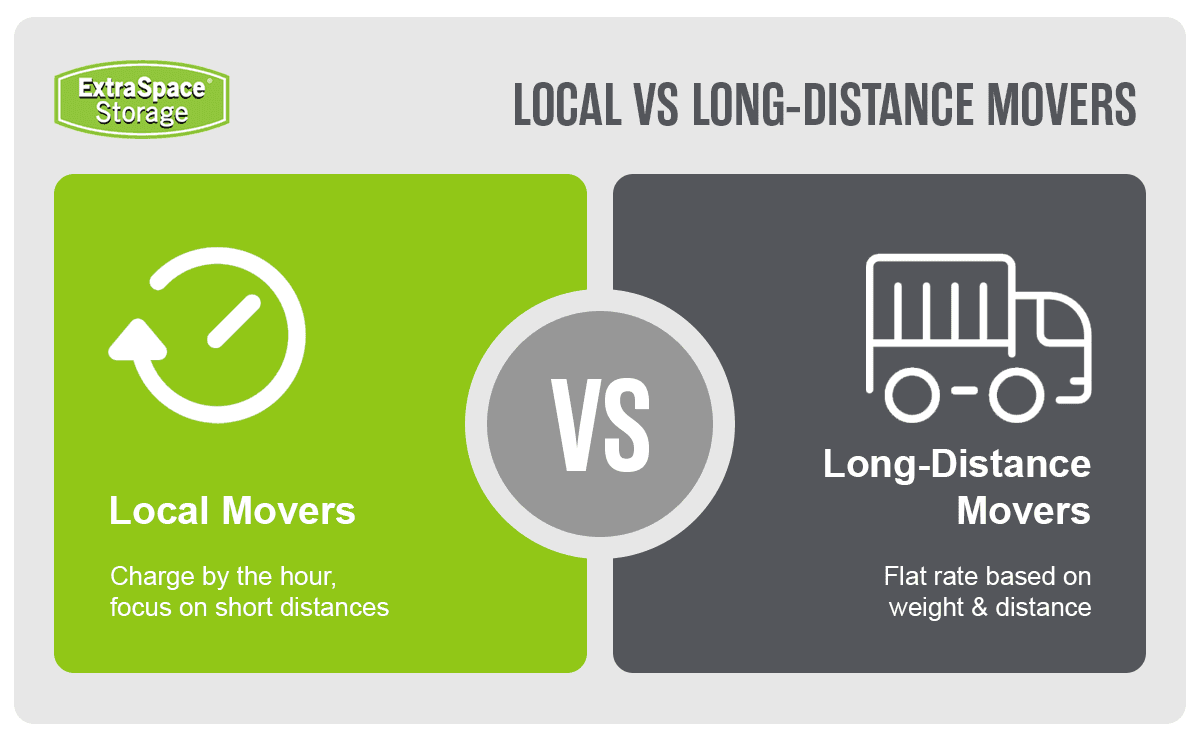
As a rule of thumb, if your new home is within the same general area, choose a local moving company. They specialize in short-distance moves and will charge you hourly. If your move is beyond that range or crosses into another state, you’ll need a long-distance mover. Even for an intrastate move that’s, say, 300 miles, many “local” companies would classify and price that as long distance.
Local Move Advantages
If you have any flexibility, staying within local-move territory can save money and hassle. Local movers can also be great if you only need help at one end of the move—many will do labor-only jobs by the hour. So, if you’re moving short distance and want to make your move budget-friendly, you might even do it yourself with a rented truck, using local labor for heavy lifting. That’s generally not feasible for cross-country moves, where a professional long-distance service is the safer bet.
Long-Distance Move Necessity
Anytime you face a long haul, especially crossing states, a long-distance moving service is usually preferable. They bring expertise in securing loads for long trips, navigating interstate logistics, and handling paperwork. The risks—damage, loss, delays—are higher with distance, so having pros who are experienced in those challenges pays off. If you’re moving for a job relocation, corporate moving packages will almost always use long-distance movers for anything over a certain mileage.
Verify With Your Mover
If you find that your move is right around that 100-mile mark or within the same state but far, it’s worth getting quotes from movers and seeing how they classify it. Some might offer a flat rate for, say, a 120-mile intrastate move, while others might still do it hourly but include a hefty travel fee. When one method is preferable, it often comes down to cost and convenience. Get a couple of quotes both from local-focused companies and larger van lines to compare and avoid unexpected moving costs. The larger van line might actually give a better rate for a 150-mile move than a small local company that has to send their truck that far and drive back empty.
Personal Comfort & Peace of Mind
Consider your own comfort too. If the idea of coordinating a complex move yourself is daunting, even a move that’s not extremely far might warrant hiring a well-established long-distance mover who handles everything door-to-door. On the flip side, if you feel confident and the move is just to the next town, you might prefer the personal touch of a local family-owned mover. It’s not strictly about distance—it’s about the service level you need. Local movers excel at quick, in-and-out jobs. Long-distance movers excel at endurance and logistics over the long haul.
***
Need storage before, during, or after your move? Extra Space Storage has storage facilities across the country. Find a storage unit near you!

Related Moving Resources

How to Choose the Right Moving Company
Whether you're on a budget, moving cross-country, or need full-service assistance, here's how to choose the right moving company for your relocation needs.

How Much Does it Cost to Move?
Learn the cost of moving, from hiring professional movers to cross-country moving costs and more, with our complete guide to moving costs.

Pros & Cons of Hiring a Moving Company
Preparing to move and considering hiring movers? Explore the pros and cons in this guide to determine whether you should hire movers or DIY your move.

Important Questions to Ask a Moving Company Before Hiring
Wondering what questions to ask moving companies? Review these helpful moving questions to avoid delays or damaged belongings for a smooth move.

How to Protect Your Furniture When Moving
Whether you're moving across the country or relocating to a nearby area, our tips to protecting your furniture can help you doing your move!
Author Profile
Quinn Johnson
Quinn Johnson is a moving expert and author for Extra Space Storage. He's moved over 15 times, including internationally, and helped countless others between their own homes. He's happy to lift some boxes for a friend as long as he's paid in pizza. As a writer and content creator for Extra Space Storage since 2019, Quinn shares helpful moving tips and info to alleviate the common stresses of moving.