Moving Tools
Important Questions to Ask a Moving Company Before Hiring

Moving to a new home is a big adventure—exciting, but often a bit overwhelming, too. One way to make the process easier is by hiring a moving company to handle the heavy lifting. But choosing the best movers near you can feel daunting. The good news is that by asking a few key questions, you can confidently find a reputable moving company that fits your needs. Taking the time to get these answers will help you avoid hidden fees, delays, or damaged belongings and ensure your move goes as smoothly as possible. Read on to learn the most helpful questions to ask when hiring professional movers!
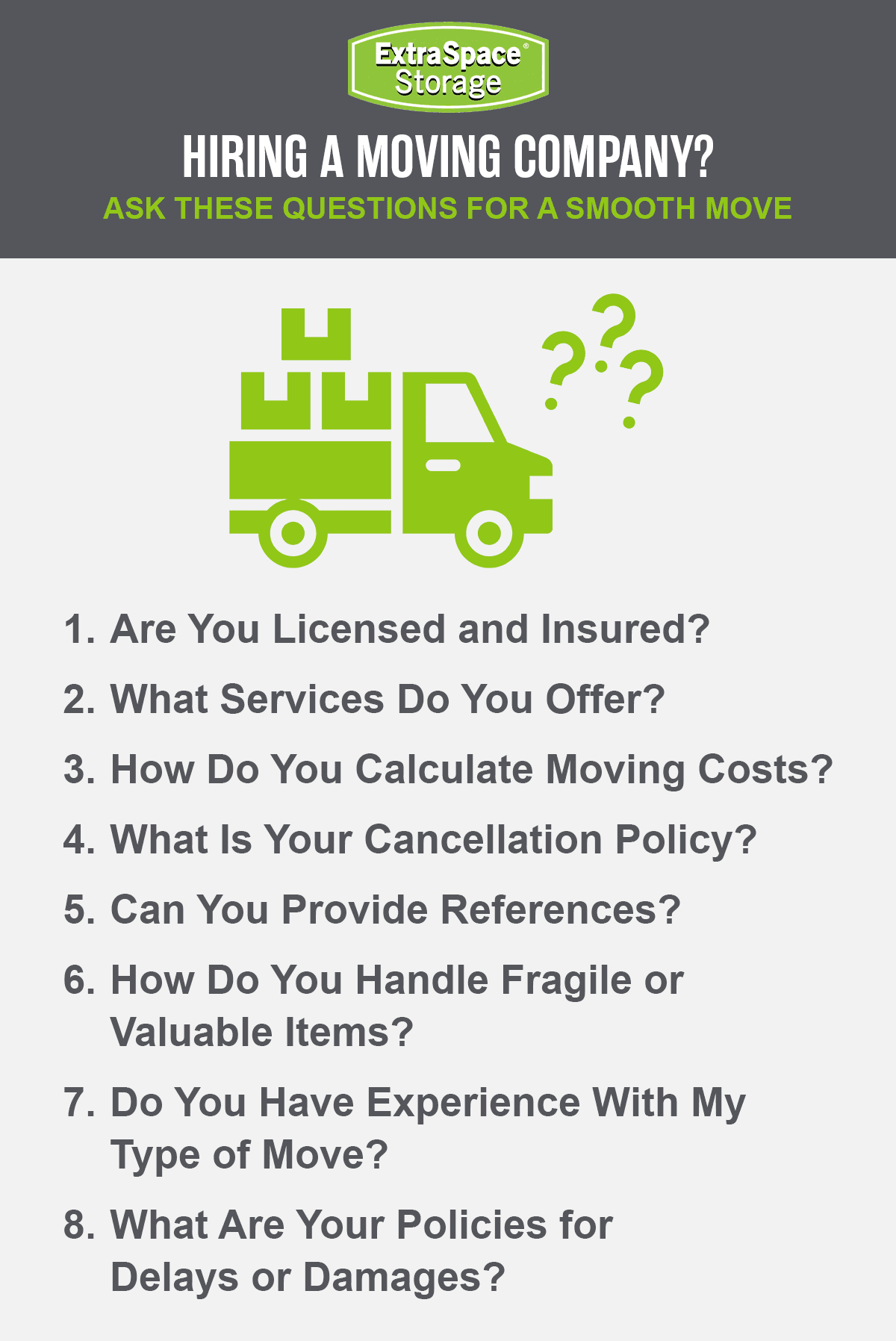
Do You Have a Moving Company License & Valid Insurance?
This should be one of the first questions you ask a moving company. Having a proper moving license and sufficient moving insurance are fundamental signs of a trustworthy company. Licensing means the company has met legal requirements to operate. For example, interstate movers in the U.S. should have a U.S. Department of Transportation (USDOT) number. Insurance is equally important: It protects your belongings in case of accidents or damage during the move. A legitimate mover will gladly provide proof of their license and proof of insurance upon request. Knowing your movers are licensed and insured gives you confidence that you’re dealing with professionals and that you won’t be stuck with the bill if something goes wrong. It also means if a mover is injured on the job or if an item is damaged, the company’s insurance should cover it—not you. Always verify these credentials for peace of mind before signing any agreement.
What Moving Services Do You Offer?
Not all moving companies are the same, so it’s important to understand what moving services a company provides. Most movers handle the basics like packing, loading the truck, transit, unloading, and even unpacking at your new home. Some companies go further, offering additional services such as:
Furniture disassembly & reassembly: Taking apart large furniture (e.g., beds, tables, etc.) for safe transport and putting it back together at your new place.
Packing supplies & crating: Providing boxes, bubble wrap, or even custom crating for fragile or odd-shaped items.
Temporary storage: Offering short-term or long-term storage solutions if your new home isn’t ready or you need to store items during the transition.
Specialty item handling: Capability to handle unique items like pianos, large appliances, or safes that may require special equipment.
It's easiest if one moving company provides all the services you need. For example, if you’re short on time, you might want full packing services, or if you have a gap between move-out and move-in dates, you may need storage. Clarifying what’s included (and what costs extra) helps ensure the company is a good fit for your specific needs. A supportive moving company will walk you through their offerings so you know exactly what you’re getting.
How Do You Calculate Cost of Moving?
Understanding how a moving company determines its prices is crucial for budgeting effectively and avoiding stress on moving day. Ask the moving company to explain their pricing model. Do they charge an hourly moving rate, or do they base costs on the weight or volume of your belongings and the distance of the move? Many local moves are priced by the hour, whereas long-distance moves might be calculated by weight and miles.
It’s also wise to ask if they will provide a written moving cost estimate. Reputable movers will typically come to your home (or do a virtual survey) to assess your move and then give you a detailed estimate in writing. Ensure you know whether the estimate is binding (a fixed price) or non-binding (an estimate that could change). A binding estimate guarantees the total cost won’t exceed the quoted price as long as your inventory and services stay the same. Always get this estimate in writing so you have documentation of what was agreed upon. A supportive moving company will gladly explain how they arrive at the price and won’t hide any fees.
Don’t forget to inquire about additional fees. Ask the company if there are any extra charges not included in the base quote. For instance, there might be fees for specific circumstances, such as:
Stairs or elevator carries: If movers have to carry items up or down many stairs, or if an elevator reservation is needed.
Long carry distances: A fee might be added if the truck can’t park close and movers must carry items a long way to your door.
Packing materials: Charges for boxes, tape, or shrink wrap that the movers provide—that you didn't prepare in advance.
Heavy or bulky items: Extra handling fees for items like pianos or oversized furniture might be added.
Fuel or travel surcharge: These charges are especially for long-distance moves to cover gasoline or driver time.
What Is Your Cancellation Policy?
Life can be unpredictable, and your moving plans might change. That’s why it’s important to ask about the moving company’s rescheduling policy upfront—plus, asking these questions in advance can save you from potential financial surprises later. Find out what happens if you need to cancel or delay your move. Will you lose your deposit, or are there fees or penalties for canceling? Do they require a certain amount of notice for cancellations or changes?
A flexible cancellation policy is a sign of an understanding, customer-friendly mover. For example, some companies allow you to reschedule within a certain window without extra charges, especially if you give plenty of notice. In contrast, others might keep a booking deposit or charge a fee if you cancel last-minute. Knowing this information beforehand lets you plan accordingly. They will clearly explain their terms and, when possible, work with you if you have to adjust your moving date. This kind of clarity and flexibility can be a lifesaver if plans change, and it reflects a supportive approach to customer service.

Find Affordable Self Storage Near You
Extra Space Storage has over 4,000 locations across the U.S. with friendly customer service, advanced security features, and affordable month-to-month rates.
- Save up to 40% off online
Can You Provide References or Reviews?
A moving company’s reputation is one of your best gauges of reliability—don’t hesitate to ask for references or reviews from past customers. A trustworthy mover should be happy to share testimonials from previous clients or point you to reviews on platforms like Google, Yelp, or the Better Business Bureau. In fact, checking these online reviews on your own is highly recommended as it gives you an unfiltered look at other customers’ experiences. Look for patterns in what people say. Were they satisfied with the company’s punctuality and professionalism? How did the company handle any issues or claims?
If a moving company hesitates to provide references or has no online presence, consider that a red flag. Most reputable movers will have plenty of positive feedback and will be proud of their service record. Speaking with someone who has used the movers before, or reading verified reviews that support the company's reliability and good customer care, can give you peace of mind while entrusting them with handling your belongings. Remember, a company that is genuinely supportive and quality-focused will have customers vouching for them.
How Do You Handle Fragile Boxes or Valuable Items?
If you have any fragile boxes or valuable items, make sure to discuss this with the moving company. Ask how they handle delicate belongings such as glassware, electronics, artwork, or antiques. A reliable mover will have experience and strategies for protecting these items—including using special packing materials, custom crating for high-value pieces, or extra padding and blankets for things like televisions and mirrors. If you own a particularly heavy or fragile item (like a grand piano or a large antique furniture piece), inquire whether the movers have specific experience and equipment for such items.
Specialty item handling often requires specific skills and tools. Reputable moving companies train their crews on how to wrap and secure fragile pieces and may use equipment like dollies with straps, piano boards, or climate-controlled trucks for sensitive items. Don’t be afraid to ask if they’ve moved similar high-value items before. Their answer will tell you a lot. Movers who are prepared for fragile items will answer confidently and explain the steps they take to keep those items safe. This question is crucial for your peace of mind, and you'll be able to relax knowing your precious belongings are in good hands during the move.
Do You Have Experience With Different Types of Moves?
Every move is a little different, so it’s smart to ask whether the company has relevant experience with your particular kind of move—they'll be able to give you examples of experience with past moves like yours and even sharing how they deal with special requirements. If you’re moving out of a city apartment, for example, there may be challenges like tight stairwells, freight elevators, or street parking rules. A company that regularly handles apartment moves will know how to navigate those narrow hallways and obtain any necessary parking permits or elevator reservations. On the other hand, if you’re planning a move across states, you’ll want movers who understand the logistics of interstate transport—including scheduling, weigh station stops, and delivery windows for cross-country moves. For a large home with many rooms of furniture, check that the moving company has enough crew and large trucks available to handle the volume in one go.
If they specialize only in small local moves and you have a five-bedroom house to relocate, or vice versa, it might not be the ideal match. The goal is to choose a mover who is well-equipped and experienced in the kind of move you need, so there are no unwelcome surprises. Their experience will help ensure things go smoothly, whether it’s maneuvering a couch down a high-rise apartment staircase or coordinating a cross-country delivery timeline. Knowing your movers have successfully handled similar situations before will make you feel more confident moving forward.
Do You Offer Damage Coverage or Compensation for Late Delivery?
Even with the best planning, sometimes things don’t go perfectly on moving day—that’s why you should ask about the company’s policies for delays or damages if something unexpected happens. Understanding their policy for damages will tell you how much care they take and how they support customers if something goes wrong. A quality moving company will answer frankly about their claims procedure and will strive to handle your belongings so carefully that you never have to use it. Plus, unforeseen delays such as bad weather, traffic jams, or truck breakdowns are not something you should expect, but can anticipate—so it's worth asking about moving delays and late delivery. Here are some things to consider with claims, coverage, and moving delays or late delivery.
Damage Claims & Coverage: Reputable movers should have a clear, written claims process for handling damage claims. This typically means they'll have you note any damage on the delivery paperwork and file a formal claim, after which they investigate and compensate you according to their insurance or valuation coverage. By law, basic liability coverage is often minimal (for example, only a small amount per pound of item weight)—but good movers also offer full value protection plans for an extra cost, which cover the full repair or replacement value of your items.
Moving Delays & Late Delivery: A supportive moving company will communicate openly and work hard to minimize any disruption if there’s a hold-up. Ask if they have contingency plans to keep your move on track. Will they promptly inform you if the schedule changes? Will they provide compensation if there is a significant delay? For example, if the delivery of your items is delayed a day, do they offer any compensation or alternative arrangements? Knowing this in advance helps manage your expectations and planning (such as when you can expect to be in your new home). It’s reassuring to hear that a mover has a plan B for unexpected delays and that they prioritize keeping you updated.
By discussing delays and damages policies, you’re making sure the mover takes responsibility and has a plan to address issues. This proactive approach on their part (and yours) means you can stay optimistic knowing that, if the unexpected occurs, you won’t be left in the dark.
Frequently Asked Questions About Paying Movers
When do you pay movers?
You typically pay the majority of your moving costs after the delivery. Just make sure everything is in your new place and not damaged first. A 10-20% deposit to secure your moving date is standard and expected.
What are some payment red flags?
If a mover is asking for only cash, this is a big red flag and you shouldn't work with them. 50% upfront charge demands and not accepting credit cards are more big red flags to avoid in movers.
***
Researching moving companies? Extra Space Storage has the moving resources to help you! Check out our Moving Cost Calculator and Moving Truck Size Calculator to help estimate your moving costs and finalize your budget!

Explore More Moving Tips

How to Move on a Budget
Moving doesn't have to be extremely expensive. Learn how to save money when planning your move by following these 12 budget-friendly moving tips.

Pros & Cons of Hiring a Moving Company
Preparing to move and considering hiring movers? Explore the pros and cons in this guide to determine whether you should hire movers or DIY your move.

Room-By-Room Packing Checklist
Make packing for your next move easy with our room-by-room checklist, which includes specific packing tips for each area of your home or apartment!

Moving Truck Size Comparison
Not sure what size moving truck you need? Use our moving truck size chart to rent the best dimensions for you!

Guide to Hiring Movers
Thinking of hiring professional movers? Using movers can make your relocation go more smoothly. Read our guide for hiring a moving company!
Author Profile
Quinn Johnson
Quinn Johnson is a moving expert and author for Extra Space Storage. He's moved over 15 times, including internationally, and helped countless others between their own homes. He's happy to lift some boxes for a friend as long as he's paid in pizza. As a writer and content creator for Extra Space Storage since 2019, Quinn shares helpful moving tips and info to alleviate the common stresses of moving.