Moving Guide
Moving Cross Country: Tips for an Affordable, Hassle-Free Move

A cross-country move doesn’t have to break the bank. While long-distance moving typically costs more than local relocations, the right strategy can help make it affordable. Whether you’re hiring professional movers or handling the move yourself, a little planning and creativity can go a long way. From DIY packing hacks to choosing the right time to move, here’s how to cut costs during your long-distance move.
Choose the Right Cross-Country Moving Option
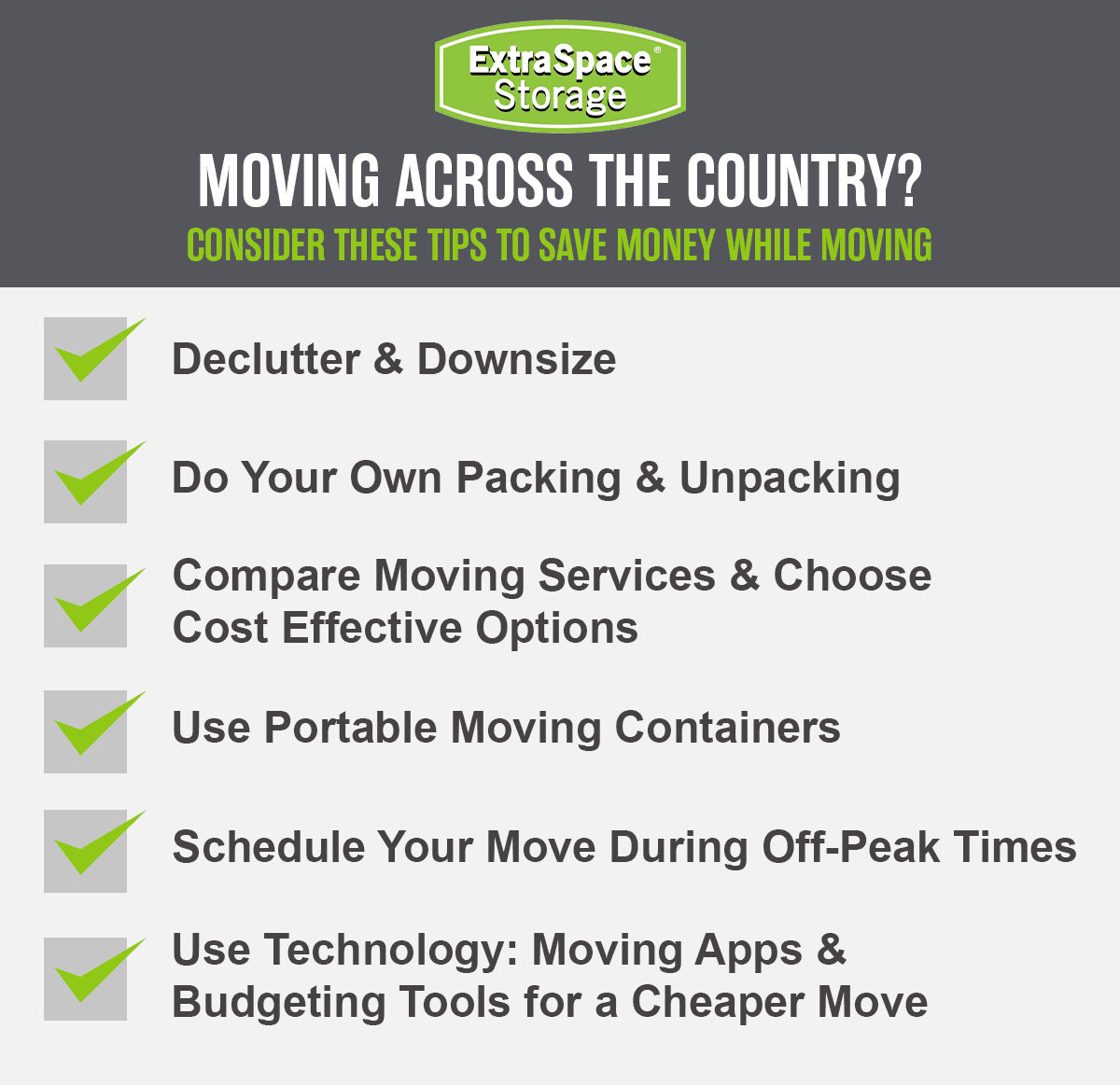
One of the biggest decisions in a long-distance move is how to transport your belongings—which can impact total moving costs. Take time to compare different moving options and find one that fits your budget and needs. DIY options like hauling a trailer or renting a truck tend to be the most affordable, but require more effort and planning. Portable moving containers offer a middle ground with flexible loading and no need to drive a large vehicle. For a hands-off approach, full-service movers take care of everything, though they come with a higher price tag.
Tips for Hiring Movers & Moving Services
Haul a trailer: While this is often the cheapest option, hauling a moving trailer often requires a vehicle with towing capacity and careful packing to protect your items.
Rent a moving truck: A DIY truck rental is typically ideal for larger moves, offering flexibility and space, but may cost more in gas and effort.
Use a portable container: If you want to avoid driving cross-country with your items, portable containers can be loaded on your own schedule and transported by the moving container company.
Hire professional movers: While usually the most stress-free option, hiring professional movers is usually more expensive. This may be ideal if you're moving last minute or unable to handle the physical demands of moving.
Get quotes early: It's best to compare pricing and services from at least three different companies, and ask about binding estimates and off-season discounts to help make sure you're getting the best deal.
Declutter & Downsize to Reduce Moving Costs
One of the easiest ways to save money on a cross-country move is to bring less with you. Since long-distance moving costs are often based on weight, volume, or container space, paring down your belongings can significantly reduce the price you’ll pay for transportation, supplies, and labor. Decluttering before you move also makes packing faster and unpacking easier—so it’s a win all around.
Tips for Downsizing Before a Move
Start early: Give yourself plenty of time to go through each room and decide what to keep, donate, sell, or toss.
Use the “one-year rule”: If you haven’t used something in the past year, it’s probably safe to let it go.
Sell valuable items: Listing gently-used furniture or electronics on sites like OfferUp, Facebook Marketplace, or Craigslist can help offset moving costs.
Donate what you don’t need: Drop off usable items at local donation centers like Goodwill, Habitat for Humanity, or LGBTQ community centers.
Recycle or responsibly dispose: Recycle what you can, and properly dispose of anything unusable to avoid hauling clutter to your new home.
Keep the essentials: Prioritize items that are costly to replace, sentimental, or essential for your daily life.
Pack Items Yourself to Save Money
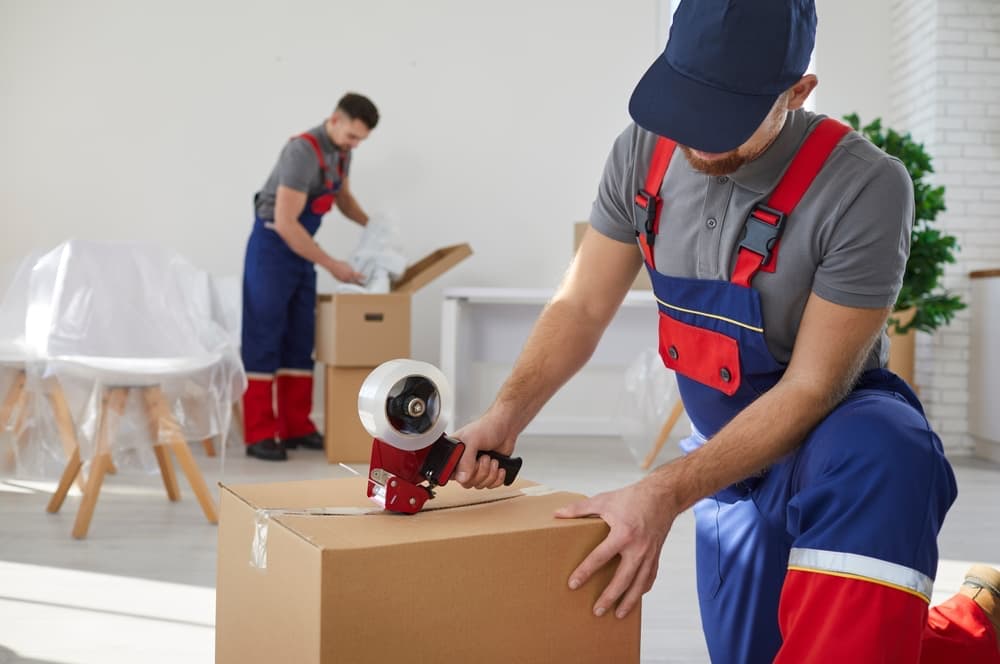
Hiring professional packers is convenient—but DIY packing can save you hundreds of dollars on labor costs. With a little planning, you can pack your belongings safely, stay organized, and reduce the risk of damage during your cross-country move. Even better, you can cut supply costs by using items you already have.
DIY Packing Tips for Long-Distance Moves
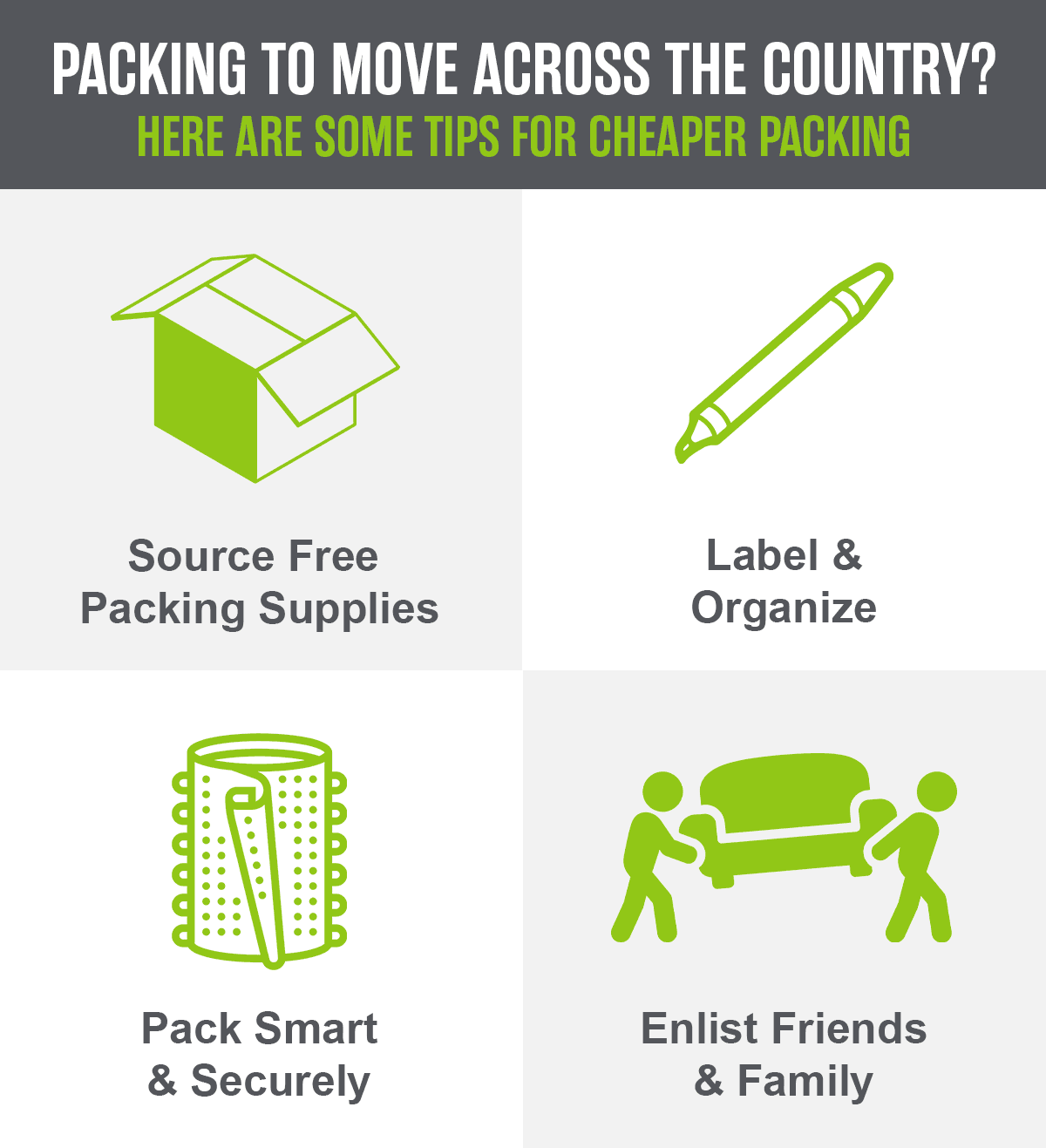
Gather free packing supplies: Collect used moving boxes from grocery stores, friends, or online community groups. You can also check sites like Craigslist or Facebook Marketplace for people giving away moving boxes.
Get creative with padding: Use what you already have—sweaters, towels, socks, pillows, and blankets can all cushion fragile items and reduce the need for bubble wrap or packing peanuts.
Use containers you already own: Suitcases, laundry baskets, plastic bins, and duffel bags can double as moving boxes, helping you save space and money.
Label everything clearly: Mark each box with its contents and destination room to stay organized and speed up the unpacking process.
Pack smart: Use smaller boxes for heavy items (like books) and larger boxes for lighter things (like bedding) to prevent breakage and make lifting easier.
Fill gaps and secure items: Use linens, paper, or clothing to fill empty spaces in boxes so items don’t shift during transit.
Ask friends or family for help: Packing with others can speed up the process, and it’s much cheaper than hiring professionals. Say thanks by offering pizza, snacks, or a friendly get-together in return.
Decide Which Moving Services Are Necessary
Not all cross-country moves are the same—and neither are the moving services that help you get there. Taking time to compare different services can help you find the right balance of cost, convenience, and effort. From packing and loading to transport and insurance, understanding what’s optional—and what’s essential—can help you stay within budget.
Tips for Choosing Budget-Friendly Moving Services
Get multiple quotes: Aim to gather estimates from at least three moving companies or container providers. Look for binding estimates to avoid surprise fees.
Watch for bundled services: Some companies include extras like moving supplies, mileage, or insurance in the total cost—others don’t, so be sure to read the fine print.
Consider a hybrid move: If you want to save without going full DIY, consider packing yourself and hiring labor-only movers to help with loading or unloading.
Look into freight or consolidated shipping: Some companies offer cross-country shipping in shared trailers, which can be cheaper than a dedicated truck. The trade-off is that your delivery date may be less certain, and you still handle the packing and loading.
Ask about discounts: Movers may offer lower rates for military families, students, AAA members, or flexible pickup/delivery dates.
Don’t just go with the lowest quote: Make sure the company is licensed, has good reviews, and offers the services you actually need.
Find Affordable Self Storage Near You
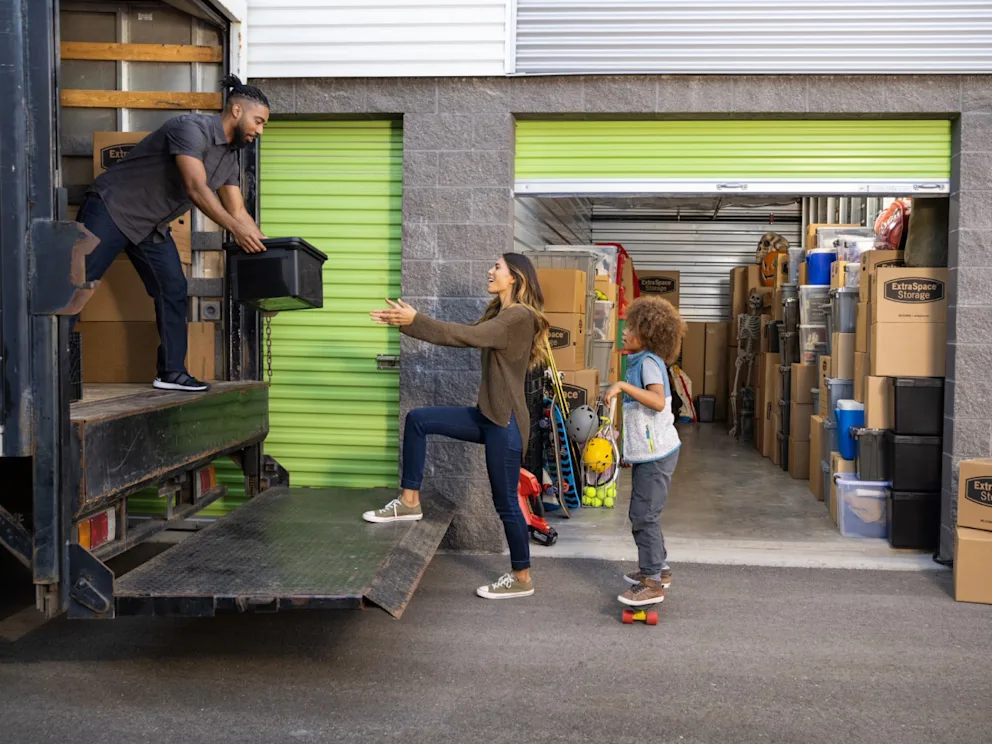
Extra Space Storage has over 4,000 locations across the U.S. with friendly customer service, advanced security features, and affordable month-to-month rates.
- Save up to 40% off online
Schedule Your Move During Off-Peak Times
When you move can be just as important as how you move—especially when it comes to pricing. Moving during peak times, like weekends or summer months, often comes with higher rates and limited availability. If you have flexibility, choosing an off-peak time can help you save money and reduce stress.
Tips for Timing Your Move to Save Money
Avoid peak season: Summer is the busiest, and usually the most expensive, time to move. If possible, plan your relocation between October and April to take advantage of lower rates.
Move mid-month, mid-week: Most people move at the beginning or end of the month or over a weekend. Scheduling your move for a weekday in the middle of the month can lead to better prices and easier booking.
Ask about flexible delivery windows: Some movers offer discounts if you’re open to a broader delivery window, allowing them to fit your shipment into their schedule more efficiently.
Book early: No matter when you plan to move, locking in your services a few weeks in advance can help secure better rates and ensure availability—especially with rental trucks and container companies.
Use Technology to Stay Organized & Save
Moving across the country involves a lot of details—but the right moving apps and online tools can help you stay on track and avoid unnecessary expenses. From budgeting and planning to finding the best prices on services and supplies, tech can be one of your most valuable moving-day tools.
Tips for Using Digital Tools to Simplify Your Move
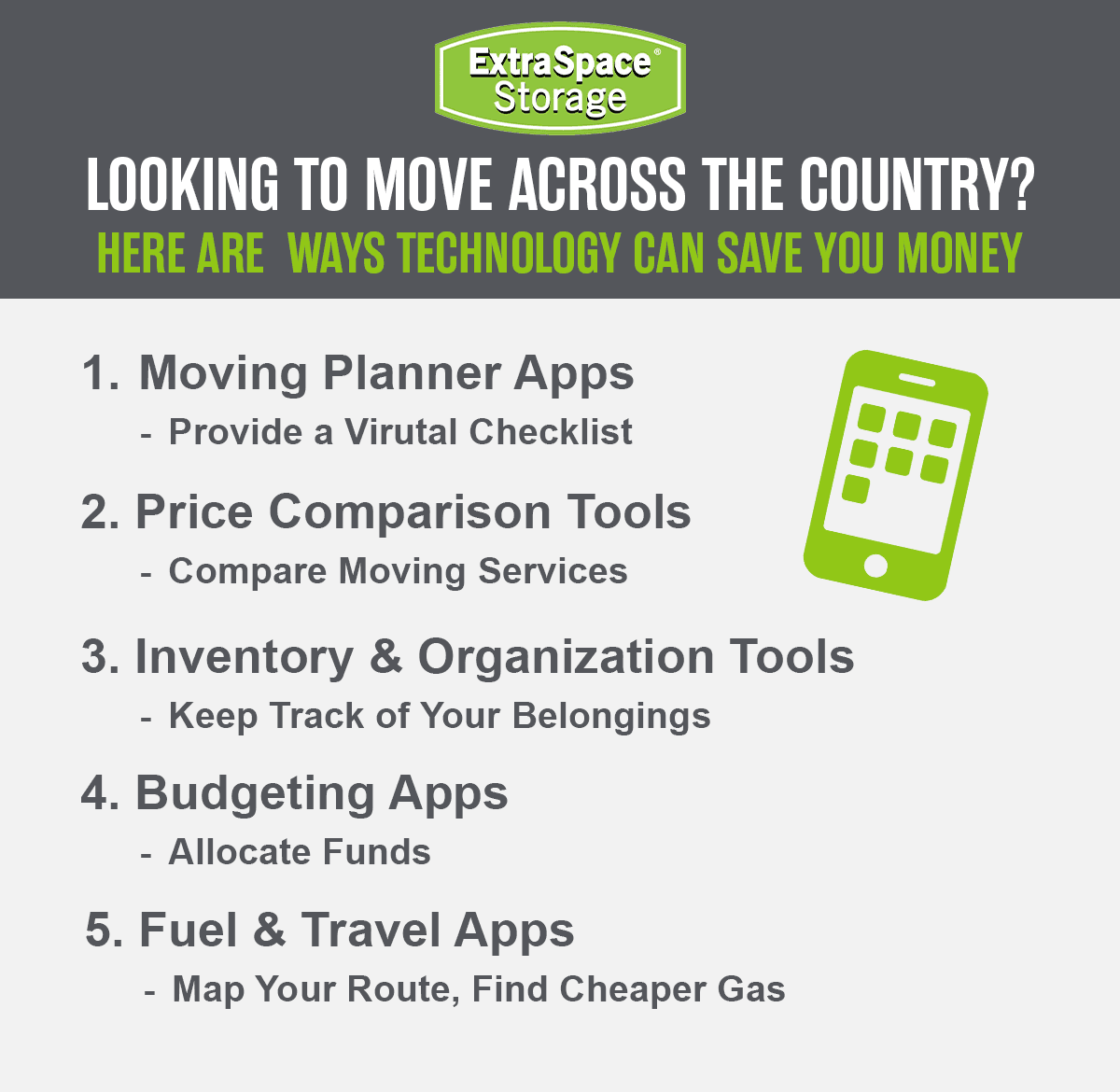
Use a moving planner app: Many free moving apps provide checklists, timelines, and inventory tools to help you stay organized from start to finish.
Compare moving quotes online: Sites like Unpakt allow you to input your inventory and get upfront pricing from vetted movers, helping you avoid the hassle of calling around. Some services even let you book your move online through the app once you find a good price. By comparing quotes side by side, you can be sure you’re getting a bargain for your cross-country move.
Track your belongings: Apps like Sortly—or even a simple spreadsheet—can help you log box contents and track items, reducing the risk of loss or damage. An accurate inventory also ensures you get more precise quotes from movers.
Budget with purpose: General budgeting apps like Mint or Goodbudget can help you create a moving-specific budget and monitor spending across categories like gas, supplies, and lodging. When you know where your money is going, you can make informed choices to cut costs.
Cut travel costs: If you’re driving, use apps like GasBuddy to find the cheapest fuel along your route. For overnight stays, apps like HotelTonight or Airbnb can help you find affordable lodging.
Tap into online communities: Facebook Marketplace, Nextdoor, and Reddit can be great for finding free moving supplies, furniture deals, or local mover recommendations in your new city.
Budget for Additional Moving Expenses
Beyond the cost of transportation, there are several other moving expenses that can add up quickly during a cross-country move. Building these into your budget ahead of time—along with a small emergency fund—can help you avoid surprise costs and stay on track financially.
Tips for Managing Hidden Moving Costs
Plan for lodging: Depending on how far you're moving and your mode of transportation, you may need to book hotels or short-term housing. Budget options like motels, Airbnb, or extended-stay hotels can help reduce costs.
Factor in food: Whether you’re flying or driving, meals can add up. Packing your own snacks or meals—like sandwiches, fruits, or pantry staples—can help stretch your budget and reduce food waste.
Watch your travel costs: If you're flying, book tickets 3–6 weeks in advance for the best pricing. Use airline miles or travel rewards if available.
Budget for packing supplies: Boxes, tape, and other supplies can cost $100–$350. Look for free boxes at local stores or through community groups, and reuse items like newspapers, towels, or seasonal clothes as padding.
Consider short-term movers: If you’re doing most of the work yourself but need help loading or unloading, hire labor-only movers for around $25–$50/hour.
Look into self storage: If your move-in and move-out dates don’t align, a temporary storage unit can give you flexibility. Unit sizes and prices vary, so compare local options to find the right fit.
*** Looking for more budget-saving tips for your cross-country move? Check out more tips on the Extra Space Storage Moving Hub or estimate the cost of your move with our Moving Cost Calculator. And if you need a storage unit, we have plenty of storage facilities located across the U.S. to help with your transition. Find affordable self storage near you!
Find How Many Moving Boxes You Need 📦
Use Extra Space Storage’s moving supplies calculator to estimate how many moving boxes you’ll need. Simply insert how many belongings you have and the size of your household to receive a fast recommendation in minutes!
Related Cross-Country Moving Guides

How Much Does it Cost to Move Across the Country?
Wondering what it costs to move across the country? Here are estimated long-distance moving costs and factors that affect the total price you pay.

19 Packing Tips for Cross-Country Moving
Trying to find the best ways to move long distances? A cross-country move can take a lot of planning. Check out these packing tips for moving out of state!

Moving on a Budget: Affordable Ways to Move Across the Country
Explore affordable ways to move to another state, with moving budget factors, storage options, and more in this cross-country moving guide.
Cheapest Ways to Ship Boxes Across the Country
Need to ship moving boxes across the country? Explore the most affordable ways to ship boxes in this guide!

Guide to Shipping Furniture Out of State
Moving to a new state? If you're thinking of shipping your furniture, check out this guide to learn how to prep your belongings for transit!
Author Profile
Quinn Johnson
Quinn Johnson is a moving expert and author for Extra Space Storage. He's moved over 15 times, including internationally, and helped countless others between their own homes. He's happy to lift some boxes for a friend as long as he's paid in pizza. As a writer and content creator for Extra Space Storage since 2019, Quinn shares helpful moving tips and info to alleviate the common stresses of moving.