Moving Guide
How to Choose the Right Moving Company

Hiring a moving company can help give you peace of mind during your move and provide an added layer of safety for your belongings. Whether you're moving on a budget or relocating across the country, here's how to choose the right moving company.
Different Types of Moving Companies
As you start researching different movers, it's important to understand your moving needs and the various services that moving companies offer. Here are some of the most common moving services.
Type of Moving Company | Price Range | Best For |
DIY & Truck Rentals | $-$$ | Moving on a budget, full control over schedule and packing |
Labor-Only Movers | $$-$$$ | Those who need help with loading/unloading but prefer to rent their own truck |
Container Moving Services | $$-$$$ | Flexible move schedules, storage needs, and long-distance moves |
Full-Service Movers | $$$-$$$$ | A hands-free moving experience, those with large homes or valuable items |
Long-Distance Movers | $$$-$$$$ | Cross-country or out-of-state moves, those who need professional handling |
DIY & Truck Rental Moves
If you're moving on a budget, a DIY move with a truck rental can be one of the most cost-effective options. With this approach, you’ll rent a moving truck to transport your belongings while handling all the packing, loading, and unloading yourself. While this requires more physical effort, it gives you greater control over your schedule and costs compared to hiring professional movers.
Do-it-yourself moves are typically the most affordable choice, but it’s important to factor in all related expenses to avoid unexpected costs. The total price of your move will depend on:
Distance: Longer moves require more fuel and may include mileage fees.
Truck size: Larger trucks cost more to rent but may reduce the number of trips needed.
Fuel costs: Moving trucks often get lower gas mileage than personal vehicles.
Additional fees: Rental companies may charge for extra insurance, dolly rentals, or late returns.
Packing supplies: Boxes, tape, and protective materials can add to your total cost.
To get the best deal, compare quotes from multiple truck rental companies, and be sure to check for discounts and moving deals.
Labor-Only Moving Services
Another affordable moving option is to hire labor-only movers, who handle the loading and unloading of your belongings while you take care of packing, providing a moving vehicle, and unpacking at your new home. This is an excellent choice if you want to avoid the heavy lifting but still save money compared to a full-service move.
While labor-only moving services are more budget-friendly, costs can vary based on the number of movers needed, hours of labor required, additional services, and peak moving times. Since you’ll still need to rent a moving truck separately, be sure to compare truck rental rates and factor in expenses like fuel and insurance.
Container Moving Services
If you're moving cross-country or need more flexibility with your schedule, a container moving service can be a great solution. With this option, you’ll rent a portable storage container, load your belongings at your own pace, and schedule a pickup time for the company to transport the unit to your new home. This is especially useful if you need temporary storage before, during, or after your move.
Container moving services offer a mid-range pricing option, typically more affordable than full-service movers but more convenient than a DIY truck rental. Your main costs will include:
Container rental fees: Pricing depends on the size of the unit and rental duration.
Transportation costs: Varies based on distance and delivery speed.
Storage fees (if needed): Some companies offer short-term or long-term storage at an additional cost.
Additional services: Some providers offer loading assistance for an extra fee.
Keep in mind that prices will vary based on the size of the container and the distance of your move, so it’s best to compare quotes from multiple providers to find the best deal.
Full-Service Movers
Full-service movers handle every aspect of your move—from securely packing your belongings and loading them onto the truck to transporting, unloading, and even unpacking at your new home. This significantly reduces the physical and logistical burden of moving, allowing you to focus on other relocation tasks, like setting up utilities or finalizing paperwork.
While full-service moving companies provide the most convenience, they are typically the most expensive option. The cost of hiring professional movers varies based on factors like the distance of your move, the volume of your belongings, and any additional services requested, such as furniture disassembly or specialty item handling. If you have a large household, limited time, or prefer a completely hands-off moving experience, hiring a full-service mover can be a worthwhile investment. Before booking, request multiple quotes and confirm what’s included in the service to avoid unexpected fees.
Long-Distance Movers
If you’re moving out of state or cross-country, hiring a long-distance moving company is often the best option. These professional movers specialize in transporting belongings over hundreds or even thousands of miles, ensuring a more efficient and stress-free relocation. Many long-distance moving services also include packing, loading, unloading, and unpacking, helping to minimize the physical demands of your move.
Because of the extended distance and logistics involved, long-distance moves cost more than local or DIY moving options. However, many reputable cross-country movers offer customizable packages that bundle services together, potentially reducing extra fees. The main factors that influence pricing include the distance of your move, number of belongings, additional services, and time of year.
Always compare quotes from multiple licensed and insured long-distance moving companies. Look for movers registered with the FMCSA (Federal Motor Carrier Safety Administration) to ensure compliance with industry standards and avoid moving scams.

Find Affordable Self Storage Near You
Extra Space Storage has over 4,000 locations across the U.S. with friendly customer service, advanced security features, and affordable month-to-month rates.
- Save up to 40% off online
Choosing the Right Moving Company for Your Situation
Before choosing a moving company, be sure to assess your situation to help you hire the right movers for your needs. Here are some common moving situations and suggested moving company options.
Moving on a Budget
If you’re looking for the most affordable way to move, handling packing, loading, unloading, and unpacking yourself can save you a significant amount of money. While this approach is more labor-intensive, it keeps costs low. To reduce some of that labor, consider renting a moving truck or hiring labor-only moving services. It can also help to book moving services on a weekday or during the off-season to secure lower moving rates.
Moving Cross-Country
For long-distance moves, hiring experienced long-distance movers can help streamline the process and reduce stress. These companies specialize in interstate moves and offer customizable packages that can include full-service moving that handles the moving process from end to end, or container moving services that offer a mix of affordability and flexibility for your long-distance move.
Moving Locally
If you’re moving within the same city or state, hiring local movers can be a convenient option. These companies can handle packing and loading, short-distance transport, and unpacking and furniture setup—so you can focus on other relocation needs.
Last-Minute Moves
If you’re facing a time-sensitive move, flexibility is key. Depending on how quickly you need to move, consider moving truck rentals to handle the move yourself. Some professional movers may offer express moving options that allow for same-day or expedited moves. Keep in mind that availability and cost can vary greatly when going this route. Always check reviews for quick moves to avoid scams and unexpected fees.
How to Research & Compare Moving Companies
After assessing your needs, you can begin researching and comparing different moving companies. There are a few things to keep in mind when hiring movers, so keep these expert tips in mind as you go through the selection process.
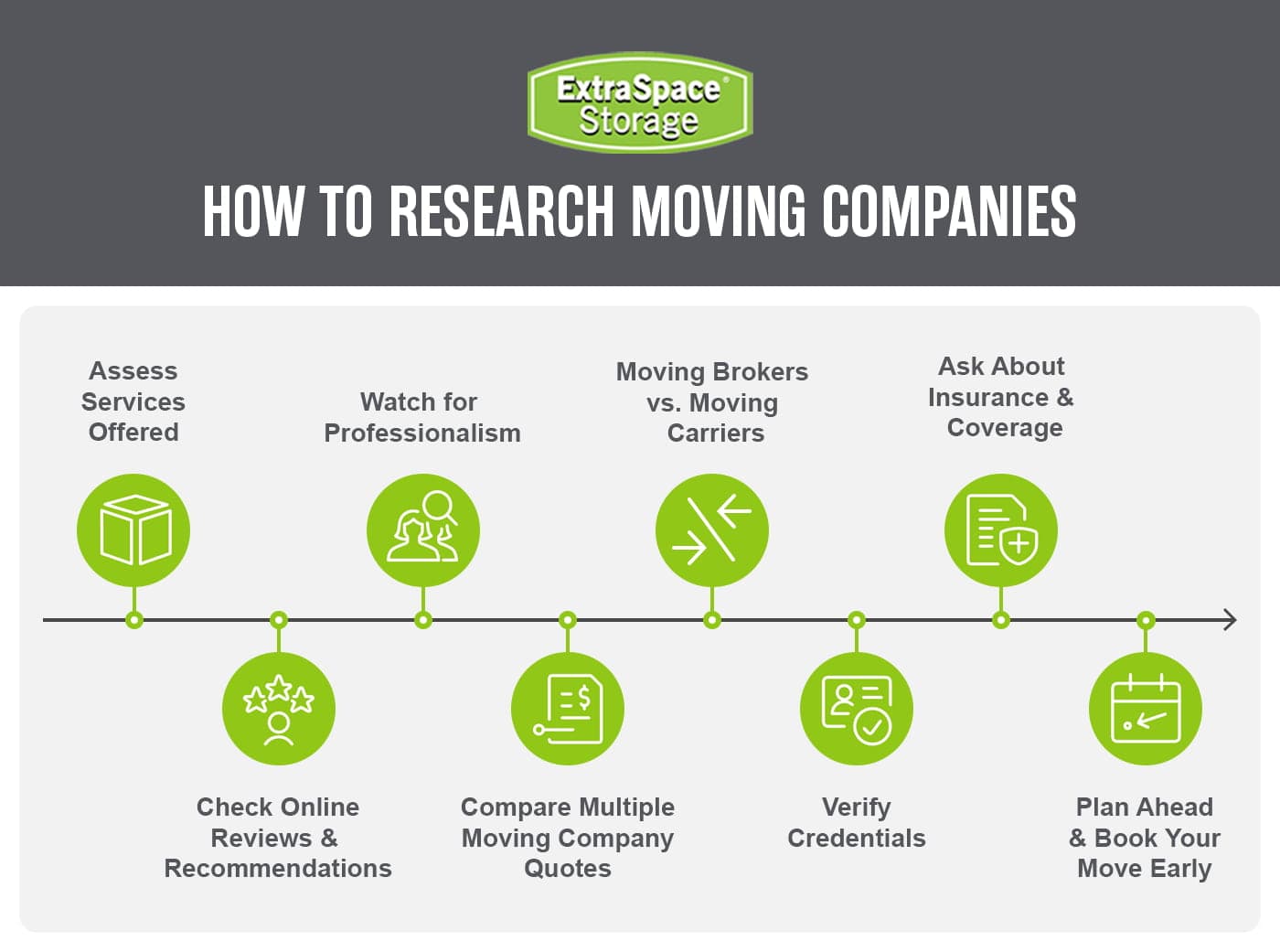
Assess Services Offered: Make sure the company provides the specific services you need. Not all movers offer the same services, so confirm they can meet your requirements.
Check Online Reviews & Recommendations: Check out customer reviews through services like Google, Yelp, and the Better Business Bureau (BBB). Ask friends, family, or coworkers if they have any mover recommendations from their own experiences. Consistent positive reviews and personal endorsements are strong indicators you’re looking at a trustworthy mover who can deliver top-notch service.
Watch for Professionalism: Consider how long the company has been in business and its expertise with your type of move. Pay attention to their professionalism during inquiries. A company that communicates well and treats you with respect during the quote process is likely to maintain that standard throughout the move.
Compare Multiple Moving Company Quotes: Collect quotes from at least three moving companies and compare what's included. Ensure each quote details the same services like packing, loading, distance, and other agreed-upon services. This comparison helps you spot any outliers. Ask for an in-home or video walkthrough, and be wary of any quote given without seeing your belongings. Remember, the cheapest quote isn’t always the best—factor in reputation and services. A slightly higher price from a well-reviewed, communicative company can save you headaches in the long run.
Moving Brokers vs. Moving Carriers: A moving broker is a middleman who contracts out your move with a carrier rather than handling the move directly. In contrast, a moving carrier is actually authorized to transport items. There are reputable brokers, but transparency about who will actually tackle your move is essential.
Verify Credentials: Check the moving company's credentials before hiring them. For interstate moves, ask for their USDOT number and look it up in the FMCSA (Federal Motor Carrier Safety Administration) database to confirm they are registered.
Ask About Insurance & Coverage: Even if a mover does have a certificate of insurance, understand the extent of coverage. Interstate movers must offer two valuation options. Released Value Protection is included at no cost but pays only 60 cents per pound per item, while Full Value Protection costs more and covers repair, replacement, or current value.
Plan Ahead & Book Your Move Early: Once you’ve identified a mover you feel good about, book your moving date as early as possible. Reliable moving companies often have busy schedules, especially during peak moving seasons, like summer months and weekends. Scheduling in advance secures your spot and gives you time to prepare.
Moving Company Red Flags
Choosing a reliable moving company starts with asking thorough questions and knowing the most common red flags for moving scams. Here are some warning signals that a moving company may not be reputable:
They require large upfront deposits or cash-only payments
They pressure you to book or pay right away
They have no physical address or verifiable credentials
They quote a price without ever seeing your belongings
They won’t offer an in-home or video walkthrough estimate
They have consistently poor reviews
They provide low estimates that are too good to be true or make unexpected price changes
They arrive with rental trucks rather than ones branded with their company name
They refuse to give an estimate until the truck is already loaded with your items
Frequently Asked Questions About Choosing Movers
What's the difference between a moving broker and a moving company?
A moving broker is a third party that arranges your move with a moving company, while a moving company or carrier is who actually transports your belongings. Brokers help coordinate services, but they don't own the trucks or employ the movers who transport your items.
What's a binding vs. non-binding moving estimate?
A binding estimate sets a fixed price based on the inventory and services you’ve agreed to. A non-binding estimate is the mover’s best guess, and the final cost depends on the actual weight of your belongings and the services you use. A binding not-to-exceed estimate is a third option: the price can come down if your shipment weighs less than expected, but it can’t go above the estimate. Ask which type you’re getting, and get it in writing. For interstate moves, federal rules limit how much a mover can require you to pay at delivery on a non-binding estimate, with the remainder billed afterward.
Is it normal for a moving company to ask for a deposit?
It's not uncommon for long-distance or interstate movers to ask for a modest deposit to hold your moving date. However, it's rare for local moves. Before paying, ask how much the deposit is, when the remaining balance is due, and whether it's refundable if your plans change. A standard moving deposit is typically between 10 and 25% of your total estimate—if it is significantly higher than that, that may indicate a moving scam.
How do I verify a moving company isn't a scam?
To verify that a moving company is not a scam, confirm the moving company's credentials, reviews, and business information before booking. For interstate moves, verify the USDOT number and look out for red flags like low payments, pressure to book right away, and large upfront payments.
Should I get an in-home or virtual moving estimate?
Both an in-home and a virtual moving estimate can work, but an in-home walk-through gives the mover a better idea of what your move involves than a phone or online estimate. Doing an in-home estimate may give you a more accurate number and help you avoid surprise charges.
***
Moving soon? Calculate the cost of your move, read expert guides, and more with Extra Space Storage Moving Resources. For your storage needs, we have convenient locations across the U.S. Find a storage unit near you!

Other Recommended Reading

Guide to Hiring Movers
Thinking of hiring professional movers? Using movers can make your relocation go more smoothly. Read our guide for hiring a moving company!

Important Questions to Ask a Moving Company Before Hiring
Wondering what questions to ask moving companies? Review these helpful moving questions to avoid delays or damaged belongings for a smooth move.

Pros & Cons of Hiring a Moving Company
Preparing to move and considering hiring movers? Explore the pros and cons in this guide to determine whether you should hire movers or DIY your move.

How Much Do Movers Cost?
Professional movers cost ~$550-$12,000. Learn the average cost of hiring a moving company for local and long-distance moves in this guide.

Moving Cross Country: The Ultimate Moving Checklist
Trying to plan out your cross country move? Use our cross country moving checklist for a comprehensive timeline to help you feel more prepared for your move.
Author Profile
Quinn Johnson
Quinn Johnson is a moving expert and author for Extra Space Storage. He's moved over 15 times, including internationally, and helped countless others between their own homes. He's happy to lift some boxes for a friend as long as he's paid in pizza. As a writer and content creator for Extra Space Storage since 2019, Quinn shares helpful moving tips and info to alleviate the common stresses of moving.