Moving Guide
How Much Does It Cost to Hire Movers?

Whether you're relocating across town or across the country, understanding moving costs can help you budget confidently and avoid financial surprises when moving. In this guide, we'll break down typically how much movers cost for local moves and long-distance moves. We'll compare the expenses of hiring professionals vs. DIY moving, as well as share tips for moving more affordably even if you hire a professional moving company.
Local Moving Costs
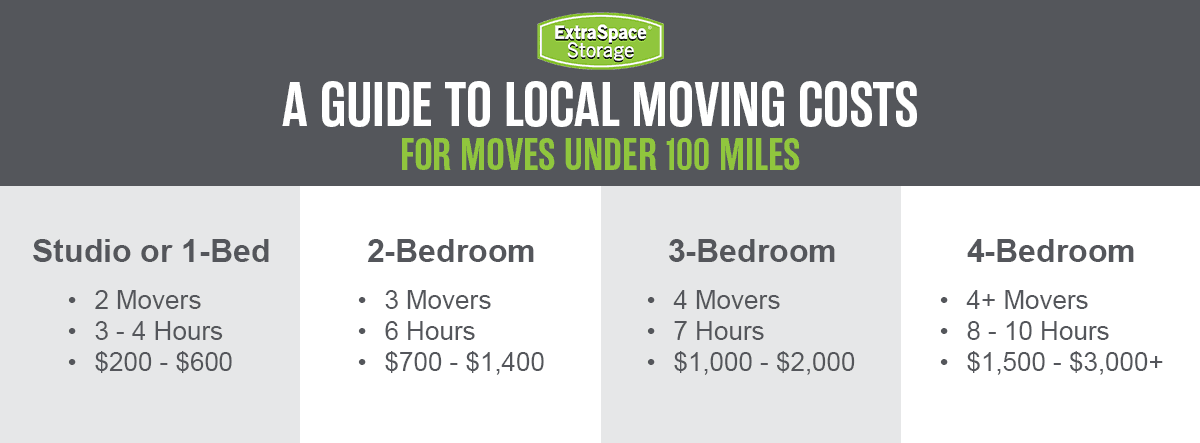
Local moves (usually under 50–100 miles) are typically charged by the hour. So, the cost of movers depends on the time it takes and the number of movers involved. On average, professional movers charge around $25–$50 per hour, per mover. Here are some typical local moving cost ranges based on home size:
Studio or 1-Bedroom Apartment (~500 square feet): Roughly $200–$600 for two movers in about three or four hours.
2-Bedroom Home (~1,000 square feet): Around $700–$1,400 for a three-person crew in about six hours.
3-Bedroom Home (~2,000 square feet): Approximately $1,000–$2,000 for a four-person team under seven hours.
4-Bedroom Home (~2,500 square feet): About $1,500-$3,000+ for four or more movers and eight hours. Larger homes that need a bigger crew or more time will cost more.
What's included in local moving costs? Generally, hourly rates include the moving truck, fuel for short distances, and basic furniture protection, like pads and straps. Other possible costs include a 2-4 hour minimum, a travel fee (often one additional hour) to cover their drive to and from your locations, and added charges for stairs, long carries, or heavy items.
Long-Distance Moving Costs
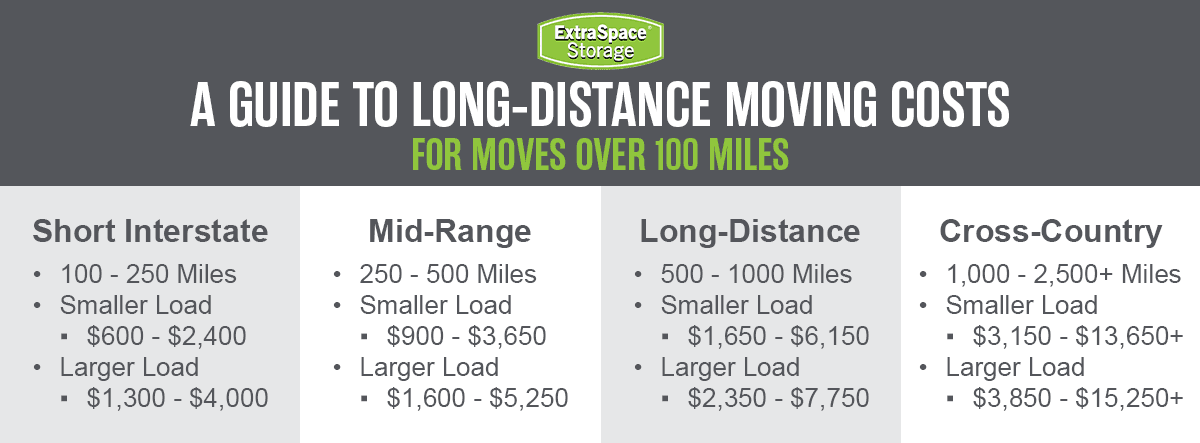
Long-distance moves (typically over 100 miles or across state lines) on average range anywhere from $800 or just under to over $12,000. Distance and shipment size play a major role in the cost of cross-country moves. Instead of an hourly rate, interstate and cross-country moving companies usually charge based on the total weight or volume of your belongings and the miles traveled. Here are national average cost ranges for long-distance moving services:
Short Interstate Move (100-250 miles): Around $600–$2,400 for 1-2 bedrooms, $1,300–$4,000 for 3-4 bedrooms.
Mid-Range Move (250-500 miles): About $900–$3,650 for 1-2 bedrooms, $1,600–$5,250 for 3-4 bedrooms.
Long-Distance Move (500-1,000 miles): Approximately $1,650–$6,150 for 1-2 bedrooms, $2,350–$7,750 for 3-4 bedrooms.
Cross-Country Move (1,000-2,500+ miles): $3,150–$13,650+ for 1-2 bedrooms, $3,850–$15,250+ for 3-4 bedrooms.
What's included in long-distance moving costs? Some long-distance quotes are "all-inclusive" for loading, transport, and unloading, while others might have specific fees for fuel surcharges, insurance coverage, additional delivery/pickup stops, and shuttle fees if they need to use a smaller truck to access your new place. Make sure to get a detailed quote and ask questions so you understand each line item—and if possible, request an in-home or virtual survey for a more accurate quote based on your belongings. Our free moving cost calculator can also help you assess your budget.
Key Factors That Influence Moving Costs
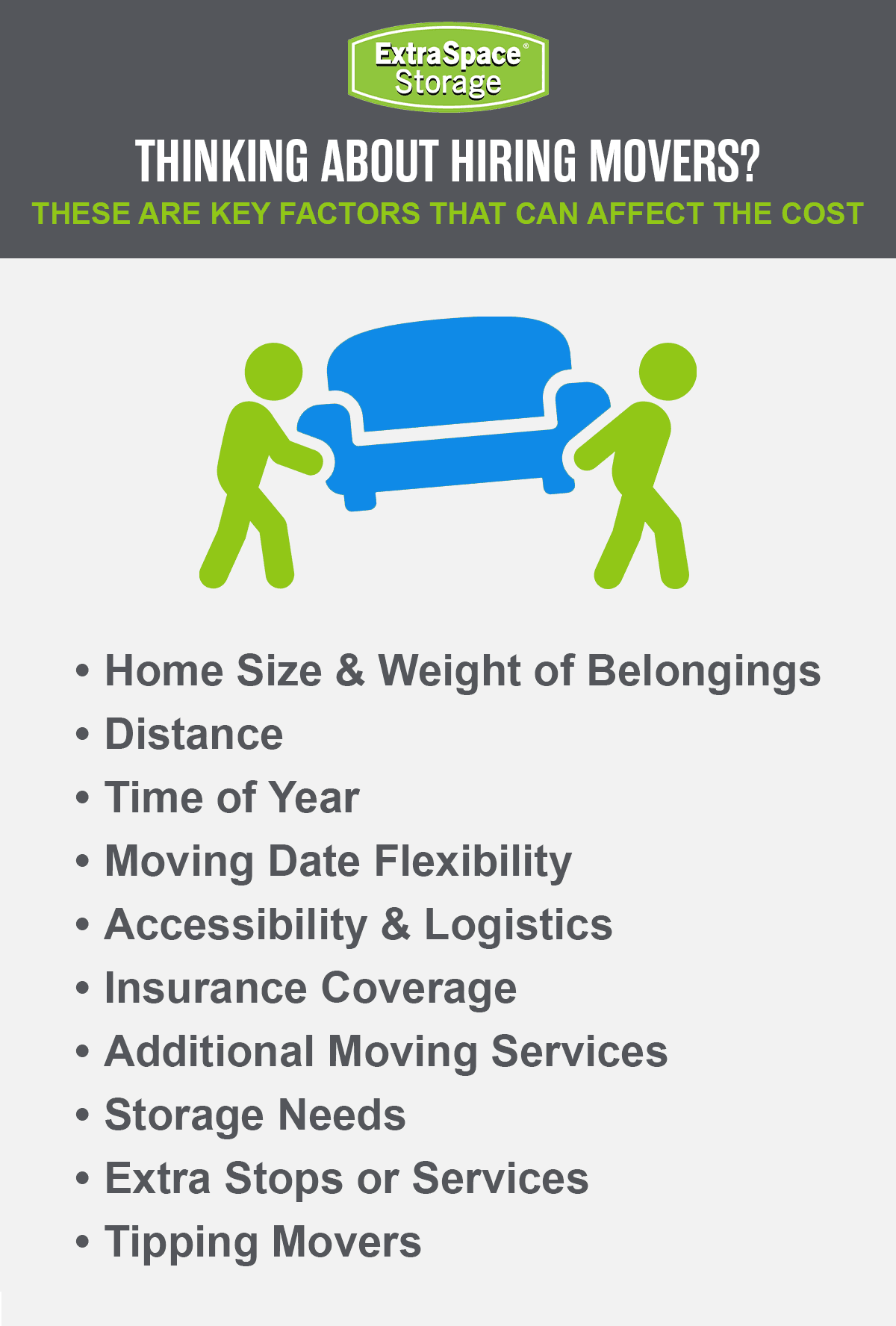
Along with whether your move is local or long-distance, a variety of factors can increase or decrease the price you pay to hire professional movers. Understanding these factors can help you plan and even find opportunities to save.
Home Size & Weight of Belongings
The more items you have, the more it costs to move. Larger homes or heavy items mean more hours for local moves, or higher weight (and higher fees) for long-distance moves.
Distance
Longer distances require more fuel, more time on the road, and higher transportation costs. Local movers might have a flat travel fee for short distances, but cross-country movers charge for every mile.
Time of Year
May through September in the U.S. is peak moving season, so demand—and prices—are highest if you move in the summer. If you can schedule your move during the off-season (fall or winter) or even mid-week and mid-month, you may get lower rates.
Moving Date Flexibility
If your moving company has to hold your shipment for a window of time or you need guaranteed delivery by a certain date, there may be extra charges. Generally, being flexible with pickup and delivery dates can reduce the cost of professional movers, especially for long-distance moves where your items might share truck space with other customers.
Accessibility & Logistics
Movers may charge extra if they have to carry items a long distance from your door to the truck, navigate multiple flights of stairs, or use special equipment, like a furniture hoist or smaller shuttle truck. These difficulties can add a few hundred dollars in labor or equipment fees. Let your movers know ahead of time if your locations have tricky access (e.g., no elevator, street parking only, narrow staircase) so they can plan and quote accordingly.
Insurance Coverage
Basic moving coverage (called released value protection) is usually included at no extra charge, but it's minimal—about 60 cents per pound per item. For example, if a 40-pound TV breaks, you'd get $24. For better coverage, you can purchase full-value protection or third-party moving insurance, which will cover the entire value of your items. The cost of full replacement coverage is usually calculated as a percentage of the declared value of your goods. While more expensive, a higher coverage option for moving insurance might be worth it if you have a lot of valuable items.
Additional Moving Services
Packing services, furniture disassembly/reassembly, and special crating will each add to your bill. If you opt for full-service movers who pack your boxes and unpack at your destination, it'll cost more than if you handle packing yourself. Likewise, having movers take apart beds, tables, or appliances for you is convenient but often billed either as an extra flat fee or an hourly add-on.
Storage Needs
If you need to store your belongings between moves for days or months, using a storage unit or the moving company's warehouse will incur storage fees. Storage unit costs vary widely based on location and volume, but could be anywhere from $50 to a few hundred dollars per month.
Extra Stops or Services
If the movers need to make an extra stop—like picking up items from a second location or delivering some items to a different address—they will likely charge additional fees. Similarly, any last-minute add-on services—like packing a few remaining items you didn't get to, or disconnecting appliances—could show up as extra charges.
Tipping Movers
While gratuity is not required, it's common (especially for local moves) to tip your movers if they do a good job. This typically ranges between 10–20% of the total moving cost. Or you might prefer to tip $20–$50 per mover per day as a good rule of thumb. Though tipping is optional, it’s important to add into your moving budget since it rewards the hard work of your moving crew. On moving day, make sure to have some cash set aside or ask the company about adding a tip via credit card.

Find Affordable Self Storage Near You
Extra Space Storage has over 4,000 locations across the U.S. with friendly customer service, advanced security features, and affordable month-to-month rates.
- Save up to 40% off online
Cost of Professional Movers vs. DIY Moving
When it comes to relocating, one key decision is if you should hire professional movers or tackle the move yourself. Cost is often the deciding factor, but other non-material costs like your time, effort, and risk are worth considering.
Budget
If budget is your primary concern, moving yourself will almost always cost less money than hiring a full-service moving company. With a DIY move, your main expenses will be truck rental, gas, mileage fees, and packing supplies.
A local DIY move for a studio apartment might only cost you $200-$900 for a small truck and equipment, whereas hiring professional movers for the same local job could run $200-$1,400 or more. For a long-distance DIY move for that same apartment, you might spend $400–$1,525 on a one-way rental truck, fuel, and maybe lodging, compared to $800–$2,650 for professionals to handle a similar move.
Skill & Effort
DIY moving means you're responsible for all the packing, lifting, loading, driving, and unloading. This can be extremely labor-intensive, especially if you're moving heavy furniture or lots of boxes. Professional movers, on the other hand, bring a crew of strong, experienced people who do most, if not all, of this for you. If the idea of carrying sofas up and down stairs or driving a 26-foot moving truck on the highway makes you anxious, hiring movers can be well worth the cost.
Time & Convenience
Professionals can typically pack and move a household much faster than you and a couple of friends could. What might take you an entire weekend could be done in a single day with a skilled team. If you're moving on a tight schedule, professional moving companies can reduce your stress by handling it efficiently. DIY moves often involve juggling many tasks, like picking up the rental truck, buying packing materials, rounding up helpers, and more. Full-service movers simplify the process by managing the logistics for you.
Risk & Safety
Moving heavy furniture, driving a moving truck, and navigating bulky items through doorways can lead to injuries or damaged belongings if not done properly. Professional movers are trained in safe lifting and driving techniques and have the right equipment to protect your property. If you move yourself, you might need to rent or buy similar equipment and still risk straining your back, scratching walls and floors, damaging your belongings, or causing an accident in the truck.
Flexibility & Control
Some people prefer the control of a DIY move—you can pack on your own schedule, you know exactly where everything is, and you’re not tied to a moving company's timetable. You might also enjoy the adventure of a road trip in a moving truck. On the other hand, coordinating a move yourself can be complicated, especially long-distance. Hiring pros can give you peace of mind that experts are handling the details, allowing you to focus on other aspects of the transition.
Tips to Save Money When Hiring a Moving Company
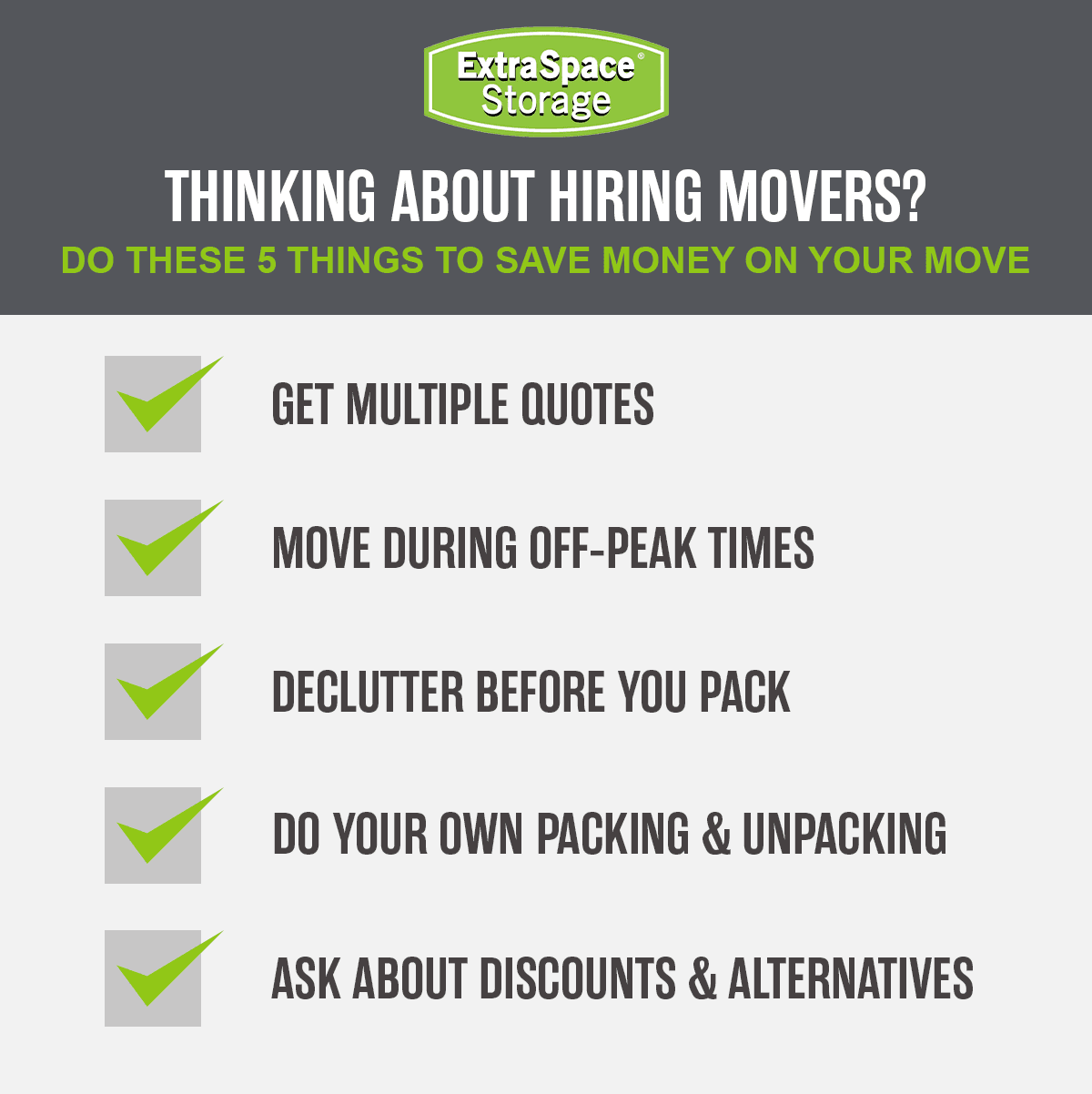
Even if you're leaning towards hiring professionals, there are several ways to keep moving costs down. Moving can be expensive, but a little strategy goes a long way.
Get Multiple Quotes
Prices can vary a lot between moving companies. Always get at least two or three quotes from reputable movers. Provide each with the same information—like dates, inventory, and distance—and make sure you're comparing apples to apples in terms of services. This way, you'll get a sense of the fair market price and can potentially negotiate or ask one company to match a lower offer.
Move During Off-Peak Times
If you have flexibility with your moving schedule, avoid peak moving season and weekends. Summer is the busiest (and priciest) time for moving. You could save by booking a move in the fall or winter, or even just choosing a mid-month, mid-week date when movers are less busy. Some companies offer discounts for off-peak moves, so ask about any seasonal or weekday rate differences.
Declutter Before You Pack
The fewer things you move, the less you pay. Take time to sort and purge items you no longer need. Sell, donate, or recycle things rather than paying to move them. Not only will this reduce your moving bill, but you'll also start life in your new home clutter-free. Large, heavy items that you’re on the fence about, like old furniture, might be cheaper to buy new than to ship or move across the country.
Do Your Own Packing & Unpacking
Professional packing services can add hundreds to your bill. By packing your own boxes, you only pay for materials and a bit of your time. Scavenge for free boxes from local stores or online community groups, and use items like towels or blankets to cushion breakables like dishes and wine glasses to save on bubble wrap. Just be sure to pack carefully to avoid damage. Unpacking yourself at the destination will also save you money.
Ask About Discounts & Alternatives
Some movers offer lower rates for military members, seniors, or AAA members. If those aren't available, consider alternatives to full-service movers. If a full truck and crew quote is too high, you could look into moving container services or freight trailers, where you load your items and they handle the transport. These options can be more affordable than a traditional moving company for long distances.
***
Need to store your belongings during a move? Extra Space Storage has convenient storage locations throughout the U.S. to help with your transition. Find self storage near you!

Explore More Moving Tips

Stressed While Moving? 25 Tips to Manage Your Moving Anxiety
Stressed about moving? From prep to post-move, here are tips to help reduce your anxiety about moving.

Important Questions to Ask a Moving Company Before Hiring
Wondering what questions to ask moving companies? Review these helpful moving questions to avoid delays or damaged belongings for a smooth move.

How to Choose the Right Moving Company
Whether you're on a budget, moving cross-country, or need full-service assistance, here's how to choose the right moving company for your relocation needs.

How to Get Rid of Stuff For A Last-Minute Move
Are you moving in a hurry? This guide shares how to prep for a last-minute move with moving tips for selling, donating, and storing your items.

Cheapest Ways to Ship Boxes Across the Country
Need to ship moving boxes across the country? Explore the most affordable ways to ship boxes in this guide!
Author Profile
Quinn Johnson
Quinn Johnson is a moving expert and author for Extra Space Storage. He's moved over 15 times, including internationally, and helped countless others between their own homes. He's happy to lift some boxes for a friend as long as he's paid in pizza. As a writer and content creator for Extra Space Storage since 2019, Quinn shares helpful moving tips and info to alleviate the common stresses of moving.