Moving Guide
Eco-Friendly Moving Trends

Moving companies are undergoing a green transformation in 2026. Eco-friendly moving practices—from sustainable packing materials to fuel-efficient vehicles—are gaining traction as consumers and the industry prioritize sustainability. Read this in-depth guide to explore the latest trends in eco-conscious moving.
Green Moving Demand in 2026
The moving industry continues to grow, with approximately 25.6 million Americans relocating per year, and sustainability is emerging as a key driver of consumer choice. For example, up to 50% of millennials opt for movers with green practices that align with their environmental values. Overall, about 60% of consumers favor providers who demonstrate sustainability in their operations, indicating that moving companies with eco-conscious policies can attract a loyal customer base. To meet this demand, many movers are integrating sustainability into their business models. This is affecting mainstream moving standards across the U.S., as relocation has become more eco-friendly nationwide, with biodegradable packing supplies, electric moving vehicles, and optimized routes to cut emissions increasingly common. With such momentum, sustainable moving practices are becoming a competitive necessity.
Moving Industry & Sustainability Stats | Value |
Annual Americans relocating (approx.) | 25.6 million (about 7.5% of U.S. population) |
Consumers favoring sustainable movers | ~60% prefer eco-friendly practices |
Millennials choosing eco-friendly moving companies | ~50% opt for green movers |
Potential CO₂ reduction with electric trucks | ~56% lower emissions vs. diesel |
Eco-Friendly Moving Trends
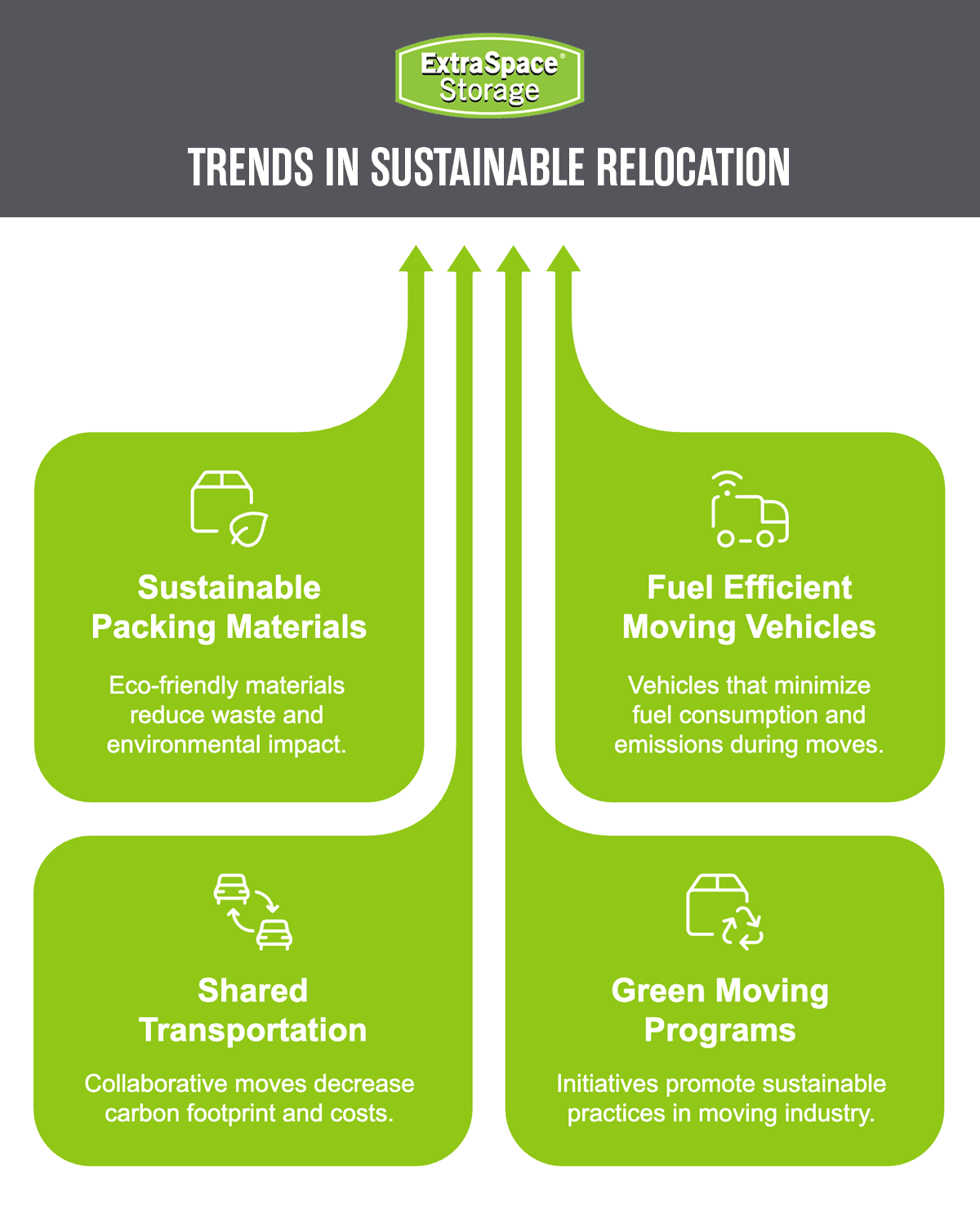
Sustainable moving practices are increasingly necessary to the moving industry at large—these are the most popular eco-friendly moving trends for 2026.
Sustainable Packing Materials
One of the most visible eco-friendly trends is the use of sustainable packing materials. Traditional moves often rely on new cardboard boxes, plastic bubble wrap, and Styrofoam peanuts—which can create a large amount of waste. Many moving companies and customers are shifting to greener alternatives to reduce this waste. In fact, 54% of consumers deliberately choose products with sustainable packaging when available, a mindset that extends to choosing moving services that use eco-friendly packaging. This includes:
Recycled & Recyclable Boxes: Instead of single-use new cardboard, movers use boxes made from high post-consumer recycled content or repurpose used boxes. Some companies even provide used boxes at a discount and take them back for reuse or recycling.
Reusable Moving Crates: Rentable, reusable plastic moving bins or crates eliminate the need for disposable boxes, as they are used repeatedly and avoid generating piles of waste. Reusable crates come delivered ready-to-pack (no assembly or tape needed) and are picked up after the move, making them convenient and eco-friendly.
Biodegradable Packing Peanuts & Wrap: Eco-conscious movers are replacing Styrofoam fillers with biodegradable packing peanuts made from corn starch or other plant-based materials. These biodegradable peanuts dissolve in water and are non-toxic, avoiding the long-term pollution of foam. Similarly, some use mushroom-based or algae-based foams as innovative compostable cushioning. Even bubble wrap has green alternatives, like oxo-biodegradable wrap that breaks down into harmless biomass.
Cloth & Upcycled Padding: Rather than disposable plastic wrap or new paper, movers use reusable moving blankets, old linens, or towels to wrap furniture and fragile items. This repurposes existing materials and cuts down on plastic. Some companies also use upcycled materials (like shredded cardboard) instead of petroleum-based foam peanuts.
Fuel-Efficient Moving Vehicles
Transportation is at the core of any move—and it’s also the biggest source of a moving company’s carbon footprint. A major trend is the adoption of fuel-efficient and alternative-fuel moving vehicles. Traditional moving trucks run on diesel, contributing to greenhouse gas emissions and air pollution. Now, movers are exploring technologies from cleaner diesel and biodiesel blends to hybrid and fully electric trucks to make relocations greener. Many eco-conscious customers will choose a moving service that promises to use a hybrid truck or offset the emissions from their move.
Electric Moving Trucks: Electric vehicles (EVs) have zero tailpipe emissions, which can dramatically cut the carbon footprint of moving. In a vehicle’s lifetime, a heavy electric truck can produce about
63% lower greenhouse gas emissions
than an equivalent diesel truck when charged on the average electricity grid mix. With renewable electricity, the emissions reduction can be as high as 84%.
Efficient Diesel & Biodiesel: Not all movers can switch to EVs immediately, but they are still greening their fleets with more efficient conventional trucks. Modern diesel engines with better mileage and lower emissions are replacing older trucks. Companies are also using biodiesel blends—fuel made from renewable resources like vegetable oils—in place of pure petroleum diesel.
Shared Transportation & Consolidated Moves
In the push for efficiency, shared transportation has become a notable green trend in the moving sector. Shared transportation in moving refers to combining shipments or services to reduce the total number of trips and resources used. This can take a few forms:
Consolidating Moves: For long-distance relocations, some moving companies offer to consolidate multiple customers’ belongings in one large truck trip (when schedules and routes align). Instead of two half-full trucks driving to the same city, one full truck can carry both shipments. This practice cuts fuel use and emissions per household moved. It also lowers costs, since clients effectively split transportation expenses.
Backhaul Marketplaces: After delivering a load, a moving truck often drives back empty. Now, online marketplace apps can connect that empty returning truck with freight or household goods that need to go in the same direction. This turns empty miles into productive miles, cutting overall trip counts. It’s a sustainable practice borrowed from freight logistics that is now entering residential moving.
Route Optimization: Movers are increasingly leveraging technology (GPS and AI) for route optimization, ensuring the moving truck takes the most efficient path. Optimized routes reduce mileage (cutting fuel use and emissions) and save time. Case studies in logistics show that digitally optimized routing can yield a
10–20% reduction in fuel consumption on average, and even higher in some instances. Fewer miles driven means lower emissions for any given move.
Green Moving Programs
Beyond packing and transport, moving companies are implementing a variety of innovative green practices this year. These practices aim to make every aspect of the move more sustainable and often go above and beyond the basics. Here are some key green initiatives:
Comprehensive Recycling Programs: Eco-friendly movers offer services to recycle or responsibly dispose of unwanted items and packing materials. For instance, companies will provide bins on moving day to sort recyclable materials (cardboard, paper, plastic) so nothing useful goes into the trash. Some movers have “take-back” programs for used boxes and supplies—after unpacking, they’ll collect the boxes for reuse or recycling. Electronics, batteries, and other hazardous items can also be handled through partnerships with recycling centers.
Donation & Reuse Partnerships: Many moving companies now partner with local charities, donation centers, or thrift shops. They will pick up furniture, clothing, or housewares the client doesn’t want and deliver them to donation outlets instead of throwing them away. This not only keeps items out of the dump, but also benefits the community. Some even coordinate pick-ups with organizations like Habitat for Humanity ReStore or Goodwill as part of the moving service.
Carbon Offsets for Moves: A growing number of movers offer carbon offset programs to neutralize emissions from each move. Customers can opt-in to purchase offsets equivalent to the CO₂ emitted by the trucks for their relocation. The moving company calculates the emissions based on distance and weight, then funds projects (like tree planting or renewable energy) that reduce emissions elsewhere. While offsets are a stopgap (reducing is better than offsetting), they’re a popular way to immediately make necessary trips greener. It demonstrates the company’s commitment to fighting climate change.
Use of Renewable Energy & Efficient Facilities: Warehouse and storage facilities are being outfitted with solar panels to power lights and even charge those new electric trucks. Energy-efficient lighting, equipment, and even electric forklifts help reduce the indirect emissions of moving operations. Some movers have also pursued green business certifications (like EPA SmartWay or Green Business Benchmark membership) to formalize their sustainable practices. This often involves tracking and improving metrics like fuel use, recycling rates, and energy consumption.
Digital Documents & Virtual Surveys: To save paper and fuel, companies are providing digital contracts and inventories (reducing printed paper) and doing virtual home surveys via video call rather than driving out for an estimate. This cuts down on paper waste and unnecessary driving. Virtual quote surveys and digital inventory management also contribute to sustainability by improving efficiency and slashing paper usage.
Find Affordable Self Storage Near You
Extra Space Storage has over 4,000 locations across the U.S. with friendly customer service, advanced security features, and affordable month-to-month rates.
- Save up to 40% off online
Cost of Traditional vs. Eco-Friendly Moves
Do eco-friendly moving options cost more? The answer in 2026 is that while some green services have a slightly higher upfront price, many are cost-competitive—and in some cases can save you money in the long run. Here’s a breakdown of cost factors when comparing a traditional move to a sustainable move:
Packing Materials Cost: Traditional moves can be done cheaply if you scavenge used boxes for free, but if you buy new boxes and supplies it can add up. Eco-friendly packing could involve renting plastic crates—they may cost a bit more upfront, but you'll often need fewer additional supplies (no tape, less risk of box breakage). Some green movers also resell used cardboard boxes at a discount or provide free used boxes, offsetting costs. Overall, packing material costs between traditional and eco options are in the same ballpark, with perhaps a small premium for the sustainable route if you rent containers.
Transportation Cost: The biggest chunk of moving costs is usually the truck, fuel, and labor—but eco-friendly transportation can reduce costs. Fuel-efficient trucks lower operational costs, and companies may pass those savings to customers. Fewer fuel stops and optimized routes also save time—potentially reducing billable hours on hourly moves. Some green movers might charge a premium if they use an expensive electric truck or purchase offsets, but many do not, especially since the cost to charge an electric moving van can be lower than fueling a diesel one per mile.
Additional Services: Recycling or donation pickups provided by the mover might add a small fee, but often it’s bundled or free as it also reduces disposal fees. Carbon offsets are usually optional and might add 1–3% to the total cost of a long-distance move.
Below is an illustrative comparison of a traditional vs. eco-friendly move for a hypothetical scenario (medium-distance, 3-bedroom home). Actual prices vary, but this shows where differences may lie:
Cost Aspect | Traditional Move (est.) | Eco-Friendly Move (est.) |
Packing Supplies (3-bedroom) | ~$200 for new cardboard boxes, tape, bubble wrap (or lower if using free used boxes) | ~$250 for renting reusable crates and eco supplies (no tape needed, includes pickup) |
Truck Fuel (300 miles) | ~$150 in diesel fuel (at $5/gal, ~30 gallons) | ~$100 in electricity (charging an electric truck) or similar cost in biodiesel blend (slightly lower MPG) |
Moving Truck & Labor | Base rate same for truck/labor; standard equipment | Base rate same; fuel-efficient trucks might finish faster (route optimization saves time) |
Additional Programs | None (standard service) | +$20 for carbon offset (optional, to neutralize ~0.5 ton CO₂); donation drop-off included free |
Total Cost | $3,000 (baseline quote) | $3,100 (roughly 3–5% higher with all green options) |
In this example, the eco-friendly move comes out slightly higher in price. However, in many cases, if you eliminate optional add-ons like offsets, the core costs are nearly identical. And importantly, some green measures save money: using fewer boxes (by decluttering and donating items before the move) can reduce the volume and cost, and fuel savings can sometimes enable a discount or at least prevent fuel surcharge add-ons. For many consumers, the slight extra cost (if any) is outweighed by the peace of mind knowing their move is sustainable. Plus, as green technology advances, eco-friendly options could even become the cheaper choice. In 2026, choosing an eco-friendly move no longer means breaking the bank—it’s a practical option for the average moving budget.
***
Preparing for an eco-friendly move? Use our Moving Resources to find a sustainable moving company near you. Extra Space Storage has thousands of sustainable storage facilities throughout the nation to help with your transition. Find self storage near you!

Related Packing Resources

Moving Boxes 101: How to Choose & Pack Boxes
Using the right moving boxes is essential when packing. Learn about different types of packing boxes for moving and how to pack them properly in this guide!

16 Packing Tips to Make Moving Easier
Getting ready to move? Relocating to a new home can be stressful—check out these 16 tips for packing moving boxes and the best ways to pack household items.

How to Wrap & Pack Furniture to Move
Moving soon and need to protect your furniture? Follow these steps to pack your couch, tables, chairs, bed sets, and other furniture.

10 Tips for Packing Moving Boxes
Planning a move? Packing moving boxes properly saves time, helps protect your items, and keeps things organized. Check out these ten efficient packing tips!

How Much Does It Cost to Hire Packers?
Considering hiring packers for your move? Here's a guide to the cost of packing services to help you budget.
Author Profile
Quinn Johnson
Quinn Johnson is a moving expert and author for Extra Space Storage. He's moved over 15 times, including internationally, and helped countless others between their own homes. He's happy to lift some boxes for a friend as long as he's paid in pizza. As a writer and content creator for Extra Space Storage since 2019, Quinn shares helpful moving tips and info to alleviate the common stresses of moving.