Vehicle Storage
Boat Size Guide: Average Measurements & Storage Size Recommendations

Read Time: 17 min read
Summary: To find the right storage for your boat, start by understanding its size, since class, type, and model all affect its dimensions. Check its Coast Guard class using length overall, then compare length, beam, height, and weight, including dry versus wet weight, against averages for your boat type. Once you know how you’ll use it, match it to a storage unit, typically 10x15 to 10x30, depending on the boat. Next, measure the full trailered length, width, and height, and add 3 to 5 feet of clearance. Choose indoor, covered, or outdoor space based on your climate control needs. Remember to compare your trailered height with the facility’s door clearance.
When it comes to boat sizes, there are a variety of factors that impact vehicle dimensions like the class, model, type, and more. Understanding boat size is important because it directly impacts your vehicle's stability, speed, comfort, fuel efficiency, passenger capacity, gear capacity, docking, and its rough water handling performance. More practically, though, knowing your boat's size will let you know what size and type of storage unit you need for when you're not using it. Read our guide below on average boat sizes and how they impact vehicle storage!
Here are some of the average measurements you'll see for boats:
Length: 6 to 25 ft (1.8 to 7.6 m)
Width (Beam): 7 to 10 ft (2.1 to 3 m)
Height: On Water: 4 to 10 ft (1.2 to 3 m) | Trailer: 8.5 to 11 ft (2.6 to 3.4 m)
Weight: 2,500 to 5,000 lbs (1,134 to 2,268 kg)
Capacity: 4 to 16 passengers
The size of boats will often vary based on class, type, and model.
What Are the Four Classes of Boat Sizes?
Boats are sorted into four official classes by the U.S. Coast Guard based on their size. To find a boat's class, experts measure its Length Overall (LOA)—which is the straight distance from the very front tip to the back wall and any parts that protrude. This official measurement does not count extra parts that detach—like clip-on swim steps. Knowing your boat's class is important because it decides what safety gear you must carry and how much your registration fees will cost. See our chart below to understand how different types of boats are classified by class, length, types, and more.
Class | Length Range | Common Boat Types | Ideal For | Transport |
Class A | Under 16 ft (4.9 m) | Kayaks, canoes, Jon boats, dinghies, small fishing boats, PWCs | Solo & 2-person use, calm waters, fishing near shore, paddle sports, beginner & budget-friendly | Extremely easy—fits in truck beds, roof racks, or small, single-axle trailers |
Class 1 | 16 to less than 26 ft (4.9–7.9 m) | Bowriders, pontoon boats, deck boats, small sailboats | 6–12 passengers, water sports, lakes, rivers, calm coastal boating, moderate cost, requires basic boat handling skills | Trailer-friendly—easily towed by standard SUVs or half-ton pickup trucks |
Class 2 | 26 to less than 40 ft (7.9–12.2 m) | Cabin cruisers, walkarounds, center consoles, tritoons, mid-size sailboats | 10-15 passengers, sleeps 2-6, multi-day trips, offshore fishing, coastal cruising, high cost, requires navigation skills & weather handling | Marina-bound—requires permanent wet slips, dry stacks, or heavy-duty semi-truck towing |
Class 3 | 40 to less than 65 ft (12.2–19.8 m) | Motor yachts, flybridge cruisers, sport fishing yachts, large sailing yachts, houseboats | 15+ passengers, extended trips, offshore cruising, full-time liveaboards, open-sea fishing, luxury level, expert- level boating skills required | Strictly water-bound—moved exclusively by water routes or professional yacht transport ships |
What Is the Average Boat Length?
The average length of recreational boats typically ranges from 6 to 25 feet, depending on the boat type and class. Here are the average lengths of common boat types:
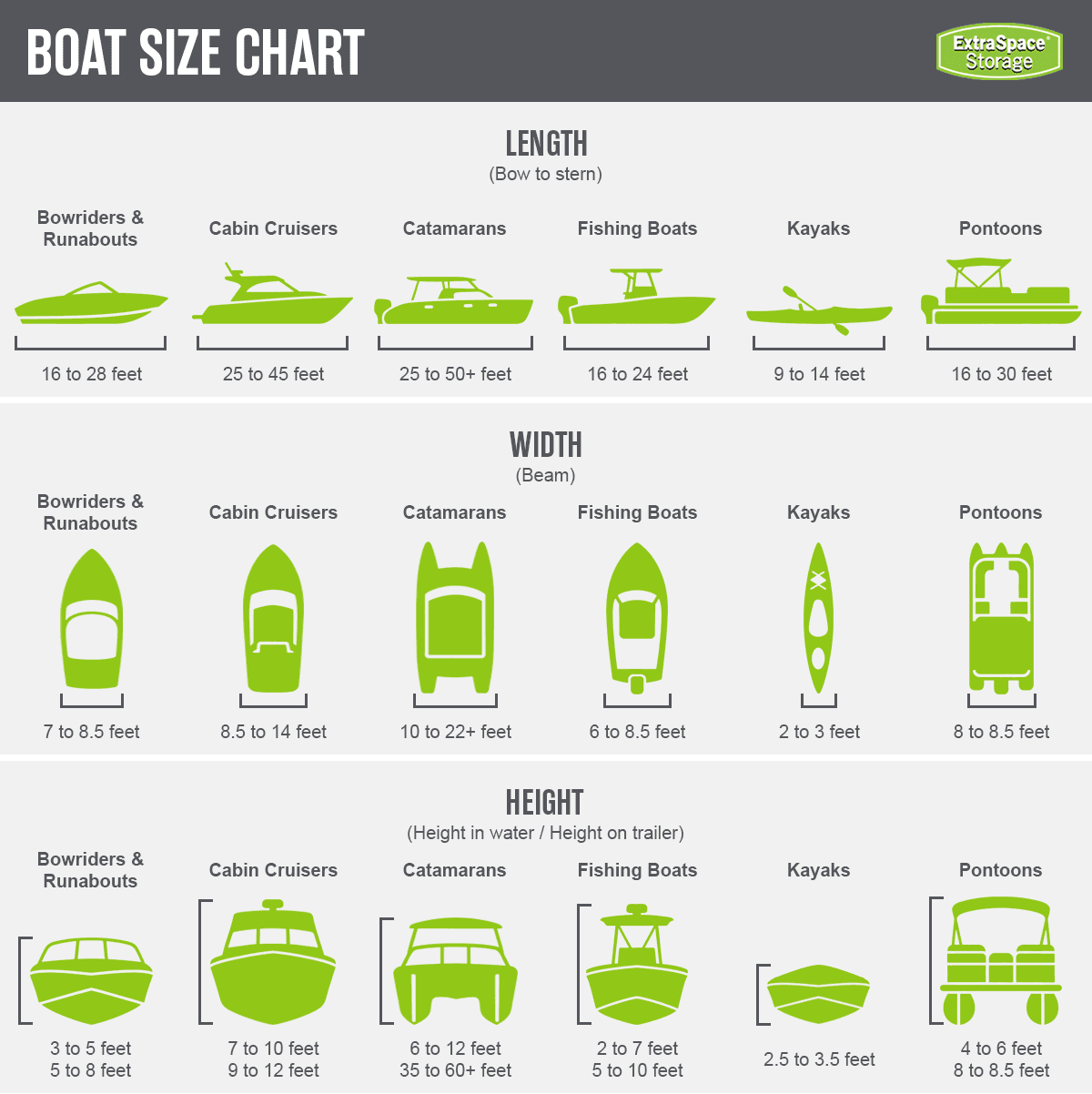
Bowriders & Runabouts: 16 to 28 ft
Cabin Cruisers: 25 to 45 ft
Catamarans: 25 to 50+ ft
Fishing Boats: 16 to 24ft
Kayaks: 9 to 14 ft
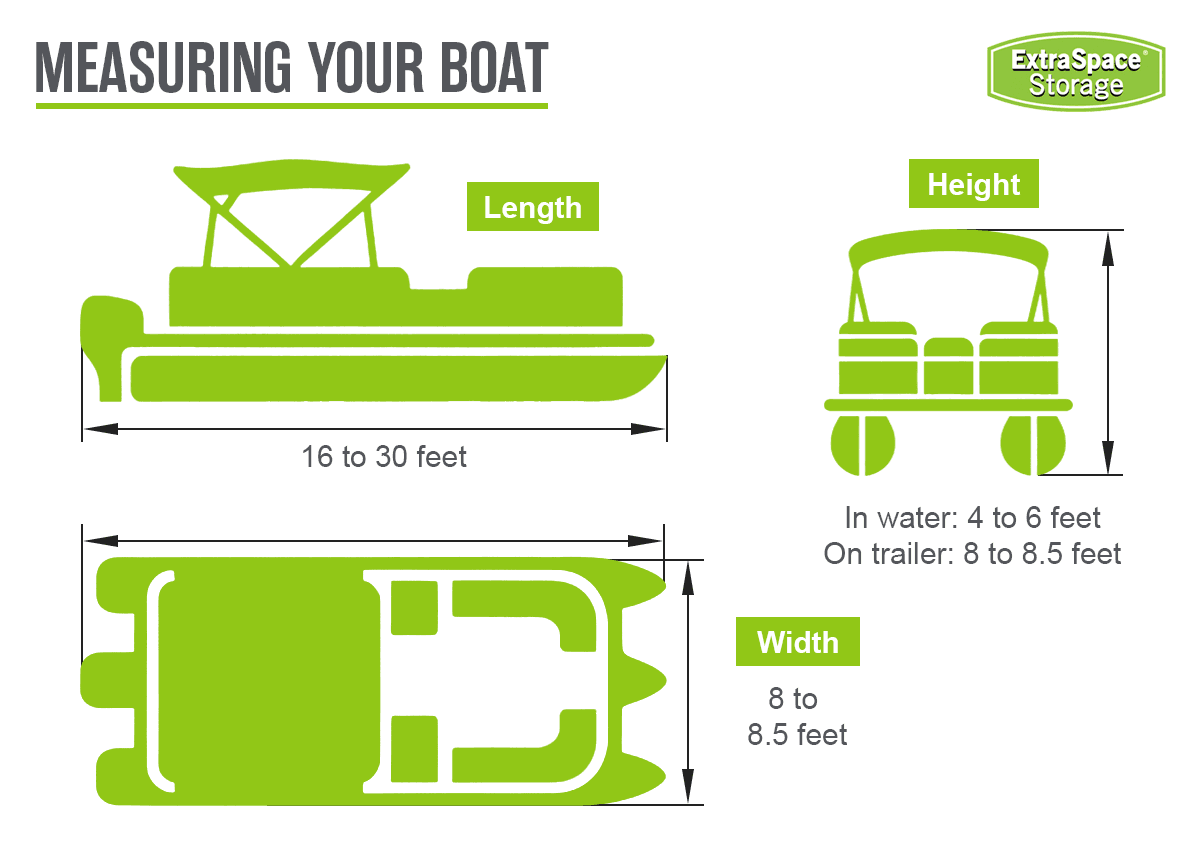
Pontoons: 16 to 30 ft
Please note these are not LOA measurements as they do not include anything protruding beyond the bow or stern.
Boat length can be split into three different measurement types. Length Overall (LOA) is the total size of the boat from front to back. Length on Deck (LOD) measures the hull distance, but skips extra hanging gear like front rails. Length at Waterline (LWL) is only the part of the boat that touches the surface when floating.
Knowing these different lengths is important because they control your costs, safety rules, and speed. You need to know your LOA because marinas, parking lots, and indoor garages use it to figure out your storage space and rental bills. You need LOD to look up state registration fees, choose the right trailer size, and buy the correct safety gear required by law. Finally, captains look at LWL because a longer waterline helps the boat ride smoothly and lets it travel much faster through the water.
How Wide Is the Average Boat & What Is the Beam of a Boat?
The beam of a boat is the vessel's width at the widest point, usually measured from the port (left) to the starboard (right) side across the middle of the vessel. Most standard recreational boats and motor yachts feature a length-to-width ratio between 3:1 and 4:1.
Boat operators need to know a boat's beam since it directly dictates legal width limits, towing safety, and storage costs. The trailable width limit in the U.S. is 8.5 feet, with wider boats needing a wide-load permit to transport. See the average width of boat types below:
Bowriders & Runabouts: 7 to 8.5 ft
Catamarans: 10 to 22+ ft
Cabin Cruisers: 8.5 to 14 ft
Fishing Boats: 6 to 8.5 ft
Kayaks: 2 to 3 ft
Pontoons: 8 to 8.5 ft
What Is the Average Boat Height?
The average height of a boat on the water ranges from 5 to 15 feet. However, once placed on a trailer, the overall height from the ground to the top of the boat typically increases by 3 to 5 feet because the hull is no longer submerged. Typically, the longer the vessel, the taller it will be. When navigating waterways, captains must track their air draft, which is the vertical distance from the water's surface to the highest fixed point on the ship—like a mast, flybridge, or tower. While air draft ensures you won't hit bridges, boaters looking to store their vessel in an indoor garage or outdoor lot must measure their total trailered height from the ground up. This ensures you get the right size storage space for your boat. See the average height of boat types below:
Bowriders & Runabouts: In Water: 3 to 5 ft | On Trailer: 5 to 8 feet
Catamarans: In Water: 6 to 12 feet (Power) | 35 to 60+ feet (Sailboat mast) On Trailer: 9 to 11 feet (Power) 8 to 10 feet (Sail with mast lowered horizontally)
Cabin Cruisers: In Water: 7 to 10 ft | On Trailer: 9 to 12 ft
Fishing Boats: In Water: 2 to 7 ft | On Trailer: 5 to 10 ft
Kayaks: In Water: 0.9 to 1.3 ft | On Trailer: 2.5 to 4.5 ft
Pontoons: In Water: 4 to 6 ft | On Trailer: 8 to 8.5 ft
How Much Does a Boat Weigh?
Boat weight is typically talked about in terms of dry and wet weight. Dry weight refers to the weight of the boat alone, while wet weight includes the boat plus fuel, water, batteries, anchors, coolers, safety equipment, and other gear. If you plan to tow your boat, you also need to account for the trailer weight, which is the weight of the empty trailer itself. To tow safely, calculate the total combined weight of the boat, trailer, and all onboard equipment. Knowing your boat's wet weight, dry weight, and trailer weight is important because a boat's factory dry weight rarely reflects its actual weight when it's ready for use. Exceeding your trailer's or tow vehicle's weight capacity can increase the risk of equipment damage, reduced braking performance, and unsafe towing conditions. You can figure out your boat's weight by checking the manufacturer's specifications, using a public or commercial vehicle scale, or estimating the total weight based on your boat's dry weight and the weight of fuel, water, and gear. See boat weight ranges for common types below:
Bowriders & Runabouts: Dry Weight: 2,000 to 4,500 lbs | Wet Weight: 3,500 to 6,500 lbs
Catamarans: Dry Weight: 3,000 to 9,500 lbs | Wet Weight: 5,000 to 13,000+ lbs
Cabin Cruisers: Dry Weight: 5,000 to 14,000 lbs | Wet Weight: 7,500 to 18,000+ lbs
Fishing Boats: Dry Weight: 1,500 to 5,500 lbs | Wet Weight: 2,500 to 8,000 lbs
Kayaks: Dry Weight: 40 to 120 lbs | Wet Weight: 60 to 150 lb
Pontoons: Dry Weight: 1,800 to 3,500 lbs | Wet Weight: 3,000 to 5,500 lbs
Average Boat Dimensions by Type Size Chart
Boat dimensions vary by type, manufacturer, and model. Use the chart below to compare the average size, weight, passenger capacity, and popular models of the most common recreational boat types.
Boat Type | Length | Width (Beam) | Height | Weight | Capacity/Passenger Load | Models |
Aluminum Fishing Boats | 8–24 ft | 4–8 ft | In Water: 2–4 ft On Trailer: 5–7 ft | Dry: 400–1,200 lbs Wet: 700–1,800 lbs | 4–8 | Lund Rebel, Tracker Grizzly, Lowe Roughneck |
Bass Boats | 16–25 ft | 7.5–8.5 ft | In Water: 3–4.5 ft On Trailer: 5.5–7 ft | Dry: 1,500–2,200 lbs Wet: 2,200–3,200 lbs | 3–5 | Ranger Z Series, Nitro Z Series, Skeeter FXR |
Bay Boats | 17–25 ft | 8–8.5 ft | In Water: 5–6 ft On Trailer: 7.5–11 ft | Dry: 2,000–4,000 lbs Wet: 3,000–5,500 lbs | 4–8 | Pathfinder 2200, Blue Wave 2400, Sea Pro 228 Bay |
Bowrider Boats | 16–35 ft | 8–9.5 ft | In Water: 4–5.5 ft (up to 8 ft with tower) On Trailer: 6.5–9.5 ft | Dry: 2,300–6,000 lbs Wet: 3,500–8,500 lbs | 8–12 | Sea Ray SPX, Bayliner VR, Chaparral SSI |
Cabin Cruisers | 26–75 ft | 8.5–16 ft | In Water: 9–14 ft On Trailer: 11–14 ft | Dry: 6,500–15,000+ lbs Wet: 8,500–19,000+ lbs | 6–12 | Sea Ray Sundancer, Regal Express, Jeanneau NC |
Center Console Boats | 18–55 ft | 8–14 ft | In Water: 6–10 ft On Trailer: 9–13.5 ft | Dry: 3,000–12,000+ lbs Wet: 4,500–16,500+ lbs | 6–12 | Boston Whaler Outrage, Scout, Grady-White Fisherman |
Deck Boats | 18–28 ft | 8–8.5 ft | In Water: 4.5–6 ft On Trailer: 7–8.5 ft | Dry: 3,000–5,500 lbs Wet: 4,200–7,000 lbs | 8–12 | Hurricane SunDeck, Bayliner DX, Stingray Deck Boat |
Dinghies | 6–8 ft | 4–5 ft | In Water: 1.5–3 ft On Trailer: 3.5–5 ft | Dry: 100–300 lbs Wet: 150–500 lbs | 2–3 | Zodiac Cadet, Highfield Roll-Up, West Marine Dinghy |
Fish & Ski Boats | 16–22 ft | 7.5–8.5 ft | In Water: 4–5 ft On Trailer: 6.5–7.5 ft | Dry: 1,800–3,500 lbs Wet: 2,700–4,800 lbs | 5–8 | Ranger Reata, Triton Fish & Ski, Lowe Fish & Ski |
High Performance Boats | 28–50+ ft (Corrected) | 8.5–10 ft | In Water: 4.5–6 ft On Trailer: 7–8.5 ft | Dry: 4,500–11,000 lbs Wet: 6,000–13,000+ lbs | 4–6 | Cigarette Racing 42X, Fountain 38SCX, Donzi 38 ZBR |
Pontoon Boats | 16–30 ft | 8–8.5 ft | In Water: 4.5–7 ft On Trailer: 7.5–9.5 ft | Dry: 1,500–3,500 lbs Wet: 2,500–5,000 lbs | 8–15 | Bennington QX, Sun Tracker Party Barge, Harris Cruiser |
Sailboats | 14–70 ft | 8–16 ft | In Water: 25–90+ ft (Mast) On Trailer: 8–11 ft (Mast down) | Dry: 1,200–8,000+ lbs Wet: 1,600–10,000+ lbs | 2–8 | Catalina 22, Beneteau Oceanis, Hunter 22 |
Tow Sports Boats | 18–28 ft | 8–8.5 ft | In Water: 5–6 ft (Tower down); 8–10 ft (Tower up) On Trailer: 7–8.5 ft (Tower down); 10–12.5 ft (Tower up) | Dry: 3,500–6,500 lbs Wet: 5,000–9,500+ lbs | 10–16 | Malibu Wakesetter, MasterCraft X24, Nautique G23 |
Trawler Boats | 26–50 ft | 10–16 ft | In Water: 12–18+ ft On Trailer: 13.5–16+ ft | Dry: 15,000–40,000+ lbs Wet: 19,000–48,000+ lbs | 6–8 | Grand Banks 42, Ranger Tugs R-43, Nordic Tug 40 |
Aluminum Fishing Boats
About: These types of fishing boats are slender and streamlined, & their outboard steerable motors make them easy to navigate through the water
Common Uses: Freshwater fishing, duck hunting, & day cruising
Where They're Used: Shallow & freshwater, inlets
Pros: Easy to operate, great for fishing families, more affordable than many other fishing boats, durable construction, lightweight & easy to transport, V-shaped hull for easy steering
Cons: Less sleek design than other boat types, can provide a rough ride in choppy water, limited amenities
Bass Boats
About: Bass boats have broad platforms that allow you to cast off the back & front
Common Uses: Freshwater fishing
Where They're Used: Inland lakes, rivers
Pros: Aerated tank for keeping fish, ample storage, outboard engine provides additional seating space, powerful, fast
Cons: Higher operating costs, expensive accessories, pricier than many freshwater fishing boats
Bay Boats
About: Shorter profile motor boats designed for floating in shallow waters
Common Uses: Fresh & saltwater fishing
Where They're Used: Shallow coastal waters
Pros: Deep hull for a smoother ride, built-in livewells, tilting outboard motor for shallow-water navigation, durable fiberglass construction
Cons: Less suited for large bodies of water, open deck offers little weather protection, limited amenities
Bowrider Boats
About: Considered the most popular of power boats for families
Common Uses: Fishing, day cruising, water sports
Where They're Used: Shallow saltwater bays, lakes, oceans
Pros: Swim platform for watersports, easy to trailer, V-hull for speed & maneuverability, more affordable ownership with lower insurance and maintenance costs
Cons: Rough ride in choppy water, limited space for overnight trips, minimal protection from harsh weather
Cabin Cruisers
About: Cabin cruisers are a spacious, comfortable type of power boat that you can live on
Common Uses: Overnight & day cruising, water sports, fishing
Where They're Used: Inland lakes, rivers, oceans
Pros: Handles rough water well, onboard amenities with shore power hookups, spacious cabin with sleeping accommodations
Cons: Higher purchase price, difficult to transport, slower than many other power boats
Center Console Boats
About: Named for the central location of the steering column, are ideal for sport fishing
Common Uses: Salt & freshwater fishing, day cruising
Where They're Used: Offshore ocean waters, lakes, rivers
Pros: Excellent rough-water performance, covered console for weather protection, generous fishing equipment storage, easy to trailer
Cons: Limited onboard amenities, more expensive than many fishing boats
Deck Boats
About: Similar to a bowrider, a deck boat has the same sleek design with even more seating capability
Common Uses: Water sports, freshwater fishing, day cruising
Where They're Used: Lakes, oceans, bays
Pros: Spacious seating for families, stable hull design, generous storage & passenger capacity
Cons: More expensive than some comparable cruisers, open seating limits comfort in poor weather
Dinghies
About: Small vessels that act as helpers to larger boats that may not be able to navigate tight areas
Common Uses: Recreational, companion boats, workhorse vessels, fishing
Where They're Used: Lakes, rivers, shallow water bodies
Pros: Easy to operate, affordable, maneuverable in tight spaces, inflatable models are easy to store, some models can be outfitted with sails
Cons: May need to be towed by a larger vessel, no amenities
Fish & Ski Boats
About: Features like built-in ski racks, elevated platforms, & fishing chairs can be added or removed to accommodate different water activities
Common Uses: Water sports, salt & freshwater fishing, day cruising
Where They're Used: Lakes, oceans, rivers, bays
Pros: Versatile for fishing, cruising, watersports, easy to trailer, removable features, ample storage
Cons: Limited protection from the elements
High Performance Boats
About: Built for lightness, speed, & style, high-performance boats have details like narrow beams, high-horsepower inboard or outboard motors, & deep V-hulls
Common Uses: High-performance sports, cruising, racing
Where They're Used: Coastal beaches, rivers, lakes
Pros: Exciting to drive, versatile for racing, cruising, & watersports
Cons: Limited seating, more expensive, increased fuel consumption, high insurance rates
Pontoon Boats
About: Well-known for gentle cruising on the water or entertaining, but they can also be used for fishing & water sports
Common Uses: Cruising, water sports, fishing
Where They're Used: Inland lakes, rivers, small bodies of water
Pros: Affordable, easy to trailer, simple to operate, versatile, easy to store
Cons: Slower than many boat types, limited rough-water capability, noisy outboard engine, little protection from the weather
Sailboats
About: Most use the wind to maintain speed, but some use inboard or outboard motors to help them power through the water
Common Uses: Daysailing, competitions, overnight cruising
Where They're Used: Lakes, bays, oceans
Pros: Environmentally friendly, easy to trailer (smaller models), capable of high speeds while racing
Cons: Steeper learning curve, higher purchase price than some cruisers, costly storage & maintenance, slower travel under sail, not ideal for shallow or narrow waterways
Tow Sports Boats
About: Perfect for families & individuals who love to ride choppy waves
Common Uses: Skiing, wakesurfing, wakeboarding, day cruising
Where They're Used: Lakes, bays, oceans, rivers
Pros: Hidden propellers improve safety, built-in accessories for watersports
Cons: Flat hulls reduce rough-water performance, more expensive than many sport boats, high fuel consumption
Trawler Boats
About: Trawlers are great boats for smooth rides & overnight cruises
Common Uses: Overnight & day cruising
Where They're Used: Lakes, oceans, intercoastal waterways
Pros: Excellent performance in rough water, comfortable amenities for extended cruising, fuel-efficient low-horsepower engines
Cons: Slower cruising speeds, higher maintenance costs due to additional onboard systems
What Size Boat Do You Need?
The right size of boat for you will depend on where and how you plan on using it, and how many passengers there'll be. Here are our recommendations on the size of boat you'll need for various activities.
Freshwater Fishing: Class A and Class 1 boats, such as aluminum fishing boats and bass boats, are ideal for freshwater bodies of water since their smaller size makes them easy to trailer, launch, and maneuver in shallow water.
Inshore Fishing: Class 1 bay boats and center console boats provide a balance of stability, shallow-water access, and enough space for multiple anglers.
Ocean Fishing: Class 2 or Class 3 center console boats and cabin cruisers offer greater stability, larger fuel capacity, and better performance in rougher waters.
Family Cruising: Class 1 bowriders, deck boats, and pontoon boats are great for day trips thanks to their comfortable seating, easy handling, and room for family and friends.
Overnight Cruising: Class 2 cabin cruisers and trawlers provide sleeping quarters, kitchens, bathrooms, and additional storage for multi-day adventures.
Extended Cruising: Class 3 cabin cruisers and trawlers offer the space, amenities, and fuel capacity needed for long-distance travel
Water Sports: Class 1 tow sports boats and bowriders are designed for activities like waterskiing, wakeboarding, and tubing, with powerful engines and dedicated towing features.
Sailing: Sailboats range from Class A to Class 3, but most recreational sailors will find a Class 1 or Class 2 sailboat offers the best balance of performance, comfort, and ease of ownership.
What Size Storage Unit Do I Need for a Boat?
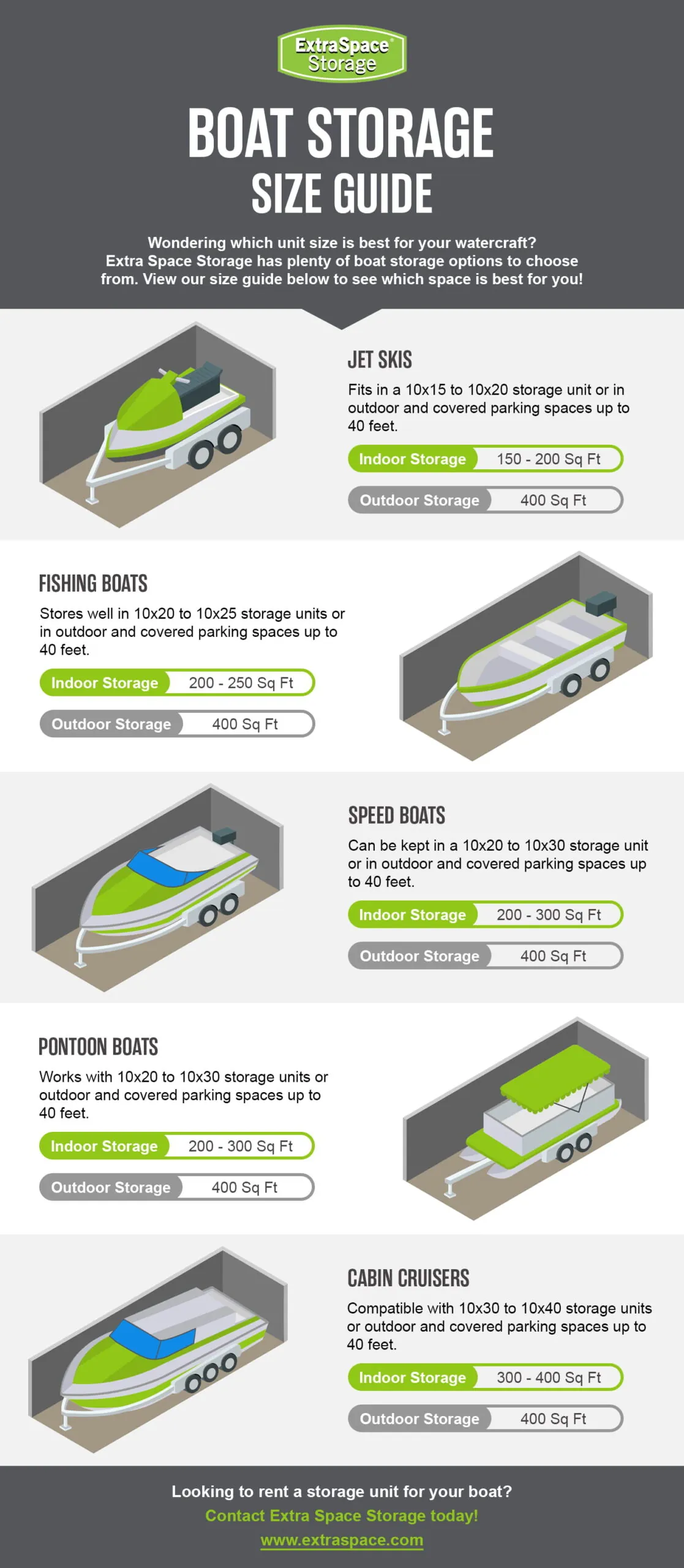
Most boats fit in a 10x20 to 10x30 storage unit with a trailer. Remember to choose a unit that is 3 to 4 feet longer than your boat's hull to clear the trailer tongue and motor. Check out this breakdown of standard recommended boat storage unit sizes.
10x15 storage units for dinghies, jet skis, small fishing boats, skiffs, and personal watercraft (PWC)
10x20 storage units for small bowriders, small speed boats, bass boats, compact pontoons, and aluminum fishing boats
10x25 storage units for cuddy cabins, medium-sized pontoons, center consoles, fishing boats, deck boats, and walkarounds
10x30 storage units for sailboats (with mast removed), large pontoons, bay boats, wakeboard boats, large day sailers, and cabin cruisers
How to Find the Right Storage Unit Size for Your Boat
Step 1—Measure Total Trailered Length: Measure from the absolute tip of the trailer tongue to the furthest rear attachment (outboard motor, swim platform, or trim tabs). This combined length is your true storage footprint.
Step 2—Measure Total Trailered Width: Measure the widest point of the setup, which is typically the trailer wheel fenders or guide posts, not just the boat's hull. Add a few inches for clearance.
Step 3—Measure Trailered Height: Measure from the ground to the absolute highest fixed point (windshield, collapsed bimini, or wake tower). Compare this strictly to the facility's door opening clearance.
Step 4—Add a Clearance Buffer: Add 3 to 5 feet to your total length measurement so you can walk around the bow and stern to load and unload things. Consider whether you need to open hatches, a bow door, or an engine cover inside the unit.
Step 5—Consider Unit Amenities: Pick between indoor enclosed, outdoor parking, or covered canopy spaces based on your climate control needs and budget. Ask nearby storage facility managers for availability in your area.
How Much Does Boat Storage Cost?
While boat storage costs will vary by location, it typically ranges from about $30 to $500 or more per month—depending on the size of your boat, the type of storage you choose, your location, local demand, and any premium features, such as indoor or climate-controlled storage.
Here are some of the price ranges from our popular boat storage markets:
City | Average Monthly Cost of Boat Storage |
$34 to $304 | |
$10 to $284 | |
$34 to $434 | |
$43 to $535 | |
$29 to $507 |
Note: The price ranges in this table include all types of boat storage, including indoor, outdoor, and covered. All prices are for reference only and are subject to change without notice. Find the exact boat storage pricing at an Extra Space Storage facility near you.
Where Can I Rent Boat Storage?
There are several ways to store a boat, including renting indoor vehicle storage at a self storage facility, or other indoor options like a home garage or dry-stacked storage. If you live in a temperate climate, winterizing your boat for the outdoors is an option, too! Consider outdoor boat storage options like an at-home trailer, covered or uncovered outdoor parking spaces at a storage facility, storing at a marina slip, or on a boat lift.
Your best option would be to rent self storage at a nearby secure facility like Extra Space Storage! Our hardworking staff keep our facilities clean and well-maintained to create a positive environment for all of our customers. Additionally, we offer storage in popular markets like Miami, Phoenix, and Los Angeles.
Frequently Asked Questions
What size boat is considered a yacht?
A boat is generally considered a yacht once it reaches 40 feet (12 meters) in length overall (LOA). While there is no strict, official legal boundary separating a standard boat from a luxury yacht, the maritime industry typically breaks down the naming conventions by size and luxury amenities:
Cabin Cruiser/Express Cruiser (26 to 39 feet): mid-sized vessels featuring basic overnight quarters, a small kitchen (galley), and a bathroom (head), are still considered boats
Yacht (40 to 79 feet): features premium cabin spaces, a permanent crew area, advanced marine navigation systems, and dual engines built for extended open-water cruising
Large Yacht (80 to 199 feet): requires a professional, hired crew to operate legally and safely due to its massive size and complex mechanical systems
Mega Yacht/Superyacht (200+ feet): ultimate luxury tier featuring multiple decks, swimming pools, helipads, and global cruising capabilities
Can you store a boat in a storage unit?
Yes, you can absolutely store a boat in a storage unit, provided you choose the right facility type for your boat's dimensions. Depending on your budget and climate control needs, most facilities offer three distinct boat storage options: Indoor vehicle storage units, covered outdoor units, and uncovered outdoor units. A storage unit is often the best option for storing a boat during the off-season.
What size boat requires a captain’s license?
A commercial captain's license is not dependent on boat length, but rather on the intent of your voyage. Under U.S. Coast Guard (USCG) regulations, you're legally required to have a captain's license the moment you carry even one paying passenger aboard your vessel, regardless of boat size. For private, recreational boating with friends and family, a captain's license isn't legally required—however, you will need to check your local state laws to see if you must carry a standard boater safety education card.
What size truck do I need to pull a boat?
The size truck you need will vary, but generally you'll need a midsize truck for small boats (under 5,000 lbs), a full-size half-ton truck for boats up to 10,000 lbs, and a heavy-duty (3/4-ton) truck for anything exceeding 10,000 lbs.
What are typical boat trailer dimensions?
Typical boat trailer dimensions vary by boat type, but you can reference a standard boat trailer size chart to find that trailers generally run 2 to 3 feet longer and 1 to 2 feet wider than the boat itself. For highway safety, a trailer's maximum legal width is restricted to 8.5 feet (102 inches) from fender to fender, while its frame height adds 2 to 4 feet of ground clearance underneath the hull. Total towing length typically spans 14 to 40+ feet depending on the setup, requiring extra room at the front for the tongue to clear your truck's bumper during tight turns. Empty boat trailer weight ranges from 200 to 400 pounds for small fishing boats up to 2,000+ pounds for heavy-duty steel variants designed for large cabin cruisers.
How big of a boat do you need for the ocean?
There is no legal minimum size to ride a boat out into the ocean, but for safety reasons, 30 feet is widely considered the absolute minimum, while 36 to 45 feet is ideal for couples or small crews tackling open, deep-water (bluewater) passages.
Can I store my boat and trailer together?
Yes, in fact, keeping the boat on the trailer is one of the most common and convenient storage methods at home or if you rent a dedicated space at a local storage facility.
***
Unsure how much space your boat needs in storage? Use our AI Smart Size Finder to find the right size space for your boat in seconds. Extra Space Storage offers reliable boat storage at our facilities across the U.S. Rent boat storage today!