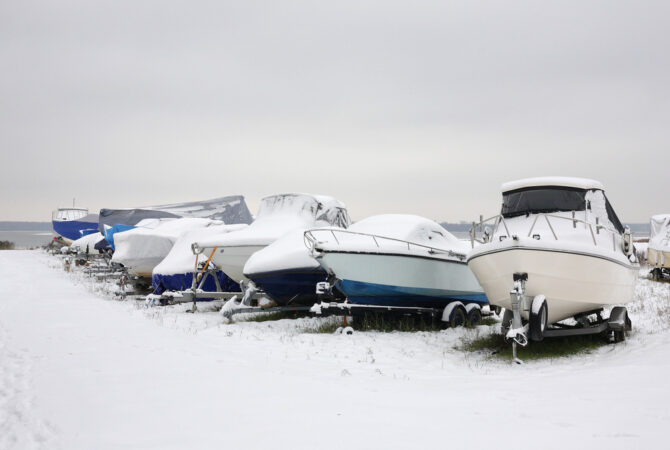
Winterizing a boat is an essential part of off-season preparation, helping protect your vehicle from damage caused by freezing temperatures, moisture, pests, and more. Use this step-by-step guide to winterize your boat and pick a winter boat storage option before temperatures drop, so you’ll be ready for launch when boating season returns!
Gather Essential Boat Winterization Supplies
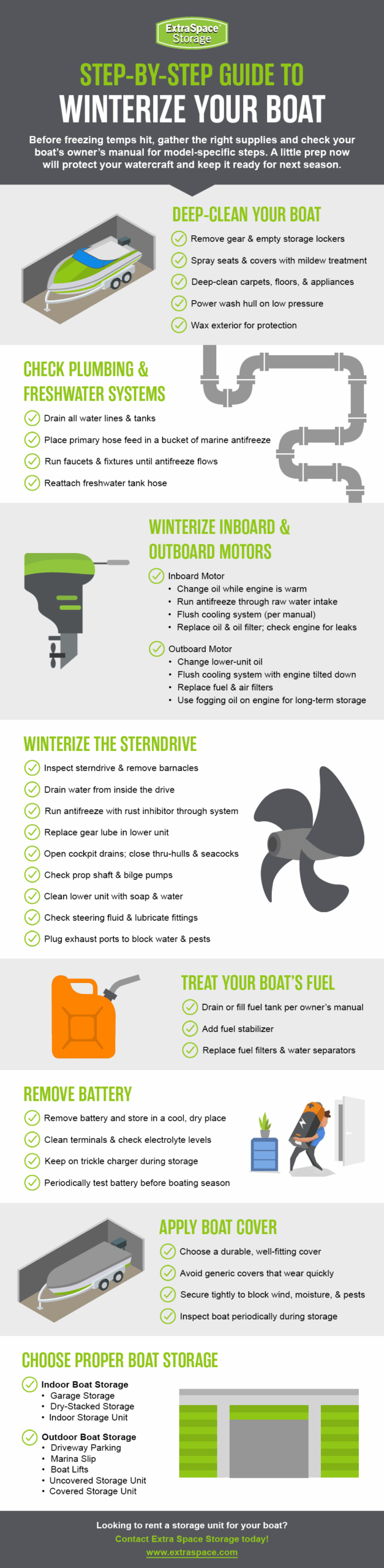
Much like winterizing jet skis, RVs, motorcycles, and cars, winterizing boats is easier when you have gathered all the necessary materials ahead of time. Here are the supplies you’ll need to prepare your boat for winter storage:
- Soap & water
- Wash rag or cloth
- Mildew spray
- Boat wax
- Marine & RV antifreeze
- Fuel & stabilizer
- Engine oil
- Fogging oil
- Oil filter
- Boat exhaust plugs
- Oil suction pump
- Lower-unit lube injection pump
- Gear lube
- Boat cover or boat shrink-wrapping supplies
- Trickle charger (optional)
Clean the Boat’s Interior & Exterior
Cleaning your boat inside and out is one of the most important winterization steps. This helps prevent mold and mildew from developing on seats, floor mats, and other parts of your boat’s interior, and keeps exterior grime from causing damage to your hull. Here are some steps for cleaning a boat before winter:
- Tie off the steering wheel.
- Remove all gear, such as fishing rods, life jackets, tackle boxes, etc.
- Clean out storage lockers and compartments.
- Spray vinyl seats and covers with a mildew spray.
- Deep clean carpets, floors, and appliances inside the boat. Allow the interior to dry completely before storage.
- Using low-pressure settings, power wash the boat’s hull to reduce buildup, then seal it with wax.
Check Boat Plumbing & Freshwater Systems
If your boat has freshwater plumbing for a sink or shower, you’ll need to winterize your boat water system to prevent damage to the engine block caused by freezing water. These systems often run along the galley and head, with water lines extending throughout the hull. Here’s how to preserve your water plumbing system before storage:
- Drain excess water from lines and tanks.
- Remove the primary hose feed and place it into a bucket of non-toxic marine and RV antifreeze (also known as “the pink stuff”).
- Turn on every fixture and faucet until antifreeze comes out.
- Reattach your freshwater tank hose.
Winterize Inboard & Outboard Motors
The biggest threats to a boat engine during the winter are freezing temperatures, fuel deterioration, and corrosion. The following boat engine winterization steps will help protect your engine during storage and make spring startup easier.
How to Winterize an Inboard Boat Motor
- Change the oil while the engine is still warm.
- Remove the raw water intake line and place it in a bucket of marine and RV antifreeze.
- Run the engine until the antifreeze has gone through the entire engine.
- If your engine has a flushing port, run cooling water through it. Otherwise, follow the manufacturer’s recommended method for flushing.
- Drain the old oil, change the filter, add fresh oil, and make sure there are no leaks in the engine.
How to Winterize an Outboard Motor
- Change the lower-unit oil. This step is imperative for winterizing outboard engines, as water left in the engine can cause serious damage when the temperature drops.
- Flush the cooling system, keeping the engine tilted down so all the water can drain out.
- Change the fuel filter (and air filter if needed) according to your boat’s make and model.
- If storing your boat for an extended period, use fogging oil to protect the engine from rust and corrosion.
Winterize the Sterndrive
The sterndrive (or inboard/outboard drive) is a propulsion system with an engine inside the boat and a drive unit mounted at the back of the hull (through the transom) that helps power and steer the boat. Follow these sterndrive winterization steps for long-term boat storage:
- Inspect the sterndrive for cracks, and remove any barnacles or other marine pests.
- Drain any residual water inside the drive.
- Run antifreeze with rust inhibitor through the raw water systems in the drive until it comes out of the exhaust.
- Drain and replace the gear lube in the lower-unit drive, checking for excess water.
- If storing your boat outdoors, open cockpit drains, but close all thru hulls and seacocks.
- Check the boat propeller shaft for damage, and ensure bilge pumps are free of water and debris.
- Clean the lower unit (i.e. the part that sits below the water) with soap and water.
- Check fluid levels in steering pumps and lubricate all fittings.
- Plug exhaust ports to protect against water, snow, and pests.
Treat the Fuel
To prepare your boat for short-term or long-term vehicle storage, make sure to treat your fuel systems. Depending on your boat type and the owner’s manual instructions, some manufacturers may suggest draining the fuel tank, while others suggest filling it. Either way, add a fuel stabilizer and change the water separators and fuel filters.
Remove the Battery
One of the most important steps to prepare your boat for winter storage is taking care of the battery. Performing regular boat battery maintenance—like cleaning battery terminals and checking electrolyte levels—can help keep your battery in top condition. It’s recommended that you keep the battery on a trickle charger to make sure it stays charged during the off-season. While your boat is in storage, periodically test your startup to make sure it’s ready to run when the boating season returns.
Apply a Boat Cover
Choosing the right cover will help protect your boat from surface damage while it’s in vehicle storage. Generic covers, typically made from synthetic materials and mass-produced by big-box retailers, are an affordable boat cover option—however, they usually only last a few seasons and can be difficult to fit. Canvas boat covers are durable and slightly more expensive, but they’ll last considerably longer. Although pre-fitted OEM covers are the most costly, they’re custom-made to create a perfect fit to your specific boat. And if you prefer not to buy a cover, shrink wrapping your boat is another option. Even with protective coverings, remember to perform regular boat inspections while your boat is in storage so you can detect and address potential issues like moisture buildup, pest infestations, or structural damage.
Find the Best Boat Storage Option
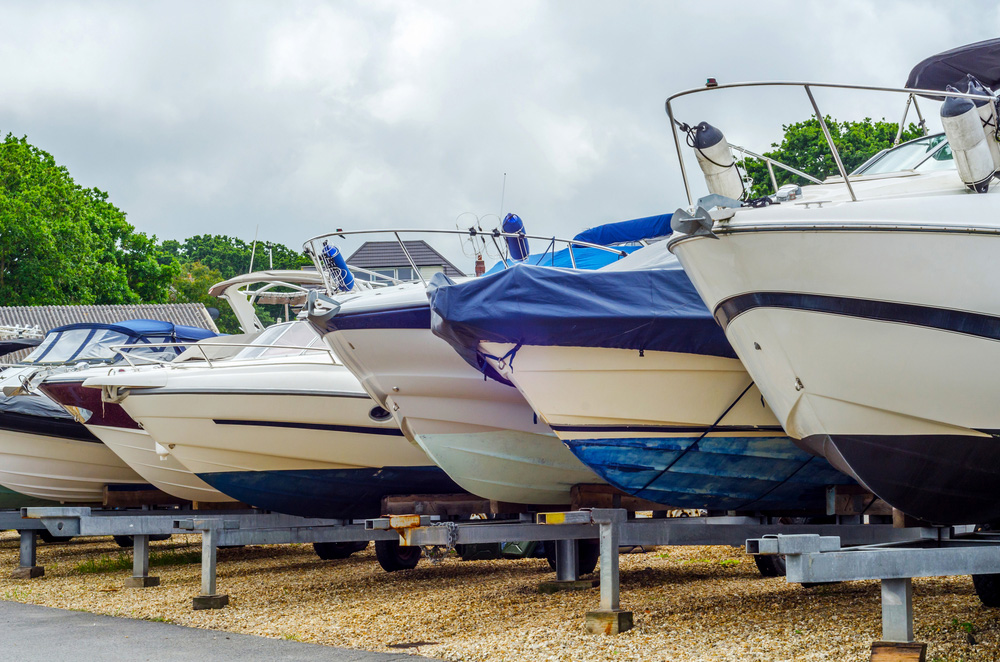
Thinking about where to store your boat during the off-season? Consider your location, what unit size you need, your boat type, and the boat storage rates that fit your budget to determine which indoor or outdoor vehicle storage option is right for you!
Indoor Boat Storage Options
- Garage Storage: Moving another vehicle outside to accommodate your boat offers security and convenience at no cost.
- Dry-Stacked Storage: Also known as “dry docking,” this option secures and protects your boat from the elements by storing it in stacked compartments inside a warehouse.
- Indoor Storage Unit: By keeping your boat inside a storage unit at a self storage facility, you can rest assured your boat is well-protected throughout the winter. You can even opt for climate-controlled storage!
Outdoor Boat Storage Options
- Parking in a Driveway: Affordable and convenient, this option allows you to store your boat at home for free.
- Marina Slip: Otherwise known as “wet storage,” this outdoor storage option is ideal for boat owners in warmer regions where temperatures don’t drop below freezing.
- Boat Lifts: This option keeps your boat at your dock but out of the water, offering convenience and some protection.
- Uncovered Storage Unit: Renting a designated parking space in a secure, fenced-in area at a self storage facility helps protect your boat and frees up space in your garage or driveway.
- Covered Storage Unit: This outdoor storage option provides a roof over your boat at a self storage facility, offering some protection from the elements.
Find Winter Storage for Your Boat in a City Near You
Looking for indoor, covered, or outdoor boat storage? Extra Space Storage has convenient, affordable options at locations across the U.S.! Popular cities for boat storage include:
- Boat Storage in Chandler, AZ
- Boat Storage in Big Bear Lake, CA
- Boat Storage in Centennial, CO
- Boat Storage in Daytona Beach, FL
- Boat Storage in Cape Neddick, ME
- Boat Storage in Bloomington, MN
Reserve storage space near you today!