

Transitioning to college life? Whether you’re going for an undergraduate or graduate degree, there’s no magic formula for college success. And with the pressure to balance your coursework on top of moving to a new city, living away from your parents, and possibly working a part-time job, the college experience can seem overwhelming. Here are some ways to thrive during your university career, from freshman year to graduation!
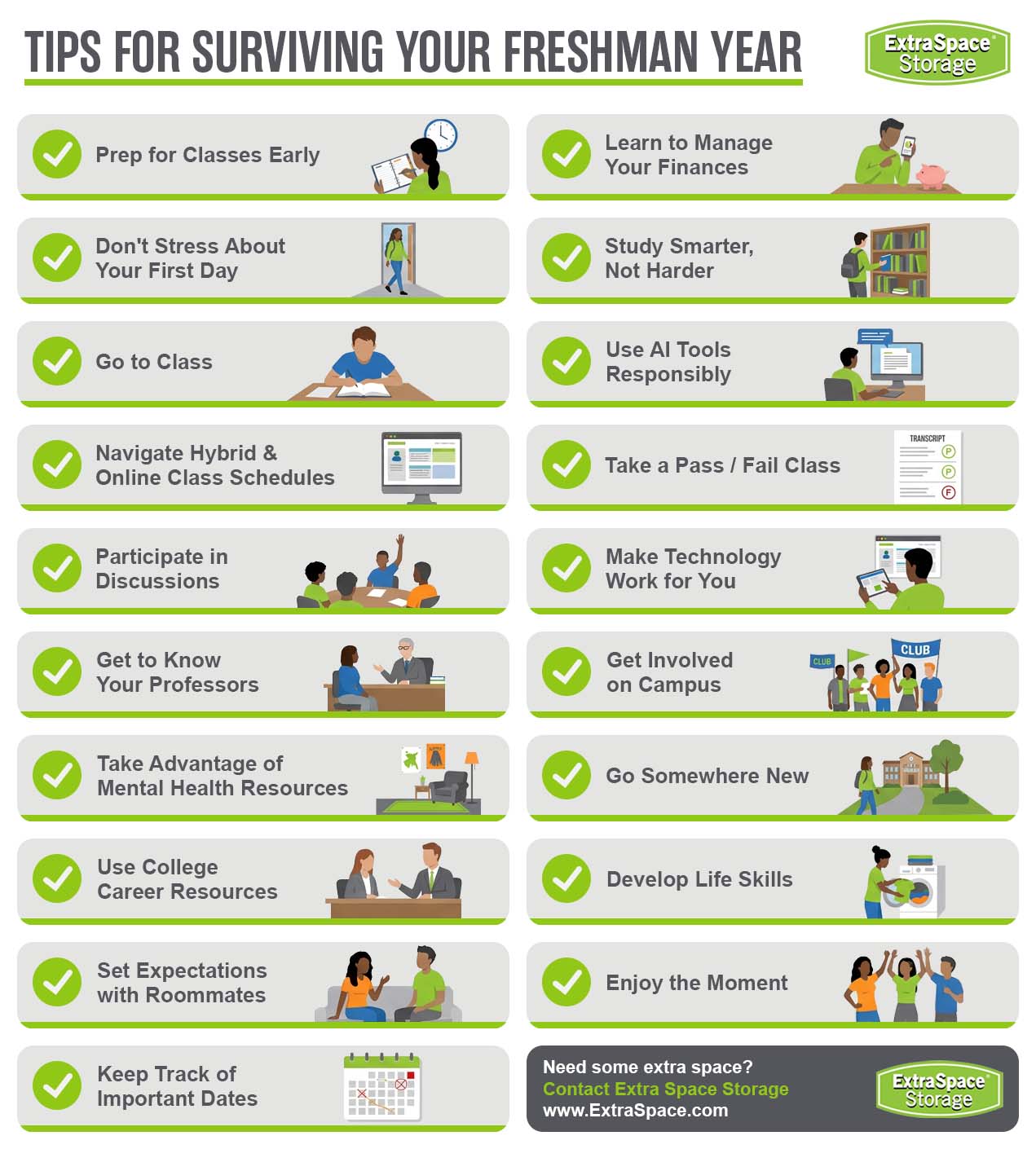
Prep for Classes Early
College can be a stressful time, even before your first day of classes. Many colleges have a freshman orientation event for new students to help familiarize them with things like the layout of the campus, academic resources, and other incoming freshmen. Ease your nerves by registering for college classes on or ahead of time. If you get waitlisted, don’t worry! Email the professor and see if they’ll still let you attend class while you wait for an opening, or you can schedule another class as a backup. Another college success tip for scheduling classes is balancing your course load. Try not to cram all your hard classes into one semester—if you mix in general education requirements, you’re less likely to get academic burnout. And before the first day, visit campus and map out your classes—what buildings they’re in, how far away they are from each other, and if necessary, where you need to park—so you know where you’re going and how long it’ll take you to get there.
Don’t Stress About Your First Day
Don’t know what to bring on the first day of college? Bring essentials like your syllabus, folders, pencil, pens, and a notebook for taking notes. If you have a laptop, bring your charger and other cords to make sure you can keep your electronics charged throughout the day. The best way to prepare for your first day of college is to review the syllabus for each of your classes and take notes on what you might need—particularly on technology use and required supplies. Professors will also include what books you need for the semester, giving you the chance to buy them ahead of time so you don’t have to worry about getting them at a later date. As you get further in your college career, you may find more is expected on your first day of classes, like pre-semester readings or assignments, so get in the habit of reading the syllabus in advance.
Go to Class
It may seem like a no-brainer, but to be successful in college, make a point to attend all your classes during the semester. This is important college advice to follow since it can be easy to fall into the habit of skipping a class or two during the week if you want to sleep in or use the time to finish assignments from other classes. Attending class is a college success tip to help you stay up-to-date on material, create a better relationship with your professors and classmates, and add structure to your day. If you know you’re a night owl or you don’t like waking up early, schedule classes in the afternoons and evenings to decrease your chances of oversleeping and skipping class.
Navigate Hybrid & Online Class Schedules
Your university may offer remote online classes or hybrid classes where some sessions meet in person and others take place online. While these types of classes provide additional flexibility, they also require you to have time management skills and personal accountability. It can be easy to lose track of what’s happening in your in-person class versus online classes since your schedule changes throughout the week. Some beneficial advice for college freshmen is to stay on top of your hybrid schedule—keep a detailed calendar that clearly marks which days you need to be on campus and which are virtual classes. In general, it’s important to treat your online classes with the same importance as in-person lectures. Be sure to actively participate in discussion boards, keep up with recorded lectures, and don’t hesitate to reach out to your professor or teaching assistant for questions. Creating a consistent weekly routine and a good place to study can help you stay organized and avoid falling behind or feeling overwhelmed.
Participate in Discussions
Once you’re in class, it’s essential to stay present, since many lectures are the place to learn the information you need—especially in most intro courses. When you’re in class, sitting at or near the front of your classroom encourages participation and boosts your grades. You may also practice effective note-taking strategies like using your own words and including color to help you retain what you’ve learned. Participating in discussions and asking questions not only keeps you engaged to better learn the material, but also helps you get to know your professors and classmates! Plus, if you miss a day, knowing your classmates makes it easier to ask if they can send you that lesson’s notes.
Get to Know Your Professors
The first week of classes is an excellent time to get to know your educators, which is great advice for first year students. Throughout your college experience, they can be helpful resources for internships, job recommendations, or research opportunities. This college success tip is also good for incoming college freshmen who are unsure about the classes and professors they’ve chosen. You can always check Rate My Professors to discover if your professor will be a good fit for your learning style.
Take Advantage of Mental Health Resources
In your freshman year of college, you may find you need help balancing out your mental health with schoolwork, or that you require accommodations for navigating a new environment. Many campuses have dedicated offices and staff for academic support, accessibility services, cultural organizations, and advocacy groups to help you adjust. These systems of support can provide you with everything from tutoring and mentorship to accommodations and connections in your new community. If you need more personal support, check out your school’s health center and counseling services. Seeking help is key to surviving college, and will help you have the best college experience possible.
Use College Career Resources
One of the best tips to do well in college from freshman year and beyond is to take advantage of the offices and services provided by your university! Your academic advisor is a great resource to meet with at least once a semester to provide guidance during your academic experience, but it doesn’t end there. Visit your university career center, financial aid office, study center, or library and meet with the staff to see if they can connect you with recent college graduates, review your resume, or help to maximize your college success. Your university also has a student resource center for different majors, which can offer specialized help with subjects like math or writing. Another tip for college students is to show up to free campus events throughout the year for fun student activities, extra school supplies, free shirts, meals, and other goodies!
Set Expectations with Your Roommates
Living on campus? Unless you were fortunate enough to get a room to yourself, chances are you’ll live with a roommate your freshman year and possibly beyond. Sharing a room may be a completely new concept for some, so a useful tip for college students is to set boundaries and communicate effectively with your roommates. So, while you and your roommates can decorate your dorm together and hang out, it’s still important to set rules for dorm organization and expected noise levels throughout the day. If you want an extra pair of ears, ask your RA or other residence hall staff to sit in and guide the chat.
Keep Track of Important Dates
Staying organized is a proven college success strategy, which is why getting a planner is one of the most common tips for college students! During the first week of classes, go through each syllabus and write down major dates for exams and papers. If you’d prefer a digital planner, check your university’s student portal or learning management system to see if there’s a calendar feature that will allow you to digitally highlight big assignments and keep track of tests. You can also use mobile planners or calendar apps to set up reminder notifications to keep you on track!
Learn to Manage Your Finances
Finances can be confusing to navigate, especially if it’s your first time paying your own bills. Some of the best advice for college freshmen is to get educated on your finances now! Understand the details of your student loans, download a budgeting app, and remember that college is a good time to start building credit and saving as much money as you can. As you manage your finances, try to build an emergency fund for unexpected college expenses like fees or classroom purchases. Opt to rent your textbooks when possible, and stick to your college meal plan instead of going out to eat every night—or limit your meals out to once a week. When your situation allows, consider getting a part-time job, full-time job, or paid internship within your field of study to build up your resume and pay for your rent and groceries.
Study Smarter, Not Harder
Essential advice for college students is to schedule study time and follow healthy study strategies. Spending all night cramming for a big test can affect your health, and it’s likely you won’t retain the information from your hurried study session. Creating a study schedule based around your college classes and the times you’re most productive can help you prioritize work from harder classes, so you can get it done more efficiently. Try adding your extracurricular activities to your study schedule, too, so you know when to plan your ideal study time.
Use AI Tools Responsibly
When it comes to using AI tools in college, many colleges and universities have specific policies that you should familiarize yourself with to avoid misunderstandings that could lead to academic consequences. Before using any AI tools or language learning models for assignments, review your professor’s syllabus as well as your institution’s academic guidelines. Some instructors may allow for some AI use for brainstorming or outlines, while others may restrict its use in its entirety. When in doubt, ask your professor for guidance to ensure that you’re staying within the rules.
Take a Pass/Fail Class
Did you know not every class has to affect your college GPA? Many universities will allow you to take a certain amount of university credit hours as “pass/no pass.” These classes don’t count toward your GPA, but they can help you achieve college success if you want to take an elective course that isn’t necessary for graduation or if you want to explore new subjects. Just be sure to check with your college advisor before changing the status of any classes!
Make Technology Work for You
Subject giving you a hard time? No matter your academic goals, there’s likely an app that can help you on your way to college success! For easy note-taking, college students can try using speech-to-text software like the voice-typing function in Google Docs or the built-in Siri Dictation on iOS devices. Many universities also provide students with a free Microsoft OneDrive account and Office 365 Education suite, which can allow you to access your notes or tools from any internet. You may also consider looking at various productivity tools like Notion or Todoist to help you manage and organize your schedule or assignments. Whether it’s digital flashcards, pre-arranged outlines, or a specific type of calculator, a little research will likely uncover a software tool to help you survive your college experience!
Get Involved on Campus
There are many benefits of getting involved on your college campus! Fun activities like college tailgating can help you unwind on the weekends and meet new friends. Specialized university clubs can expand your skill set, provide networking opportunities, and look fantastic on your resume. University extracurriculars can even help you continue to pursue a passion, hobby, or sport without needing to pay for a class or try out for a team. Professional organizations and nonprofits are also good ways to get involved in your chosen job field. If you’re worried about keeping up with your studies while getting involved on campus, an easy college success tip is to start small! Choose an activity that meets once a week, and add more college extracurricular activities if you find yourself with extra time.
Go Somewhere New
College is the time to expand your worldview, whether you commit to attending university out of your home state, change your address temporarily for a study program, or just do things to get yourself out of your comfort zone! Being a freshman, college is a new adjustment, but putting yourself out there is an awesome way to meet new people and experience new opportunities. Branching out can make you happier and help build your confidence. On a larger scale, studying abroad or participating in an exchange program lets you experience a different perspective or culture—plus, you can earn credits toward your degree through your travels.
Develop Life Skills
College tips don’t just end with your academics. If you’re a student who’s moving into a dorm or a small apartment off campus, you’ll have to manage your day-to-day responsibilities on your own when you’re not studying or in class. From doing laundry and grocery shopping to cooking all of your meals and keeping your living space organized, developing good basic life skills can make your college experience a better experience. Start small by creating routines that help you stay on top of everyday tasks. Set aside time each week for cleaning, budgeting, and meal prep so things don’t pile up. Learning how to manage your time, take care of your health, and stay organized will not only reduce stress but also give you more freedom to focus on your classes and social life.
Enjoy the Moment
Your college experience will go by quicker than you think! One of the best college success tips is to make sure you’re spending your time and energy on the things that matter to you and your education, while also taking time for yourself. You can set up mock interviews and resume reviews at your university career center, but still catch student activities like movie nights, concerts, or late-night Greek life fundraisers. If you feel like you’re stretched too thin, it’s okay to stay in for a night or lighten your course load the following semester so you can get the right amount of sleep. College may seem like a daunting few years, but if you make a point to challenge yourself while still prioritizing your health, surviving college will be a cinch!
***
The Extra Space Storage “There’s Space for Everyone” Scholarship can help provide the resources you need to cover college expenses. Join our newsletter to be notified when scholarship entries open. And after freshman year, instead of moving all your items home, consider renting local student storage at one of the thousands of Extra Space Storage locations across the U.S.