Moving Guide
How to Move a Home Office: Timeline, Packing Tips, & More

Part of moving to a new home may include relocating your home office. This process is more than boxing up a spare room—it’s relocating the command center of your career or business. Fortunately, an organized plan and proactive approach will help you relocate with minimal downtime and maybe even spark new creativity in your fresh surroundings. Use this guide to learn tips and tricks for packing your home office when moving.
Map Out a Timeline & Checklist
Preparing to move your home office should start weeks before your actual moving date. Grab a calendar and block time for the following milestones:
Timeline | Tasks |
6–8 weeks before your move | Confirm move date, measure furniture and doorways, secure quotes from movers or truck rentals, and schedule time off work. |
4–6 weeks before your move | Order specialty boxes and packing supplies, declutter office, and create digital backups. |
2–4 weeks before your move | Begin packing seldom-used items, notify internet provider of transfer, and arrange mail forwarding. |
1-2 weeks before your move | Pack daily-use equipment last, disassemble furniture, prepare “open-first” kit, and review checklist. |
Splitting tasks across several weeks protects your regular workload. If an unexpected deadline or personal commitment arises, you can slide less-critical chores to another day without derailing your entire schedule.
Declutter Before You Pack
Help lighten some of the load on moving day by decluttering your home office ahead of time. The less you move with, the easier it will be to put everything into your new space.
Conduct a sweep: Empty each drawer and shelf onto a table. Seeing everything laid out highlights duplicates or items you no longer use.
Apply the 90-day rule: If you haven’t used an item in three months and it isn’t required to keep, consider letting it go.
Digitize paper piles: Scanner apps on smartphones can batch-scan receipts, meeting notes, or signed contracts directly into PDFs. Store them in cloud folders mirroring your physical file categories.
Sell items you no longer need: List old monitors, desk chairs, or unused printers on local marketplace sites. The extra cash can offset moving costs.
Dispose responsibly: Drop old hard drives and batteries at e-waste centers and shred sensitive documents. Many office-supply stores offer shredding by the pound and recycling bins for ink cartridges.
Secure Documents & Back Up Data
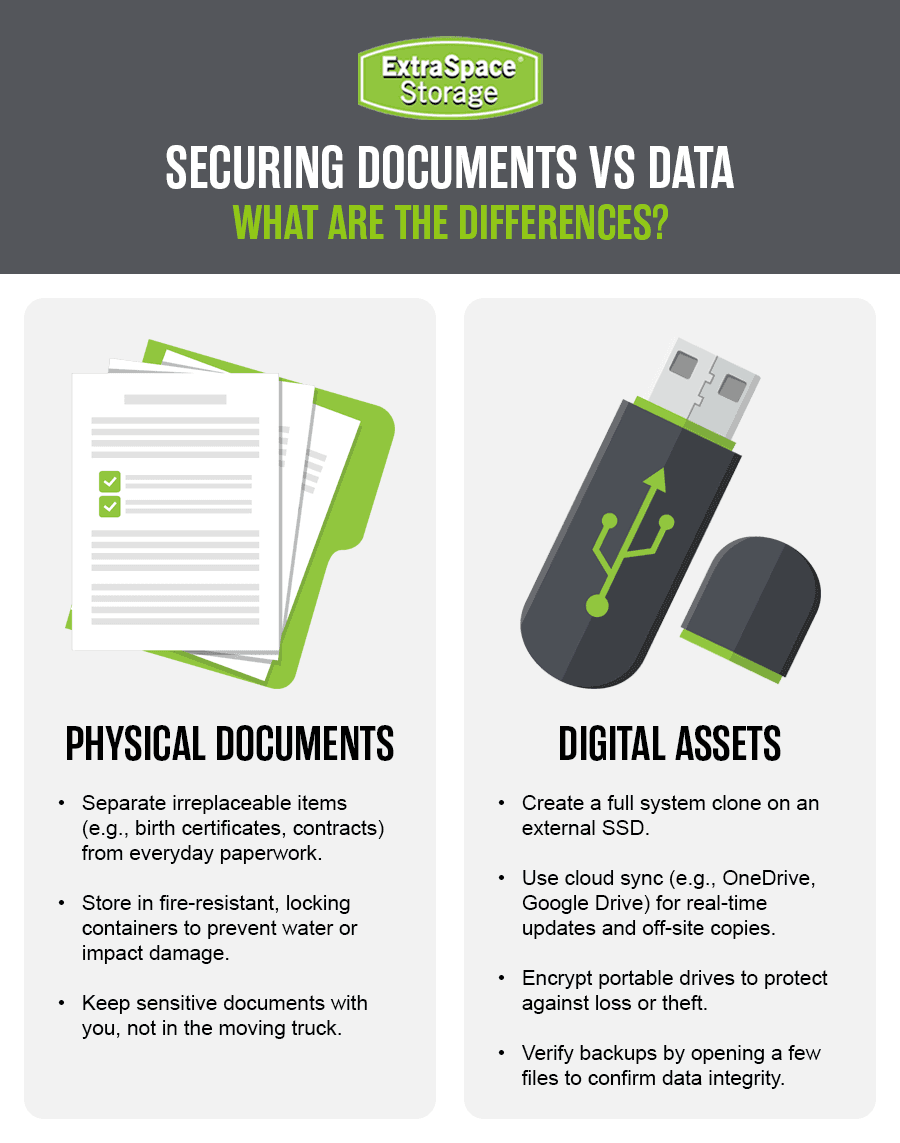
Your home office likely contains important documents that will need to be safely transported to your new home. Follow these steps to help stay organized and keep files protected.
Safeguard Physical Documents
Prioritize: Separate irreplaceable items (birth certificates, client contracts) from everyday paperwork.
Use locking containers: Fire-resistant bags or portable safes protect against water and accidental drops en route.
Keep important items with you: Keep sensitive documents with you, not on the truck, especially if they contain personal identifiers or proprietary information.
Back Up Digital Assets
Mirror your file system: Use disk-cloning software to create an exact snapshot of your hard drive onto an external SSD.
Enable cloud sync: Services like Microsoft OneDrive or Google Drive automatically reflect changes in real time, providing an additional copy off-site.
Encrypt portable drives: A password-protected drive prevents unauthorized access if misplaced.
Test the backup: Open a handful of files from the external copy to confirm the data is intact—an often-skipped but vital step.
Gather Packing Supplies
Professional-grade packing supplies can help prevent damage during transit. Gather these supplies to prepare for moving your home office.
A variety of moving boxes: Small boxes work great for books, dense files, or batteries, while medium boxes can be used for small electronics and office decor. Not sure which size is best? Use our
for a quick recommendation!
Cushioning: Antistatic bubble wrap for electronics, foam sheets for glass surfaces, and furniture blankets secured with stretch-wrap can help protect fragile items.
Fasteners & labels: Industrial tape, tamper-evident cable ties for expensive gear, and color dots or waterproof markers for further protection.
Organizers: zip-top bags for screws, a hard-shell tool case for drivers, hex keys, drill bits, and a foldable dolly to help keep smaller items in place.
Find Affordable Self Storage Near You
Extra Space Storage has over 4,000 locations across the U.S. with friendly customer service, advanced security features, and affordable month-to-month rates.
- Save up to 40% off online
Pack Electronics Carefully
Electronics are fragile items that should be packed with care to avoid damage. Use these tips to pack laptops, monitors, and other office tech:
Wrap devices in antistatic bubble wrap, paying extra attention to corners and screens.
Layer in padding by placing a two-inch cushion of packing material in the bottom of the box.
Box one item per box as overpacking multiple devices increases impact force.
Fill voids until no rattles are audible when gently shaking the box.
Seal and label with contents, orientation, and fragile note
Disassemble & Protect Furniture
For moving ease, you may want to disassemble bulky office furniture to easily navigate in and out of your spaces:
Study the furniture manual to help you avoid errors when reassembling furniture.
Mark hidden cable paths so you don’t drill new holes later
Use painter’s tape to mark piece order
Bag hardware logically by labeling pouches
Lay blankets on the floor before unscrewing to avoid damage to floors and items.
Shrink-wrap loose shelves to prevent sliding damage.
Box Books, Files, & Supplies Efficiently
Books, files, and other office supplies can get disorganized quickly without proper packing. Use these tips to help you pack these items effectively:
Books
Alternate spine direction to equalize pressure.
Finish each layer with cardboard to stabilize.
Cap weight at 40 lbs per box; write the weight on tape.
Files
Keep hanging folders upright in banker’s boxes; label by category.
Insert silica-gel packets if you’re moving through humid climates.
Seal boxes with zip ties—easy to snip open yet prevents spills.
Supplies & Decor
Bundle pens and small tools in zippered pouches.
Cushion fragile ornaments with T-shirts or towels—double duty saves space.
Pack pushpins inside travel mugs with secure lids.
Prepare an “Open-First” Kit
Making a kit for commonly used office items that you'll need shortly after moving will help you set up essentials quickly. Use this checklist as a guide:
Category | Items |
Tech | Laptop, phone, chargers, power strip, Ethernet cable, USB hub, mouse. |
Connectivity | Router, modem, printed ISP login info, coax/DSL cables. |
Paperwork | Lease agreement, prescription list, moving receipts, warranty docs. |
Tools & Hardware | Multi-bit screwdriver, Allen keys, utility knife, spare screws, zip ties. |
Comfort | Water bottle, granola bars, blue-light glasses, small desk fan. |
Health & Safety | First-aid kit, pain reliever, hand sanitizer. |
Coordinate Moving Day Logistics
Leading up to the day of your move, do the following tasks to help ensure a smooth transition and set-up.
One Day Before Moving
Defrost mini-fridges if any.
Charge a cordless drill and label maker.
Back up your computer one more time and shut it down.
Morning of Your Move
Do a safety sweep to remove tripping hazards and tape down loose cords.
Brief movers on fragile items and your color-coding system.
Stage a loading zone near the exit door keeping heavy items closest to the truck ramp.
En Route to Your New Home
Keep essentials and valuables with you.
Text arrival ETA to whoever is receiving items at the new address.
Unloading
Direct big pieces into final position immediately and use floor protectors prevent scuffs.
Check off each box ID as its unloaded so missing cartons get noticed instantly.
***
For more helpful moving tips, explore our moving resources, including moving guides, calculators, and other relocation tools. And if you need a secure spot for extra office equipment during your move, Extra Space Storage has thousands of convenient storage locations throughout the U.S. that can help. Find a storage unit near you!

Essential Moving & Packing How-Tos

10 Tips for Moving Large Items
Wondering how to move large objects safely? Discover the 10 best tips for moving bulky items in this guide!

Tips for Packing & Moving a Flat-Screen TV
Moving homes and need to pack a flat-screen TV? Follow this guide on how to securely and safely prepare it for your move.
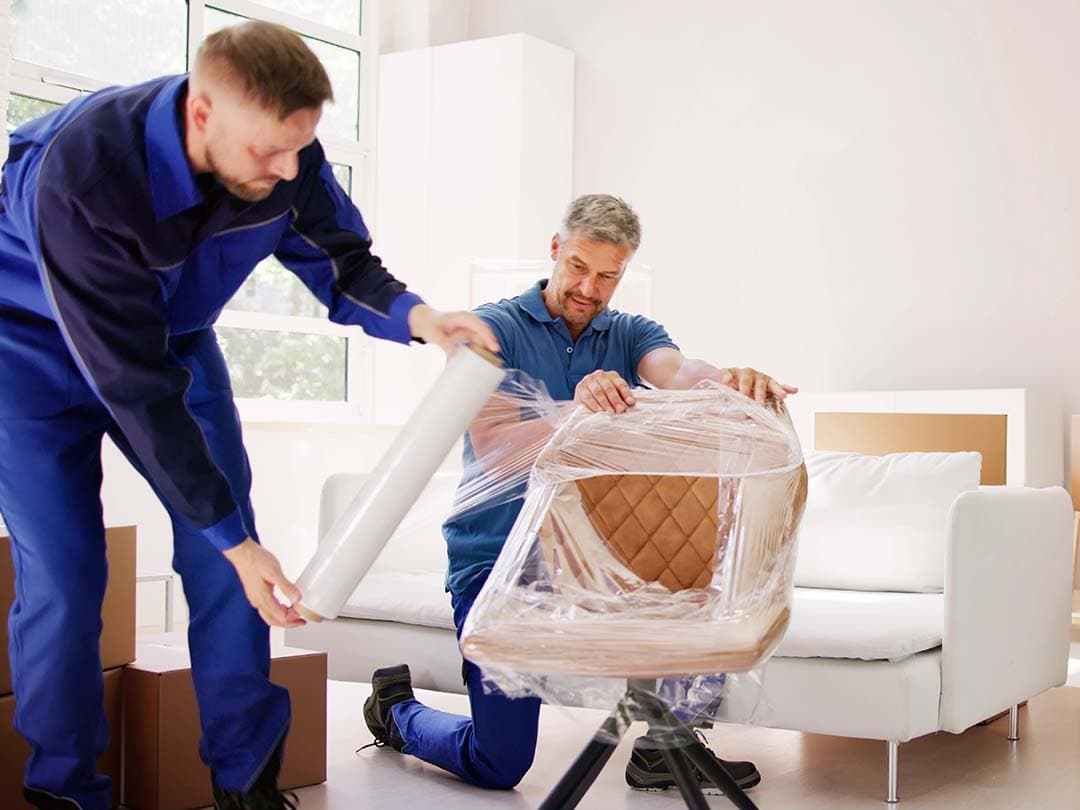
How to Wrap & Pack Furniture to Move
Moving soon and need to protect your furniture? Follow these steps to pack your couch, tables, chairs, bed sets, and other furniture.
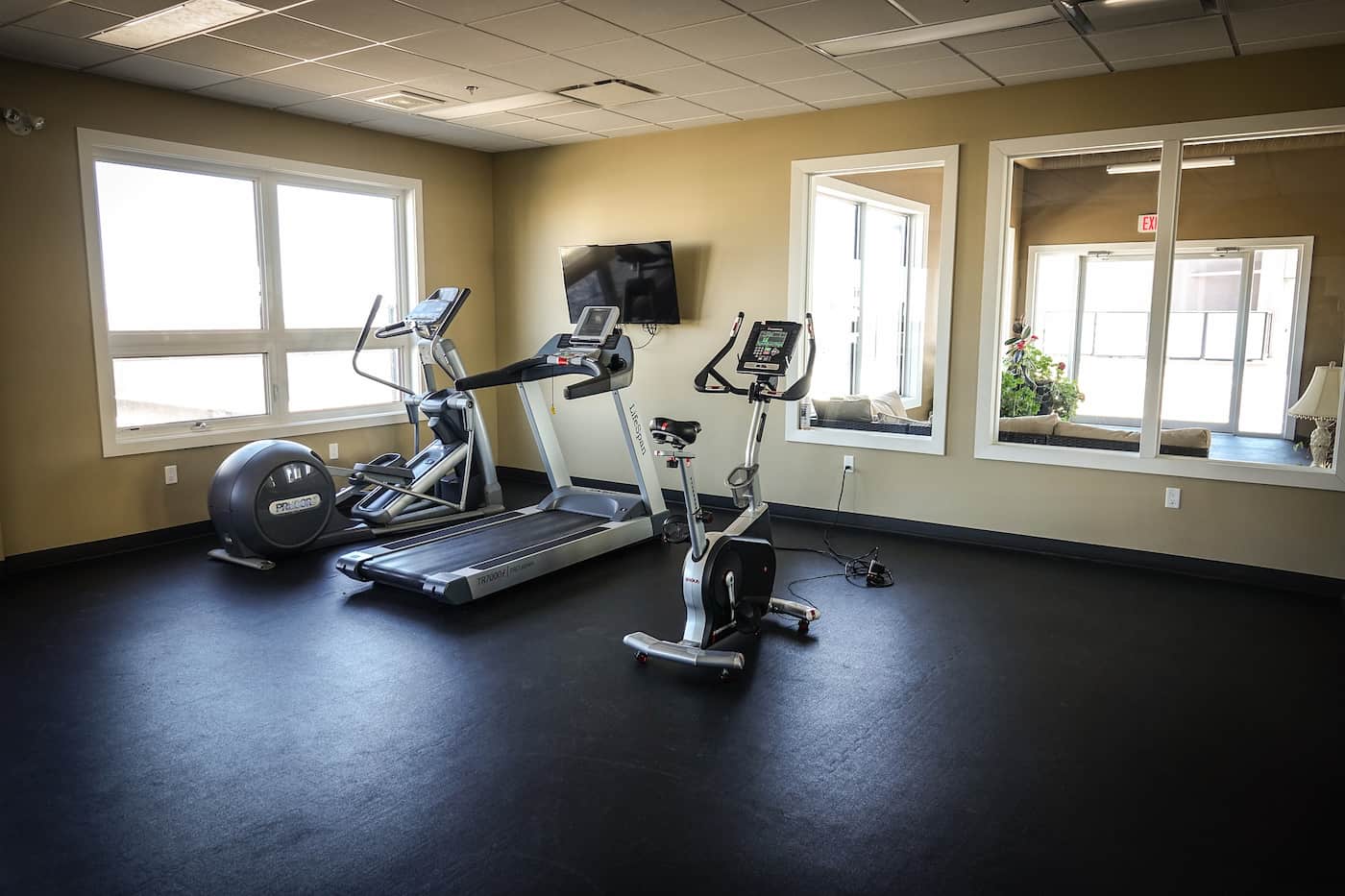
How to Move a Treadmill
Heavy, bulky, and expensive if hiring movers—here's how to move or dispose of a treadmill quickly and safely.

7 Steps for Packing Paintings & Artwork for Moving
Whether you’re an artist or collector, it’s important to protect your art from damage and depreciation. Here’s how to pack paintings and artwork for moving!
Author Profile
Quinn Johnson
Quinn Johnson is a moving expert and author for Extra Space Storage. He's moved over 15 times, including internationally, and helped countless others between their own homes. He's happy to lift some boxes for a friend as long as he's paid in pizza. As a writer and content creator for Extra Space Storage since 2019, Quinn shares helpful moving tips and info to alleviate the common stresses of moving.