Moving Guide
Average Cost of Moving a Piano Locally & Long Distance

Need to move a piano, but not sure how much it costs? Specialty items like pianos and other large instruments require professional movers with specialized equipment to transport safely—which does effect the price. This guide breaks down average piano moving costs, factors that impact pricing, tips to save money, and how to find qualified piano movers for your relocation!
Average Cost to Move a Piano
The average cost for moving a piano locally, which typically includes one flight of stairs, ranges between $150 and $650. These moves, typically under 50 miles, often use flat-rate pricing. Long-distance moves are typically charged per mile, with rates varying based on the total mileage, the size of the piano, and whether specialized transport, like climate-controlled trucks, is required. Because of these variations, long-distance moves can cost anywhere between $500 and $2,5000. Please note that these prices are provided for reference only and may be subject to change based on specific circumstances and local market rates.
Piano Moving Costs by Distance
Distance | Average Cost Per Mile |
Local (< 50 miles) | $1.50-$3.00/flat rate |
Regional (50-300 miles) | $2.00-$5.00 |
Long-distance (300+ miles) | $300-$650 |
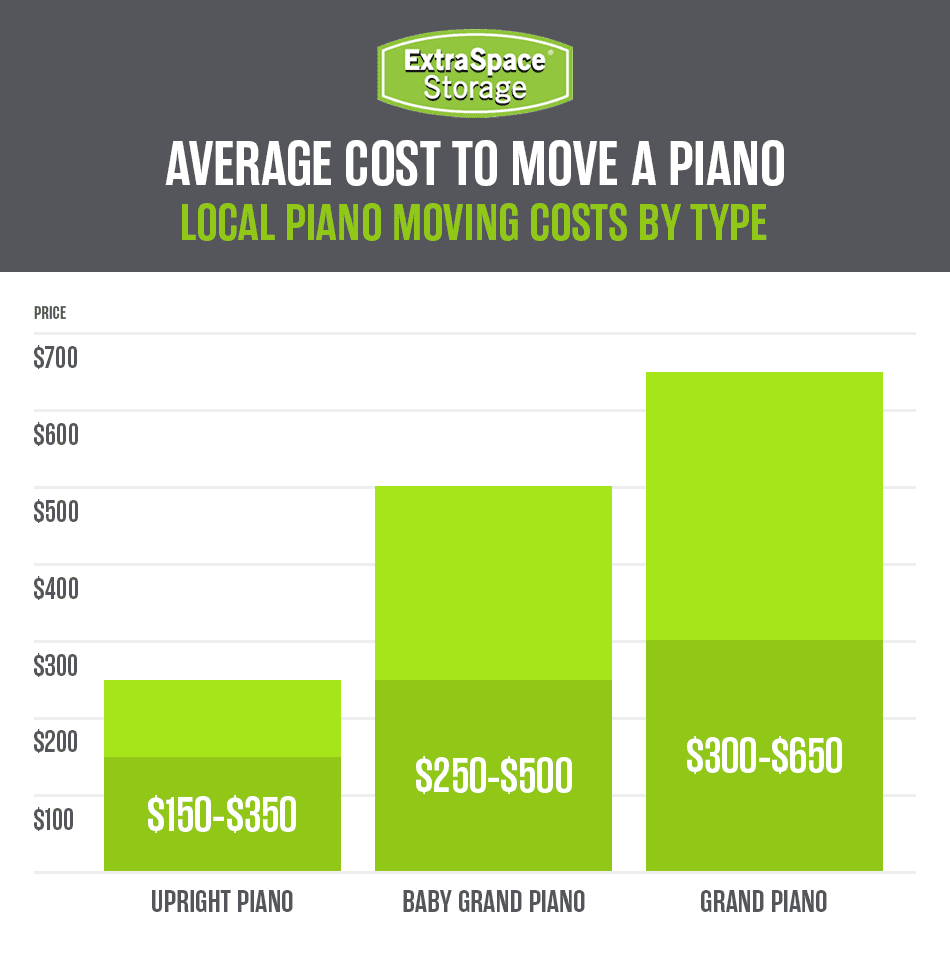
Local Piano Moving Costs by Type
Piano Type | Average Cost |
Upright Piano | $150-$350 |
Baby Grand Piano | $250-$500 |
Grand Piano | $300-$650 |
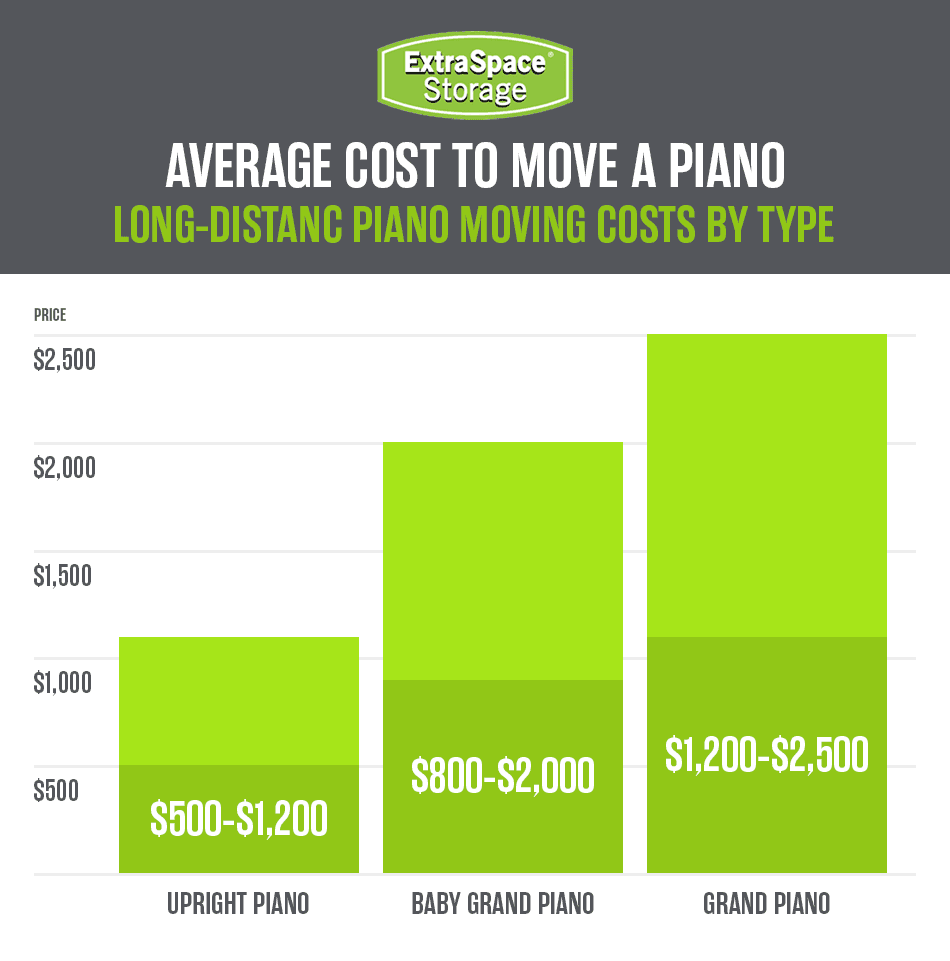
Long-Distance Piano Moving Costs by Type
Piano Type | Average Cost |
Upright Piano | $500-$1,200 |
Baby Grand Piano | $800-$2,000 |
Grand Piano | $1,200-$2,500+ |
What Affects the Cost of Moving a Piano?
Like other moving costs, The price to move a piano depends on several factors, like the type of piano you have, your location, and anything that can add risk. Here are some reasons you can expect to see additional costs for moving a piano.
Piano Type & Size
Larger, heavier pianos generally cost more to move because they require more movers and specialized equipment. A small upright piano typically requires two movers, while a concert grand may need five professionals working together. Grand pianos often require partial disassembly and reassembly, and may also necessitate special crating.
Stairs
A common additional fee when moving pianos is the cost of stairs—sometimes called a “per stair” or “per step” fee. This is due to the increased labor and risk associated with it. Expect to pay $5 to $10 per step or a flat fee of $40 to $100 per staircase flight. Difficult terrain and tight corners, such as those found on stairs or in hallways, can also contribute to this cost. In some cases, movers may charge extra if stairs require complex turns, multiple landings, or the use of specialized equipment to safely maneuver the piano.
Obstacles
If your movers have to guide a piano through challenging terrain, you can expect some additional fees. Movers may charge between $40 and $150 for navigating tight doorways or narrow hallways that require careful maneuvering. If the movers need to cross gravel, grass, or steep driveways, expect an added fee of $40 to $240 to account for the extra time and equipment required. In more complex situations—such as moving a piano through an upper-story window or over obstacles—a crane or pulley system may be necessary, which can add anywhere from $500 to $1,700 to the total cost.
Additional Services
When planning a piano move, a few additional services can make the process smoother and safer. Disassembly and reassembly for grand pianos that require leg and pedal removal typically cost $80 to $100. Professional crating to protect against vibration and humidity during long moves ranges from $700 to $1,200. Post-move tuning is usually a separate service, costing between $100 and $300. You can also purchase additional insurance for about $15 per $1,000 of piano value beyond the standard $5,000 coverage most movers include. For last-minute relocations, rush service can add another $300 to $700.
Timing & Location
The timing and location of your move can significantly affect pricing. Peak season, between May and September, and weekend moves typically cost 10–15% more than off-season weekday moves. Urban areas with higher costs of living may charge 20–30% more than suburban or rural locations. Additionally, rush jobs can raise costs by as much as $700, particularly in regions with limited access to professional piano movers.
How to Save Money on Piano Moving
There are several strategies to reduce the cost of moving a piano while still remaining safe and efficient. Some of the best money saving tips are:
Get multiple quotes: Reach out to at least three piano moving companies and compare pricing and services to ensure you are paying a fair rate.
Schedule during off-peak times: Moving a piano during less busy times such as weekdays or during winter months, can save 10-20% compared to peak season.
Clear pathways in advance: Remove furniture or obstacles along the piano’s route to help reduce labor time and, in turn, lower costs.
Bundle & save: If you are moving your entire household, bundling your piano move with your full-service relocation may qualify for discounts.
Plan ahead: Booking a piano move 4-6 weeks in advance often provides better rates and scheduling flexibility.
Rent self-storage: If your move-out and move-in dates don’t align, short-term climate-controlled storage—typically $50 to $170 per month—may be a more affordable option than paying for multiple piano moves.
How to Find Qualified Piano Movers
Not all moving companies have the expertise to safely transport a piano. Here are some tips to finding the best piano movers.
Check for licensing: Ensure the company carries adequate insurance, including both liability and cargo coverage for the full value of your piano.
Ask about experience: See if potential moving companies have piano-specific experience, including how many instruments they move each year, and verify that they have workers’ compensation coverage to protect you in case of accidents on your property.
Watch for red flags: Avoid companies that offer prices dramatically lower than other their competition, have poor reviews or complaints about damaged pianos.
FAQs About Moving a Piano
Can You Move a Piano By Yourself?
No—while you might be tempted to save money by moving a piano yourself, it's not recommended. Professional piano movers have the training, specialized equipment, and insurance to protect both your instrument and your safety. Pianos are extremely heavy, awkwardly balanced, and can cause serious injury if improperly handled.
How Much Should I Tip Piano Movers?
A common guideline is $20 to $50 per mover for a standard piano move. For particularly difficult moves—such as long distances, multiple flights of stairs, or tight spaces—you may consider tipping more. Always tip based on the quality of service and the complexity of the job.
How Much Does it Cost to Store a Piano?
If you're moving a piano into storage, you should rent a climate-controlled storage unit, which costs between $50 and $170 per month. Climate-controlled storage maintains a consistent temperature between 55-80 degrees and helps protect your piano's tuning, prevent soundboard cracks, and preserve internal components.
***
Planning a move? Find more guides on moving speciality items and other relocation tools on the Extra Space Storage Moving Hub. And if you need temporary piano storage, we have climate-controlled storage units at our facilities across the U.S. Find a storage unit near you!

Find Affordable Self Storage Near You
Extra Space Storage has over 4,000 locations across the U.S. with friendly customer service, advanced security features, and affordable month-to-month rates.
- Save up to 50% off online

Essential Moving & Packing How-Tos

10 Tips for Moving Large Items
Wondering how to move large objects safely? Discover the 10 best tips for moving bulky items in this guide!

Tips for Packing & Moving a Flat-Screen TV
Moving homes and need to pack a flat-screen TV? Follow this guide on how to securely and safely prepare it for your move.

How to Wrap & Pack Furniture to Move
Moving soon and need to protect your furniture? Follow these steps to pack your couch, tables, chairs, bed sets, and other furniture.
How to Move a Treadmill
Heavy, bulky, and expensive if hiring movers—here's how to move or dispose of a treadmill quickly and safely.

7 Steps for Packing Paintings & Artwork for Moving
Whether you’re an artist or collector, it’s important to protect your art from damage and depreciation. Here’s how to pack paintings and artwork for moving!
Author Profile
Quinn Johnson
Quinn Johnson is a moving expert and author for Extra Space Storage. He's moved over 15 times, including internationally, and helped countless others between their own homes. He's happy to lift some boxes for a friend as long as he's paid in pizza. As a writer and content creator for Extra Space Storage since 2019, Quinn shares helpful moving tips and info to alleviate the common stresses of moving.