Moving Guide
How to Calculate Linear Feet & Other Common Moving Measurements
Knowing how to measure linear, cubic, and square feet can be essential to planning a stress-free move. Read our guide to learn how to calculate these common moving measurements!

Planning a move can feel overwhelming, but a little measuring know-how goes a long way. Whether you’re figuring out how much space you need in a storage unit or deciding what size moving truck to rent, understanding measurements like linear feet, square feet, and cubic feet will make the process much easier! If you're not sure which measurement you need, consider the following:
Linear feet give you a quick sense of length—perfect for measuring furniture or gauging truck/trailer space by length.
Square feet help you figure out floor area, which is crucial for comparing storage unit sizes or planning how to arrange items in a room.
Cubic feet tell you the total volume available, invaluable for packing a truck to the brim or stacking boxes in a storage unit.
What Is a Linear Foot?
A linear foot is a measurement of length that’s 12 inches in a straight line (i.e., one foot). Essentially, it’s a “regular” foot measured in a straight line. The term “linear” just emphasizes that we’re measuring straight-line distance, as opposed to square feet or cubic feet which cover area and volume.
Why Are Linear Feet Important for Moving?
For moving, linear feet are used when measuring truck or trailer space—and knowing the accurate amount of space you need for safely transporting your belongings is important to mitigate trips and breakage. When you see 10-foot, 15-foot, or 20-foot trucks, that length refers to about how many linear feet of interior space the truck has from front to back. And if you use a freight trailer for a long-distance move, they often charge by how many linear feet of trailer space your stuff occupies.
If you're loading a rental moving trailer that's eight feet wide, stack your boxes and furniture from the front of the trailer toward the back. If the load stretches 10 feet down the length of the trailer, then you’ve used 10 linear feet of that trailer’s floor space. If the trailer company charges $X per linear foot, you’d pay roughly 10 ft. × $X. This is why knowing your total linear feet is helpful—it tells you how much truck or trailer length your belongings will fill.
How to Calculate Linear Feet
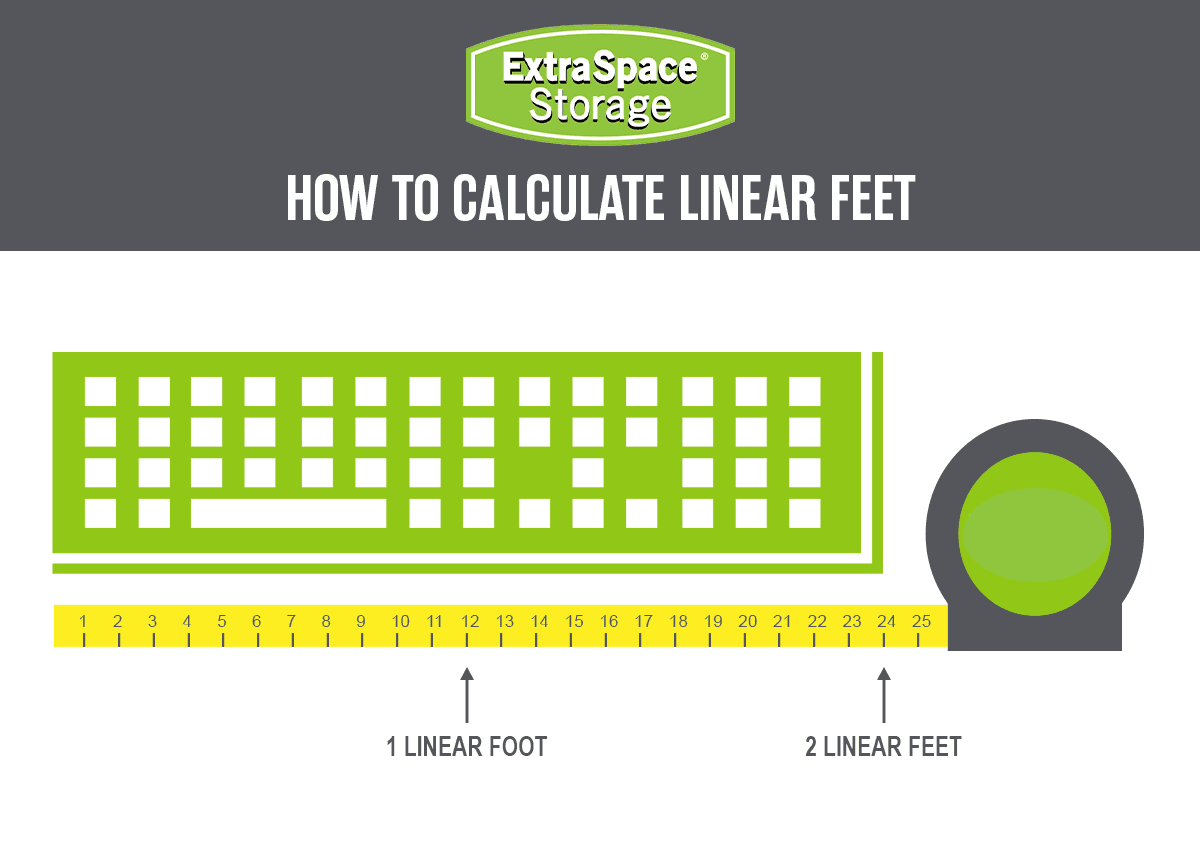
Measuring linear feet is essentially measuring length. Tape measures often label feet along with inches, so you can directly read the length in feet without doing math. If an object isn’t an exact whole foot long, you can express the length in feet and inches (for example, 5 feet 3 inches for a 63-inch-long table). Follow these steps to find the linear footage of any item or space:
Grab a Tape Measure: Use a measuring tape or ruler marked in inches (most tape measures have both inches and feet).
Measure the Length in Inches: Stretch the tape in a straight line along the item’s longest side. Note the length in inches.
Convert Inches to Feet: There are 12 inches in one foot, so divide the total inches measured by 12 to convert to feet. In our example, 24 inches ÷ 12 = 2 feet. That’s the keyboard's length in linear feet.
Add Them Up (if Needed): If you have multiple items or spaces to measure, repeat the process for each and then add the lengths together. This gives you the total linear feet required. For instance, if you have a dresser that’s five feet long (60 inches) and a bookshelf that’s three feet long (36 inches), together they take up eight linear feet of wall or truck space.
What Is a Square Foot?
A square foot is a measurement of area, how much flat surface something covers, so they're most commonly used when describing storage units or floor space. One square foot is a foot-by-foot square—12 inches by 12 inches—totaling 144 square inches. You get square footage by multiplying length by width (in feet).
Why Is Square Footage Good to Know While Moving?
When renting a moving truck, the floor of the truck has a certain area (length x width)—and knowing this area's square footage helps you more accurately understand what moving vehicle size you should opt for or prepare for multiple trips. You can also use this to determine how to arrange items on the truck floor. Storage unit dimensions are also typically described by square footage (e.g., a 5-foot by 10-foot storage unit has 50 square feet of floor space). If you have roughly 50-square-feet's worth of boxes and furniture (when arranged without stacking), a 5x10 storage unit should fit them.
How to Calculate Square Footage
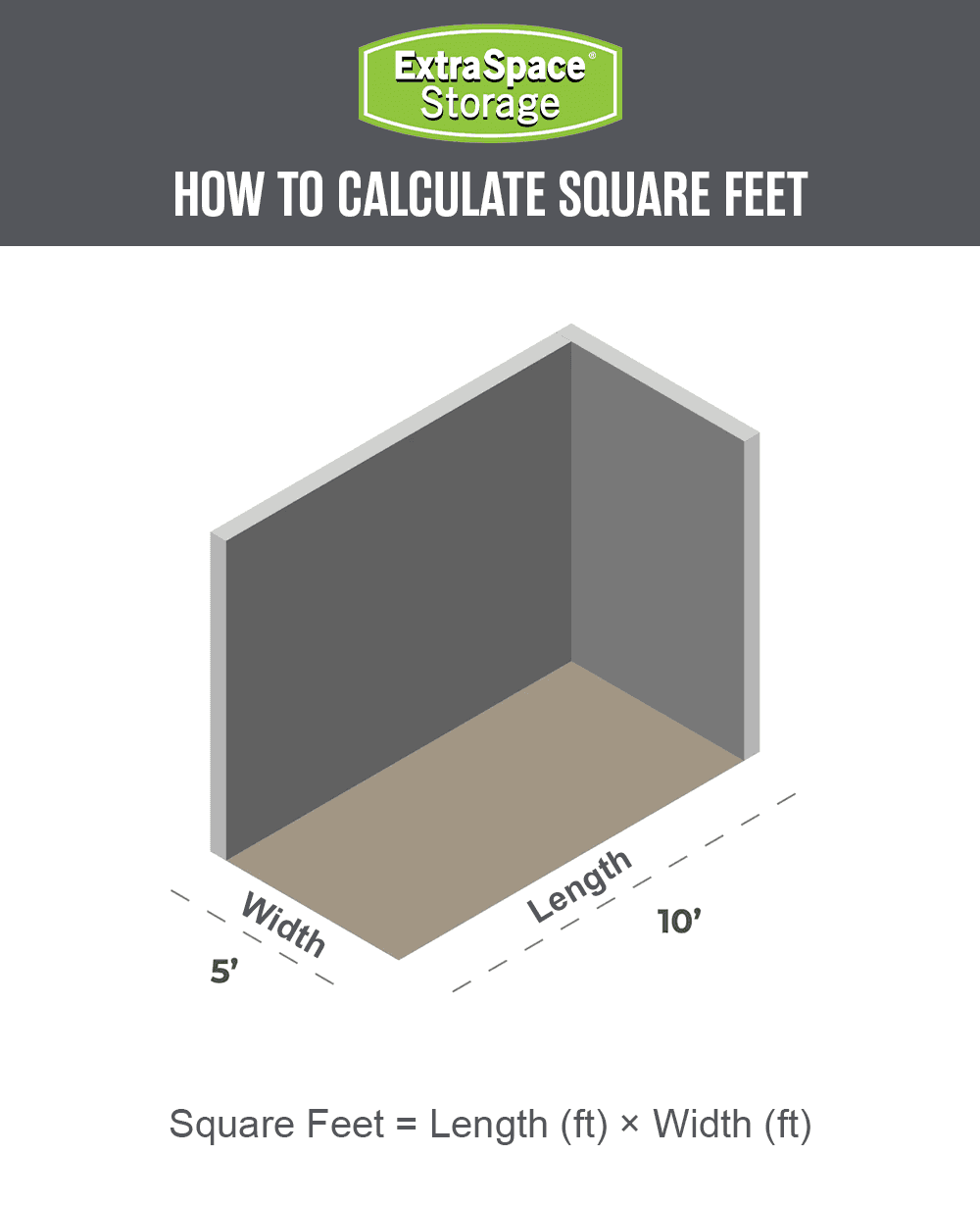
Calculating square feet is straightforward: Length × Width (when both are measured in feet)—for example, a storage unit floor that's 7 feet wide and 10 feet long has 70 square feet of floor space. You only need two dimensions. Here’s how to find square footage:
Measure the Length: Determine the length of the floor or object in linear feet.
Measure the Width: Determine the width in linear feet. (Make sure you measure perpendicular to the length—basically the other side of the area.)
Measuring Odd Spaces: If a space isn’t a perfect rectangle, try breaking it into smaller rectangles, calculate each area, and then add them up.
If Measuring in Inches: Convert them to feet (divide by 12) before multiplying.
Multiply Length by Width: Multiply these two numbers. The result is the area in square feet.
What Is a Cubic Foot?
A cubic foot is a measurement of volume. One cubic foot is a cube measuring 1 ft × 1 ft × 1 ft, or 1,728 cubic inches. You calculate cubic footage by multiplying length × width × height (in feet). If square footage is about flat area, cubic footage is about how much space inside a 3D container an object or a collection of items will take up. This metric tells you how much stuff you can fit into a box, truck, storage unit, or any space with length, width, and height.
Why Are Cubic Feet Good to Calculate When Moving?
Cubic feet are extremely helpful for gauging capacity—even moving boxes are measured in cubic feet! Moving truck sizes are often listed by their cubic footage in addition to length. For instance, a large 26-foot moving truck might offer around 1,500–1,700 cubic feet of space for your belongings (plenty for a multi-bedroom house). If you’re using portable storage containers or storage units, knowing the cubic footage lets you maximize how you stack things. For example, a 5x5 storage unit with an 8-ft ceiling has 200 cubic feet of space inside.
How to Calculate Cubic Footage
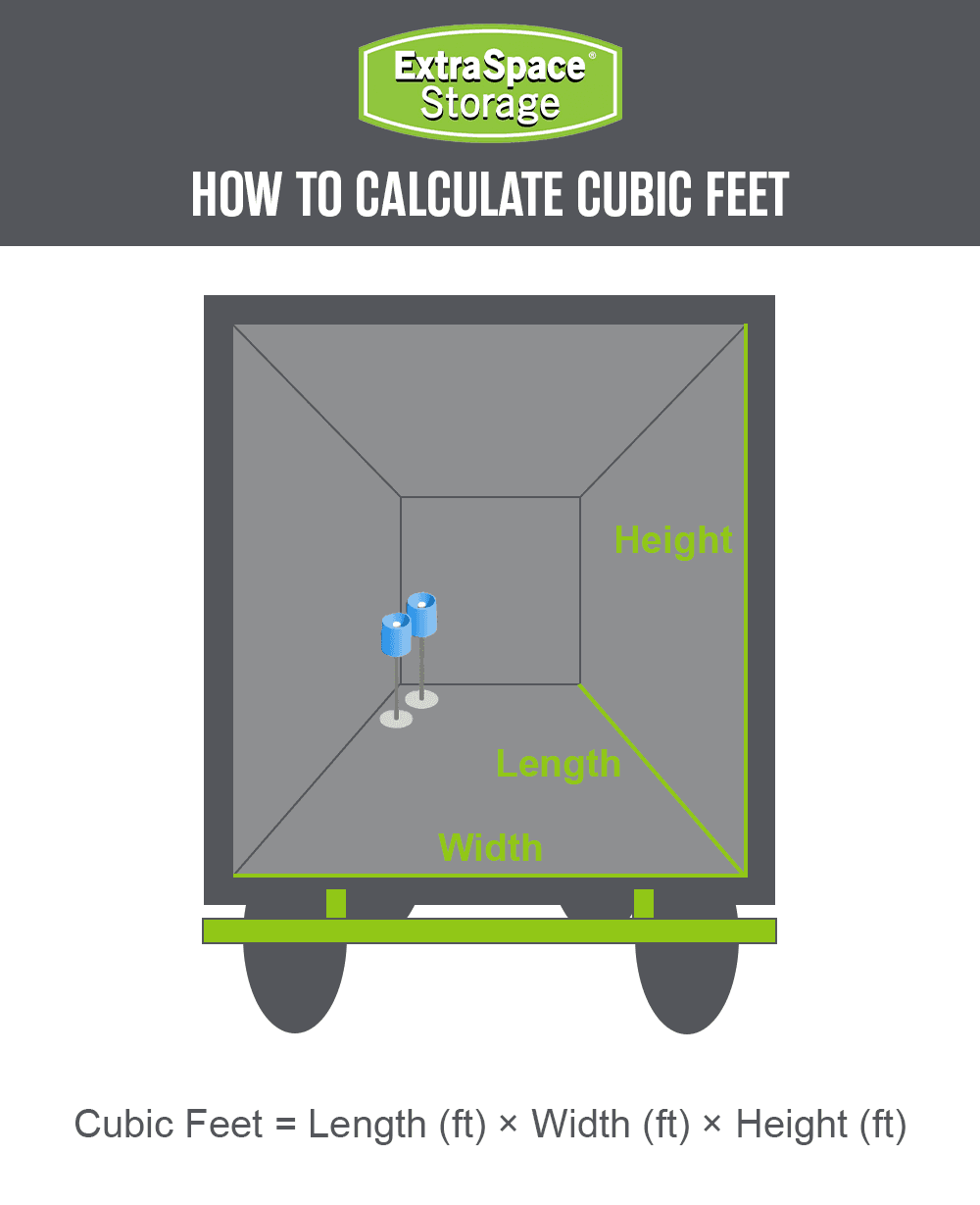
Calculating cubic feet requires three measurements: length, width, and height (all in feet). Here’s the formula in simple terms: Cubic Feet = Length (ft) × Width (ft) × Height (ft). Say you’re figuring out the capacity of a moving truck’s cargo area. If the inside of the truck is 10 feet long, 6 feet wide, and 6 feet high, then the volume is 10 × 6 × 6 = 360 cubic feet. This truck can hold up to 360 cubic feet of household items. Follow these steps to calculate cubic feet:
Measure Length: Measure the length of the space or object in feet.
Measure Width: Measure the width in feet.
Measure Height: Measure the height/depth in feet.
Multiply All Three: Multiply length × width × height. The product is the volume in cubic feet.
***
Need a place to store your belongings while moving? Extra Space Storage offers affordable, high-quality storage units to fit your needs. Find a storage facility near you!

Related Moving Guides & Tips

Moving Insurance: A Complete Guide
Moving soon? Learn all about moving insurance—including types of coverage, costs, claims, and expert tips to protect your belongings during your move.

How to Move Heavy Furniture
Need to move heavy furniture? From safe lifting to smart tools, here’s how to make moving large items easier.

A Guide to Moving Out of State
Wondering how to move to another state? These interstate moving tips and moving out-of-state checklist can help you easily plan the best cross-state move!

Moving Truck Rental Requirements
Before renting a moving truck, you'll want to make sure you meet common requirements. Read our guide on how to rent a moving truck!

How to Declutter Before Moving
Planning a move soon and need to get rid of clutter? Check out this guide for decluttering tips before a move!

Donating Used Furniture During a Move: Places that Offer Free Donation Pick-Up
Moving soon? Here are the best places to donate furniture that offer free pick-up and drop-off!
Author Profile
Quinn Johnson
Quinn Johnson is a moving expert and author for Extra Space Storage. He's moved over 15 times, including internationally, and helped countless others between their own homes. He's happy to lift some boxes for a friend as long as he's paid in pizza. As a writer and content creator for Extra Space Storage since 2019, Quinn shares helpful moving tips and info to alleviate the common stresses of moving.