Need to know how to store a washer and dryer? Whether you’re preparing for a home renovation, moving on short notice, or keeping extra appliances instead of disposing of them, there are a few important steps to follow. Here’s how to properly move a washer and dryer into storage.
Gather Supplies
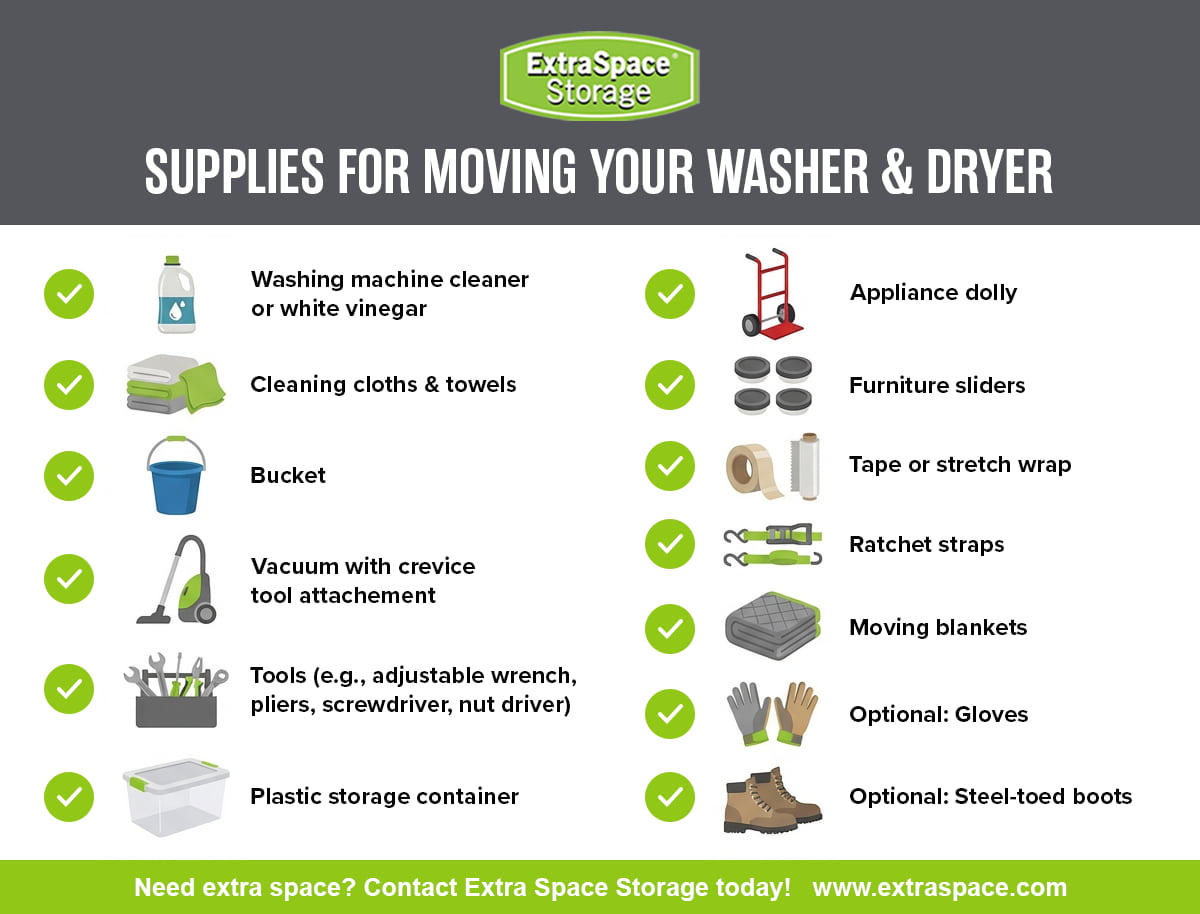
To prepare your washer and dryer for storage, start by gathering the appropriate supplies. The exact tools you’ll need depend on whether you’re moving the appliances by yourself or hiring assistance for certain steps. Here are some things you may need to safely transition your appliances into storage:
- Washing machine cleaner or white vinegar
- Cleaning cloths & towels
- Bucket
- Vacuum with crevice tool attachment
- Tools (e.g., adjustable wrench, pliers, screwdriver, nut driver)
- Plastic storage containers
- Appliance dolly
- Furniture sliders
- Tape or stretch wrap
- Ratchet straps
- Moving blankets
- Optional: Gloves
- Optional: Steel-toed boots
Thoroughly Clean the Appliances
Before storing a washing machine and dryer, they need to be thoroughly cleaned.
- Start by emptying the washer of clothes and debris.
- Then add either a washing machine cleaner or two to three cups of white vinegar—through the detergent dispenser if one is available or just directly into the washer—and run a hot-water cycle to remove detergent buildup and prevent mildew.
- Once the cycle is complete, prop the door open so the interior can dry, and wipe down the exterior of the machine with a damp cloth to remove dust and residue.
- Clean the dryer by wiping down the drum with a damp cloth to remove dust, then follow up with a dry towel to remove excess moisture.
- Clean the exterior in the same way.
- Next, remove the dryer’s lint screen, clear it off, and vacuum any leftover debris from the drum and vent area using a crevice tool attachment.
- For a deeper clean, you can soak the lint trap in warm water and soap before drying completely and moving it into storage.
Drain Your Washing Machine
Once it’s clean, follow these instructions to safely disconnect your washer from its power supply and continue preparing it for washing machine storage. Keep a bucket and some towels nearby to catch any spills as you drain the lines.
- Start by turning off power to your washer at your home’s breaker box, then unplug the power cord from the wall.
- Gently pull the washing machine away from the wall to access the water hoses, using furniture sliders or an appliance dolly if needed.
- Before disconnecting anything, turn off the hot and cold water supply valves. Use pliers to help loosen and remove the hot and cold water inlet hoses from both the washer and the wall valves, pointing them into a bucket to release remaining water.
- Repeat this process with the drain hose.
- Once drained, coil the hoses and place them inside labeled storage containers.
- Coil the power cord and tape it to the side of the machine so it’ll be out of your way when you move the washer.
Disconnect Your Dryer
The steps for moving a dryer will differ depending on whether it’s a gas or electric model, but both will need to be unplugged from the power source. If you own a gas dryer, it’s recommended to hire a licensed technician to disconnect the gas line for safety reasons. For both electric and gas dryers, disconnect the aluminum vent duct from the dryer and wall vent, loosening the clamps by hand or with a screwdriver or nut driver as needed. Vacuum out the dryer vent and duct to remove any dust and lint buildup. Secure the power cord to the machine’s side with tape to make the dryer moving process safer. Place the flexible duct in a labeled storage container.
Safely Load Appliances for Transport
Wondering how to move a washer and dryer to your storage space or onto a moving truck? When deciding between hiring movers and doing it yourself, consider factors like physical effort, time, and experience. While the cost of hiring movers may lead some people to handle the move on their own, professional single-item movers can reduce strain and provide peace of mind that your appliances are handled with proper tools and expertise. If you choose to move heavy appliances yourself, enlist help from a friend or family member and wear protective gear like gloves and steel-toed boots. Use furniture sliders to move your washer and dryer away from the wall, then load them onto a dolly with built-in straps and stair rollers. Secure the appliance doors with tape or stretch wrap to prevent them from swinging open and cover the machines with moving blankets or furniture pads to protect their finish. Keep your washer and dryer upright during transport to help protect the internal components of both machines. When loading the machines onto the moving truck, secure them with ratchet straps to prevent shifting during transit.
Pick the Proper Storage Environment
Selecting the right washer and dryer storage is crucial to maintain their functionality for later use. Climate-controlled storage is generally recommended for household appliances like washers and dryers, as it helps protect against warping, corrosion, and mildew or mold growth caused by temperature swings and humidity. If you have available space and prefer to keep your appliances close by, home storage areas like a garage, storage room, or apartment complex storage space can work—provided the areas stay dry and above freezing temperatures. If space is limited or you want to free up room at home, renting a nearby climate-controlled storage unit can offer added protection and convenient access when needed.
Protect Your Washer & Dryer in Storage
No matter where you store your appliances, there are several washing machine storage and dryer storage tips that can help protect your appliances over time.
- Keep them elevated on pallets inside your storage space to reduce exposure to moisture—which can lead to rust, mold, or mildew.
- Leave appliance doors slightly ajar to promote airflow, and cover the machines with clean, breathable sheets to protect against dust. Avoid using plastic tarps as they can trap moisture.
- Don’t place anything heavy on top of your washer or dryer to avoid scratches or dents.
- Store hoses and attachments in clearly labeled storage containers so they’re easy to locate when reinstalling the machines in the future.
- Keep units away from the walls and use moisture absorbers or a dehumidifier to reduce condensation if you’re storing at home or in a non-climate-controlled space. You may also want to use pest deterrents in garages or shared storage areas.
If you’re renting a washer and dryer storage unit, routinely visit the space every three to six months to inspect for signs of mildew, pests, rust, and other potential issues. Inspect your appliances more frequently if they’re in a shared storage space or if you’re renting a standard storage unit without climate control.
Why customers choose Extra Space Storage:
***
Find Climate-Controlled Storage Near You!
Want to protect your washer and dryer from damage? Take advantage of appliance storage at Extra Space Storage, which offers climate control—including air-cooled storage, heated storage, and humidity-controlled storage—at facilities across the U.S.
Popular cities for climate control include:
- Anaheim, CA Climate-Controlled Storage
- Cocoa, FL Climate-Controlled Storage
- Rossville, GA Climate-Controlled Storage
- Andover, MA Climate-Controlled Storage
- Midlothian, TX Climate-Controlled Storage
- Little River, SC Climate-Controlled Storage
Find climate-controlled storage today!