Moving Guide
9 Easy Steps to Pack Books for a Move

Moving a home library might feel daunting, but with a little planning and the right approach, you can safely and efficiently pack the room and transport your books. For moving locally or across the country, this step-by-step guide will walk you through the best way to pack books for moving, so your cherished reads arrive at your new home in great condition. Whether you're an avid book collector or packing the contents of a small bookshelf, these tips on how to pack books for a move will help make the process easier!
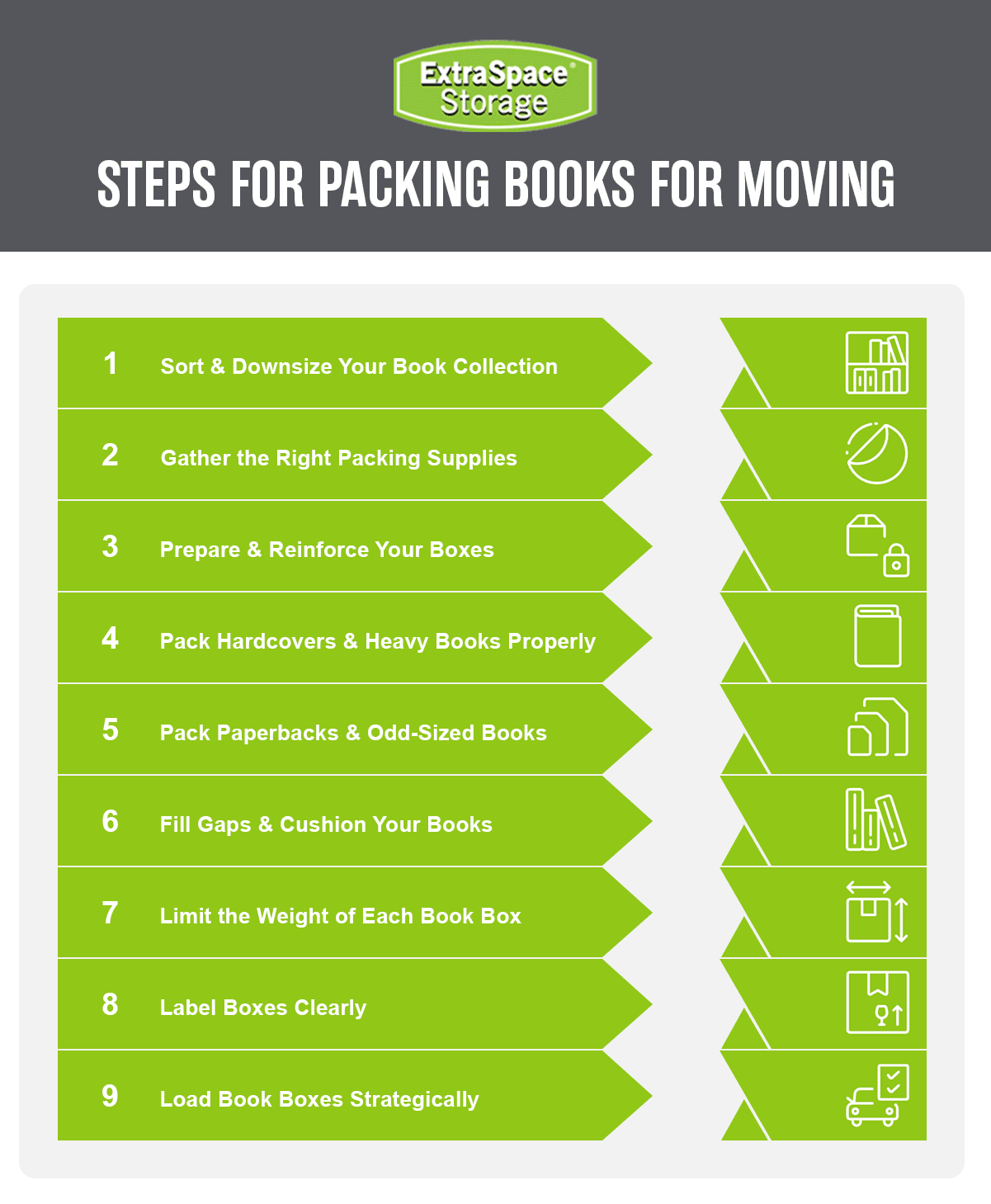
Step 1: Sort & Downsize Your Book Collection
Before putting anything in a book box, go through your collection and decide what to keep. Moving is the perfect opportunity to declutter your home and library. Sort your books into piles, keeping your favorites, and planning to donate or sell any that you no longer need. Be honest with yourself about which books you'll read again—a college textbook from years ago or a novel you didn’t love are good candidates for items you can get rid of before moving. Donating gently used books to local libraries, schools, or charities not only helps you pack lighter, but also gives those books a second life. Remember, every book you let go means one less heavy box to carry—and more space for new books in the future.
Step 2: Gather the Right Packing Supplies
Having the proper packing supplies and boxes for moving books on hand makes all the difference. Start with small, sturdy cardboard boxes that can handle the weight of books without breaking. Small or medium boxes are ideal—if you use a box that's too large, it can quickly become too heavy to lift. Make sure your boxes are intact and in good condition. Before you start packing books, you'll also want to grab some padding materials like bubble wrap, packing paper, or even clean towels or small moving blankets to use as cushioning and to fill empty spaces. Lastly, have a black marker for labeling boxes so you can keep track of what's in each one.
Step 3: Prepare & Reinforce Your Boxes
Assemble your book moving boxes and double-tape the bottoms for extra support. Apply at least two layers of tape along the seams and across the middle for stability. If a box has been previously used or feels a bit flimsy, add a third layer of tape on the bottom. It's far better to over-reinforce now than to have a box fall apart mid-move. For added protection, line the bottom of each box with a sheet of crumpled packing paper or a thin layer of bubble wrap. This creates a cushioning layer and protects book corners.
Step 4: Pack Hardcovers & Heavy Books Properly
When packing books for a move—especially hardcovers and heavy volumes—placement matters. In general, the best way to pack books for moving is to put the heaviest books at the bottom of the box. For hardcovers, you have two safe options to pack the moving box:
Upright: Place hardback books standing up, with their spines against the box wall, just as they sit on a bookshelf. They should be snug, but not so tight that you have to force them in or risk damage when pulling them out.
Flat stacking: For oversized books—like large art books or photo albums—lay them flat in the box. Stack a few flat on top of one another, with the largest at the bottom. Avoid making a tall stack so you can keep the weight evenly distributed.
Always avoid packing books when moving with their spines facing upward (pages down), since this can stress the binding. If you have valuable first editions or sentimental reads, consider wrapping each in acid-free paper or bubble wrap for extra protection before placing them in a box. By handling your heavy books with care at the packing stage, you're increasing the chances they come out of the moving box in the same condition they went in.
Find Affordable Self Storage Near You
Extra Space Storage has over 4,000 locations across the U.S. with friendly customer service, advanced security features, and affordable month-to-month rates.
- Save up to 40% off online
Step 5: Pack Paperbacks & Odd-Sized Books
Lighter books like paperbacks can go on top of your heavier books or in their own box. They're a bit more flexible in how you can pack and move them. The key to paperback book packing is to prevent any bending of pages or covers. Here are the two best options:
Flat stacking: Just like with hardcovers, place paperbacks in flat stacks, making sure each stack fills the box space to prevent shifting.
Spine-down: Stand paperbacks spine-down (so the paper edges face up toward the box top), and keep them tightly together so they stay upright.
For magazines, comics, or other thin materials, it's best to stack them flat or bundle them to prevent slippage. If you have any uniquely shaped or smaller books, tuck them in wherever they fit, but try to keep them either flat or with spines vertical. Mixing packing methods in one box is fine as long as everything lies flat or stands vertically—don't angle any books, as that could lead to warping. By thoughtfully arranging your paperbacks and smaller items, you can maximize space and keep each book in good shape.
Step 6: Fill Gaps & Cushion Your Books
Once your books are neatly arranged in the box, you might notice little gaps here and there. It's important to fill any empty spaces so that books don't shift during transit. Use crumpled packing paper, bubble wrap, or even clean socks and towels to gently fill gaps between books and on top of the stacks. The goal is to have a snug fit without crushing anything. When you shake the box gently, nothing inside should rattle or move around. If you took the time to wrap special books or first editions individually, this is the moment to ensure those padded books are placed securely, perhaps in the center of the box with padding around them. A well-cushioned moving box for books will absorb bumps in the road so that your collection stays safe.
Step 7: Limit the Weight of Each Book Box
Books are deceptively heavy. To save your back and your boxes, keep an eye on the weight of each packed box. A common best practice for moving books is to limit each book box to about 30 to 40 pounds at most. If you've chosen small moving boxes, they'll naturally stay within this weight range when filled with books. If you're using a medium box, fill it about halfway with books, then use lighter items—like pillows or linens—to top it off. This way, you're not left with an extremely heavy box full of books that’s tough to lift. Remember, it's easier to carry two lighter boxes than one box that's too heavy. Before taping your boxes closed, test how they feel. If a box feels too heavy, lighten it. Your future self (and your moving helpers) will thank you.
Step 8: Label Boxes Clearly
After all that careful packing, take a moment to clearly label your boxes of books before sealing them up. Use your marker to write "Books" on the top and at least one side of the box. If these books belong to a specific room or bookshelf, note that too (for example, "Books—Living Room Shelf" or "Books—Study"). Detailed labels make unloading and unpacking so much smoother, because you or your moving company will know exactly where each box should go at the new place. Labeling also alerts anyone handling the box that it's full of books (which often implies it's heavy), so they'll handle it with care. This quick packing tip keeps you organized and turns a stack of mystery boxes into a clearly managed system, making it easier to set up your personal library when you arrive in your new home.
Step 9: Load Book Boxes Strategically on Moving Day
When moving day arrives, how you load boxes into the moving vehicle is just as important as how you packed them. If you've opted to rent a moving truck rather than hiring movers, remember to lift with your legs and not your back, and ask someone for help with the heavy boxes.
Always place your heaviest book boxes on the floor of the truck or car—don't put them on top of lighter boxes that could get crushed. Additionally, try to distribute the book boxes evenly across the floor to balance the load, rather than putting them all on one side. You can stack boxes on top of each other if they're similar in size and weight, but avoid towering piles.
Keep stacks to just two boxes each, unless you have something sturdy to stack under or against—like a wall of the truck or the side of a dresser—to help prevent any toppling in transit. Wedge heavier boxes against other heavy items so nothing slides around, or use straps or bungee cords to secure them. Loading book moving boxes strategically helps prevent shifting while driving so your items can arrive in good condition at your new home.
***
Planning a move? Extra Space Storage's moving resources can help you find trusted moving companies, truck rentals, and more. If you need a secure place to store your books or other belongings during the transition, we offer affordable storage units nationwide to keep everything safe until you’re ready to settle in. Find self storage near you!
Get a Free Moving Box & Packing Supplies Estimate 📦
Make packing easier with Extra Space Storage’s free moving box calculator. In just a few simple steps, you’ll receive personalized recommendations for moving boxes and packing supplies.
Explore More Packing Tips
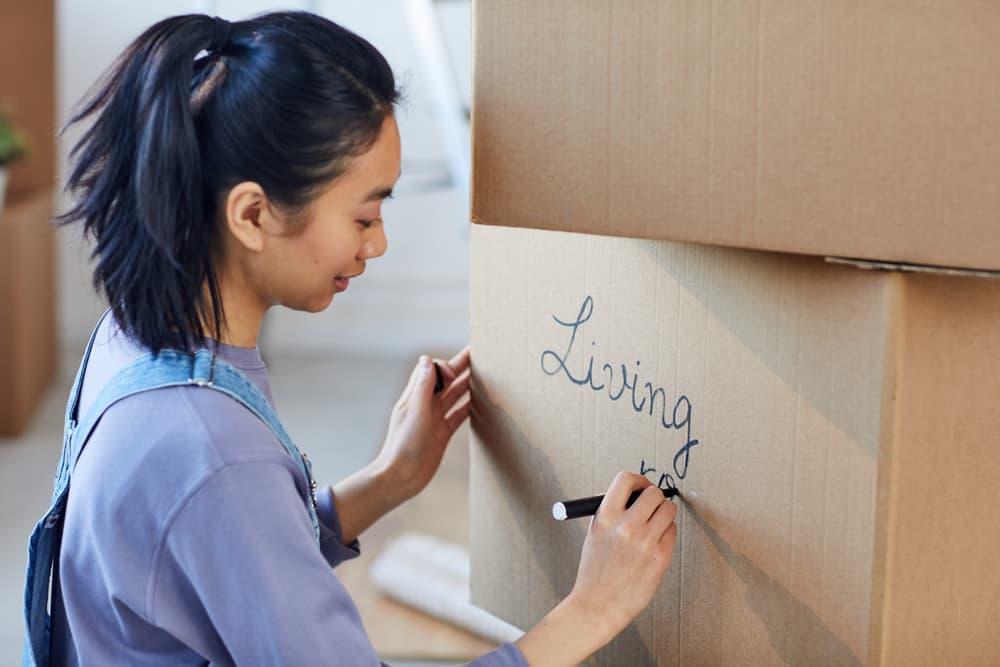
7 Tips for Labeling Moving Boxes
Moving into a new home? Use this guide for proper labeling techniques to make the moving process easier.

Tips for Packing & Moving a Flat-Screen TV
Moving homes and need to pack a flat-screen TV? Follow this guide on how to securely and safely prepare it for your move.
Best Way to Pack Clothes for Moving
Learn the best ways to pack clothes for a move with these expert tips on decluttering, folding techniques, packing supplies, and more.
How to Pack Fine China
Need to pack china for storage or moving? Follow these helpful steps to avoid damaging your delicate china.
Room-By-Room Packing Checklist
Make packing for your next move easy with our room-by-room checklist, which includes specific packing tips for each area of your home or apartment!
Author Profile
Quinn Johnson
Quinn Johnson is a moving expert and author for Extra Space Storage. He's moved over 15 times, including internationally, and helped countless others between their own homes. He's happy to lift some boxes for a friend as long as he's paid in pizza. As a writer and content creator for Extra Space Storage since 2019, Quinn shares helpful moving tips and info to alleviate the common stresses of moving.