Moving Guide
How to Pack China for Moving or Storage
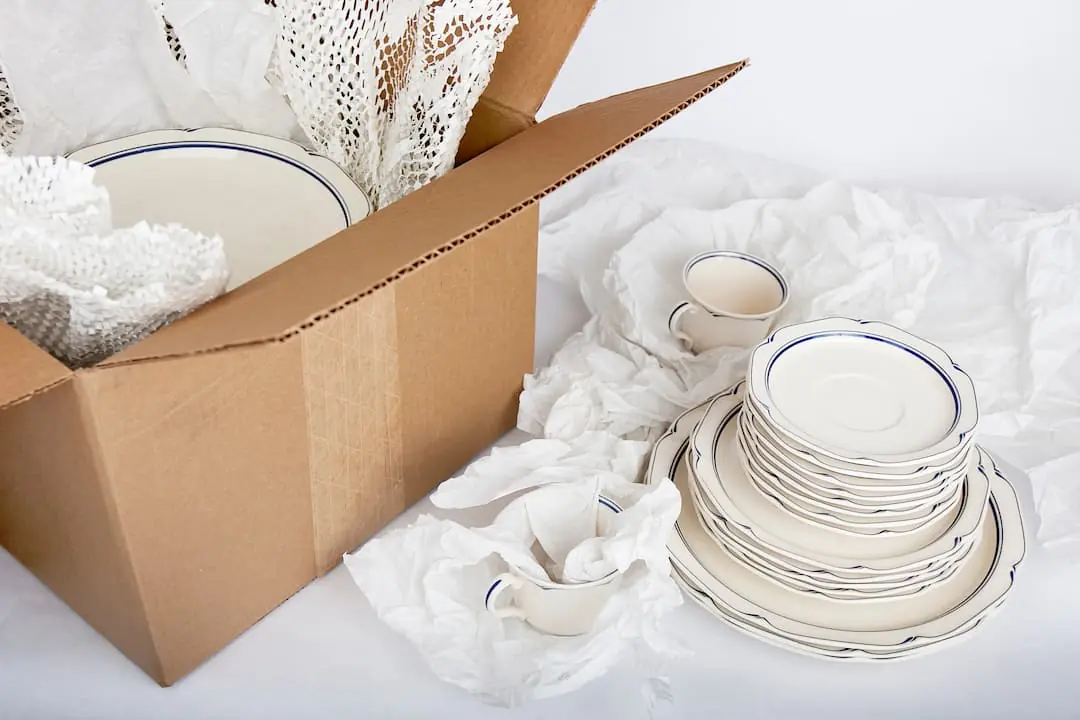
Made from fragile materials like clay, bone ash, and porcelain, china can easily crack, chip, or shatter if not handled properly. Whether you’re moving out of state or simply relocating nearby, it’s important to take extra care when packing fine china to protect these delicate pieces. For a stress-free move, follow this step-by-step guide filled with packing tips for fine china!
Gather Packing Supplies
Before you can begin working through your packing checklist, you need to collect the proper packing materials. With the right supplies, you can better secure your china pieces and help prevent damage. These are the supplies you’ll need when packing china:
Bubble wrap
Dish packs or in-box dividers
Markers
Packing paper
Packing peanuts
Packing tape
Small moving boxes
Prepare Your Fine China Sets for Packing
Ensuring your pieces are in the proper condition and getting them all organized can make packing and unpacking both safer and easier. Here are the best ways to prepare your chinaware to be packed:
Start by washing and drying each piece, making sure no moisture is left behind.
Inspect your chinaware for cracks, chips, or other signs of wear. If any of your china pieces are damaged, make a note to take extra caution when packing them.
Group similar items together, creating separate stacks for your dinner plates, salad bowls, and other pieces. Not only do like-items fit better into boxes together, but this also allows you to locate your pieces more easily when unpacking.
Find Affordable Self Storage Near You
Extra Space Storage has over 4,000 locations across the U.S. with friendly customer service, advanced security features, and affordable month-to-month rates.
- Save up to 40% off online
Carefully Wrap Each Piece of China
Once you’ve prepped all your plates, bowls, drinkware, and serving dishes, it’s time to start packing your chinaware. Avoid stacking items and wrapping them together like you would when packing dishes that are more durable. Instead, each piece of china should be wrapped individually to prevent contact that can result in scuffs or breakage during transit. It’s also best to add a layer of bubble wrap between your wrapped dishes to give them some extra padding. Follow these steps to properly wrap your entire fine china set:
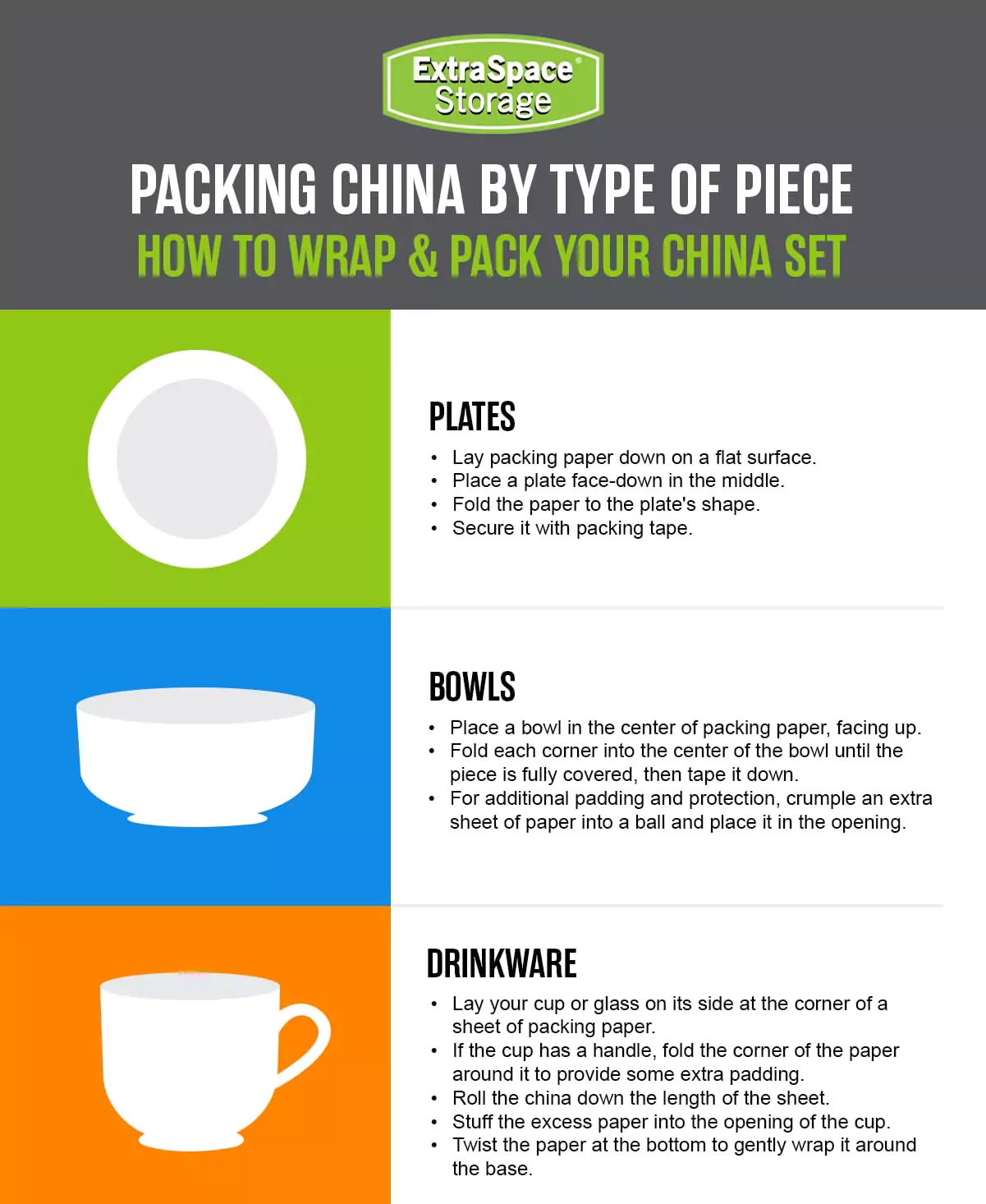
Plates: Lay a piece of packing paper down on a flat surface, then place a plate face-down in the middle. Fold the paper to the plate’s shape, and secure it with packing tape.
Bowls: Place a bowl in the center of a sheet of packing paper, facing up. Fold each corner into the center of the bowl until the piece is fully covered, then tape it down. For additional padding and protection, crumple an extra sheet of paper into a ball and place it in the opening.
Drinkware: Lay your cup or glass on its side at the corner of a sheet of packing paper—and if the cup has a handle, fold the corner of the paper around it to provide some extra padding. Then, roll the china down the length of the sheet. Stuff the excess paper on top into the opening of the cup and fold the paper at the bottom to gently wrap it around the base.
Securely Pack Your Moving Boxes
After each individual piece of china is wrapped, you can start packing them into boxes. Be sure to use separate boxes for plates, bowls, and drinkware—packing like-items together helps them fit more securely and minimizes the risk of damage. Additionally, avoid overpacking your boxes so they’re easier to carry. These are the best tips for packing a moving box with china:
Start by lining the bottom of each box with a layer of densely-packed paper or packing peanuts for added cushioning.
If you’re using a dish pack, put one of your packed china pieces within each individual section.
If you’re using a standard moving box, stack plates and bowls vertically (on their edges) to reduce the risk of breakage. Set drinkware upright to reduce pressure on the rims. Add a layer of cardboard, bubble wrap, or packing paper between each item to prevent them from touching.
Once everything is placed in the box, fill any gaps with packing paper or packing peanuts to ensure everything is tightly packed and there is no movement.
Seal all the edges of the box with tape and use a marker to label the box with its contents—as well as “Fragile” and “This Side Up” designations so the boxes will be handled with care.
For added protection, you can wrap your box inside packing blankets to further prevent damage to your china while moving.
***
Need somewhere safe to store your items while decluttering for a move? Extra Space Storage offers affordable storage facilities throughout the nation. Find self storage near you!
Get a Free Moving Box & Packing Supplies Estimate 📦
Take the guesswork out of moving supplies with our free moving box estimator. Provide a few details about your move, and receive a recommendation for moving boxes sizes and packing supplies in minutes!

Related Packing Resources
Moving Boxes 101: How to Choose & Pack Boxes
Using the right moving boxes is essential when packing. Learn about different types of packing boxes for moving and how to pack them properly in this guide!
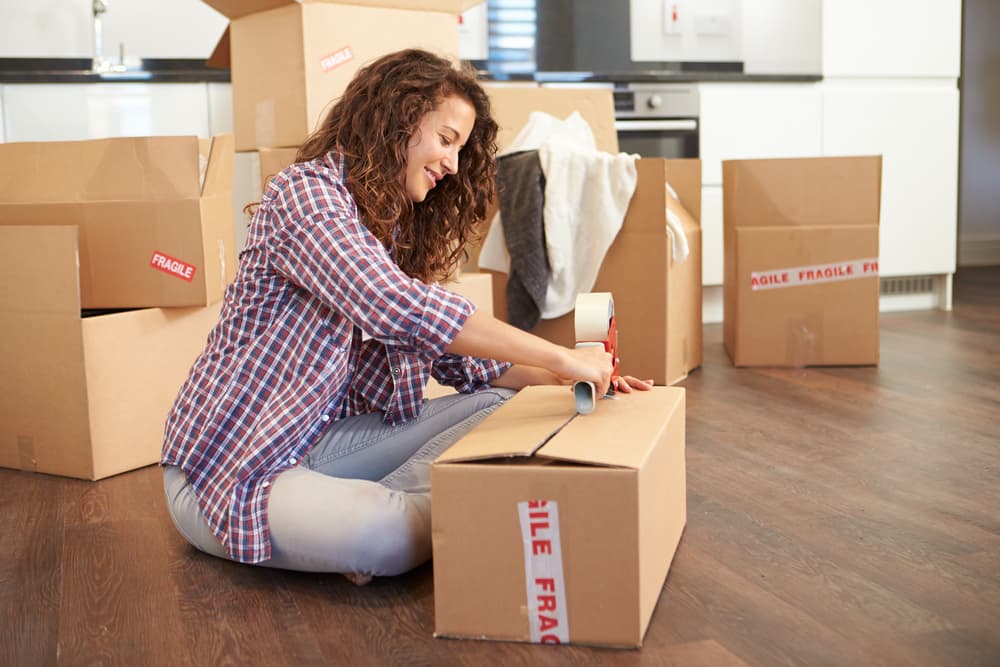
16 Packing Tips to Make Moving Easier
Getting ready to move? Relocating to a new home can be stressful—check out these 16 tips for packing moving boxes and the best ways to pack household items.
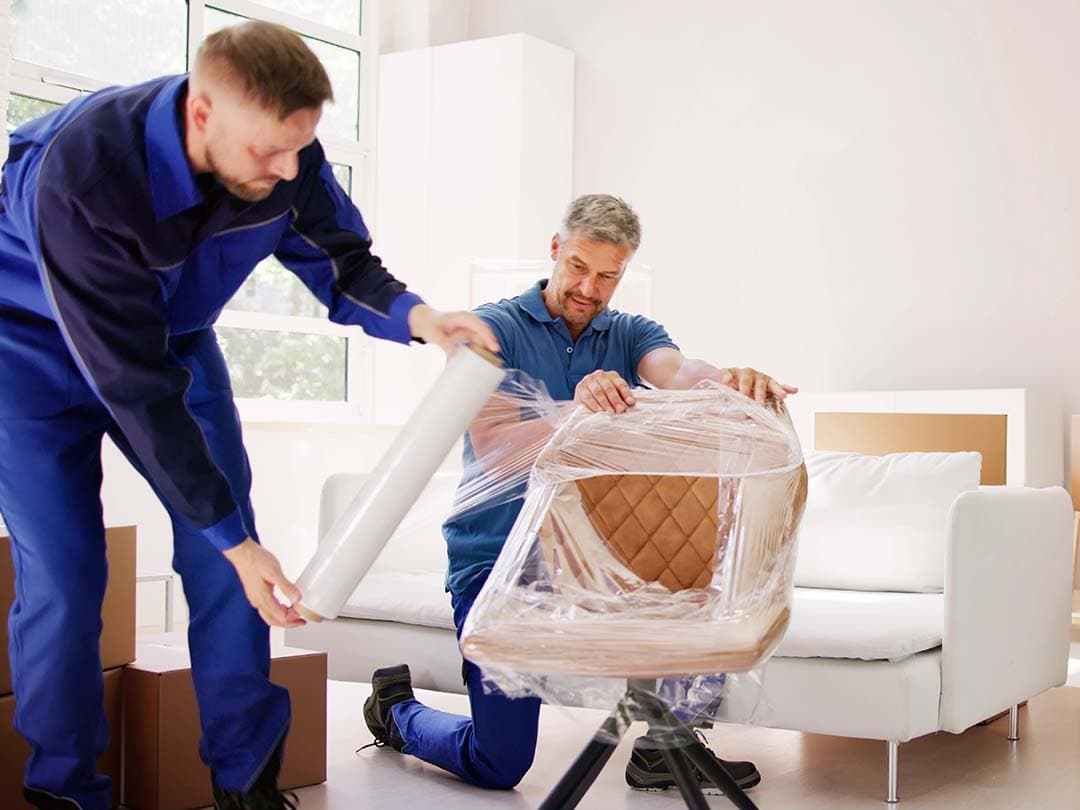
How to Wrap & Pack Furniture to Move
Moving soon and need to protect your furniture? Follow these steps to pack your couch, tables, chairs, bed sets, and other furniture.
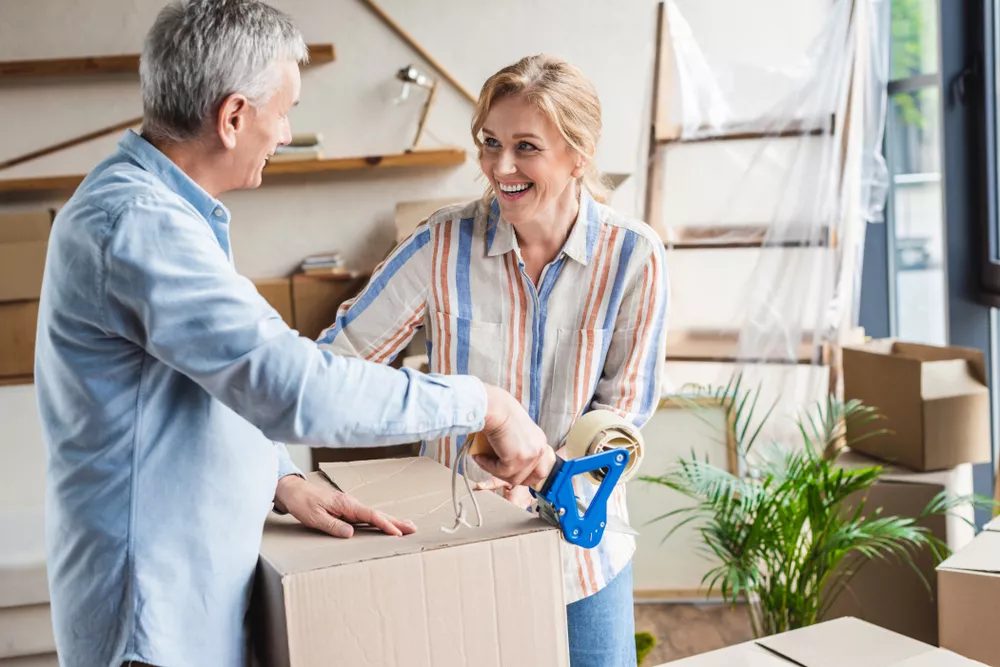
10 Tips for Packing Moving Boxes
Planning a move? Packing moving boxes properly saves time, helps protect your items, and keeps things organized. Check out these ten efficient packing tips!
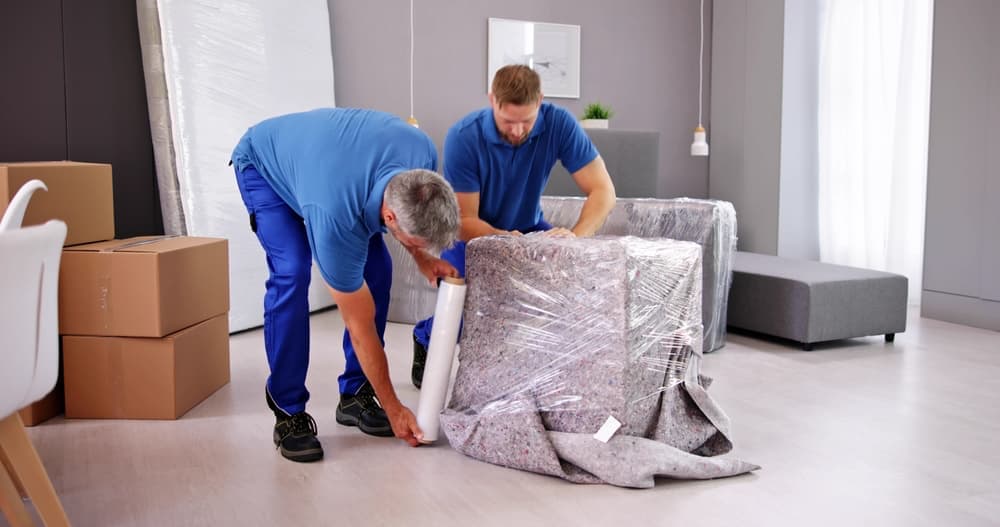
How Much Does It Cost to Hire Packers?
Considering hiring packers for your move? Here's a guide to the cost of packing services to help you budget.
Author Profile
Quinn Johnson
Quinn Johnson is a moving expert and author for Extra Space Storage. He's moved over 15 times, including internationally, and helped countless others between their own homes. He's happy to lift some boxes for a friend as long as he's paid in pizza. As a writer and content creator for Extra Space Storage since 2019, Quinn shares helpful moving tips and info to alleviate the common stresses of moving.