Moving Guide
How to Label Boxes for Moving
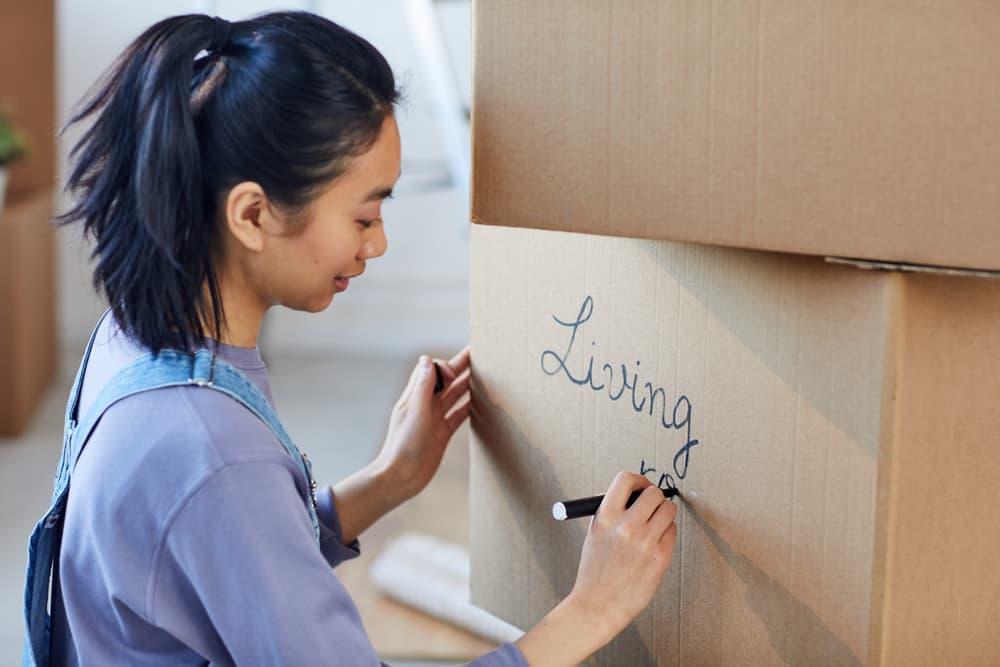
Moving to a new home can feel overwhelming, but using the right labeling system for your moving boxes can simplify the process. By creating clear, consistent labels as you pack room to room, you'll know exactly where each box goes and what it contains—making unpacking and settling in much easier. This guide covers how to label boxes for moving so you can stay organized from start to finish.
Gather Your Labeling Supplies
Having the right supplies from the start sets you up for success, allowing you to label each box the moment it’s packed. Here is a list of supplies to keep close:
Permanent markers: Choose quality, waterproof markers. A black marker is essential for clear text. Colored markers can be helpful if you plan to color-code your boxes by room.
Labels or stickers: You can use pre-printed moving labels or blank labels. These can be helpful for neatly writing information instead of writing directly on the cardboard.
Plastic label pockets: If any boxes will go into storage for a while, consider using clear plastic label sleeves that stick onto boxes. They protect paper labels for the long haul and allow you to swap out labels at any time.
Colored tape: Use colored packing tape or duct tape to show which room a moving box belongs in. For example, use blue tape for bathroom boxes or green for a kitchen.
Clear packing tape: Use clear packing tape to secure paper labels on boxes. This also helps protect labels from tearing or smudging during the move.
Notebook or inventory app: If you choose to use a numbering system, use a notebook, spreadsheet, or moving app to note what items are inside each box.
Label Boxes as You Pack Them
Once you are done packing a box, label it right away. If you pack a dozen boxes at a time, you likely won't remember what’s in each one—so make it a habit that every time you fill a box and seal it, you immediately label the box.
Don’t pre-label empty boxes: It’s fine to mark a box "Kitchen" in advance if you're certain it will contain kitchen items, but avoid writing detailed contents on a box before you’ve packed it. Plans can change, and you might realize that box would be better suited for something else.
Work room by room: Stay organized by packing and labeling one room at a time. For example, focus on finishing all of the boxes from the bathroom before moving onto the bedroom. This helps to avoid mixing items from different rooms in the same box.
Stay consistent: Packing and labeling as you go helps you stay consistent with your labeling system—and seeing those neatly labeled boxes stack up can give you a real sense of progress and control over the moving process.
Use a Consistent Labeling System
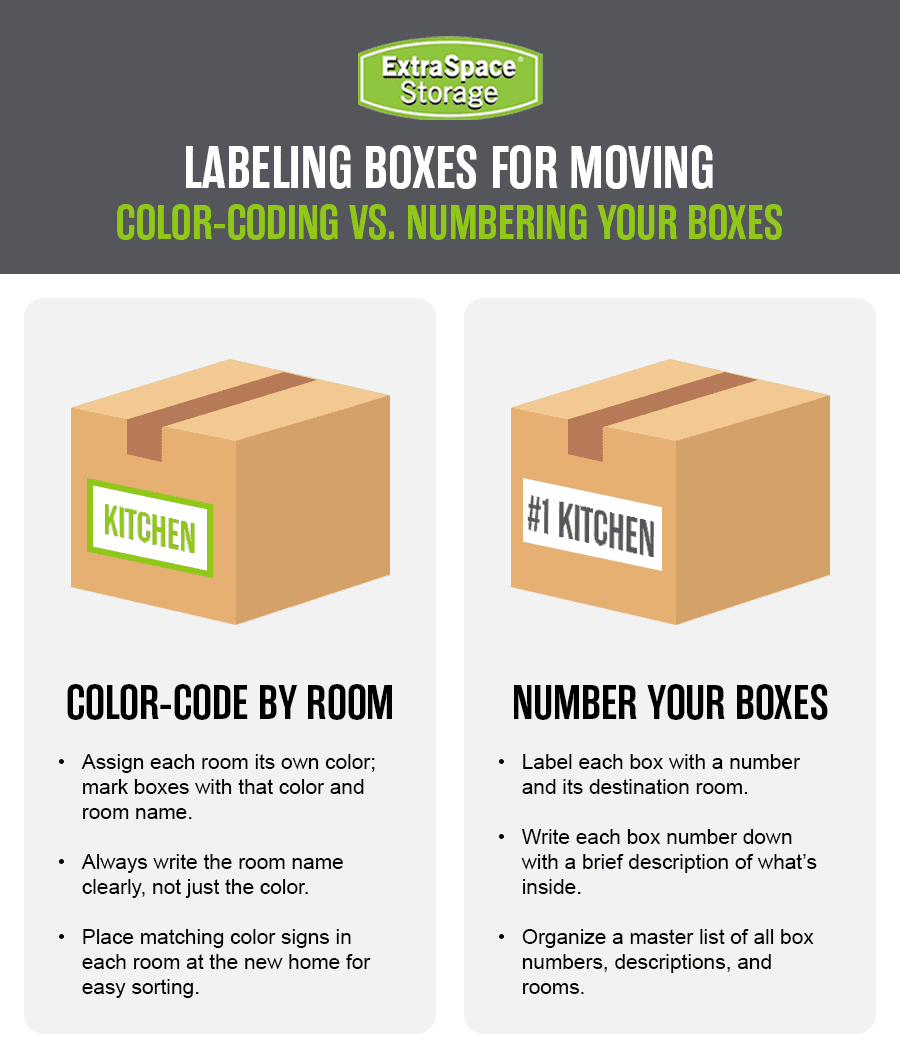
Before you write on any boxes, choose the labeling system that works best for you. The two most popular methods are color-coding and numbering boxes with a corresponding list—and you can even combine both for extra clarity. Whatever system you choose, be sure to share it with everyone helping you move so they understand what each label means. Here’s how these labeling systems work:
Color-Code by Room
Assign a unique color to each room: Use colored markers and write the room name on the box in its assigned color. You can also place a strip of colored tape on the box that corresponds to that room.
Write the room name clearly: Color alone is helpful, but make sure also to write the name of the room in text.
Use color-coded signs at the new home: Place a sheet of paper or tape in each room, matching the label color. This helps match boxes to the rooms.
Number & Inventory Your Boxes
Label each box with a number and room: Instead of writing contents on the box, simply give it a number and write the room name.
Create a master inventory list: Write the box number down, along with a brief description of what's inside and the room it goes to. For instance, your list might say "#1—Kitchen: Coffee maker, toaster, dish towels."
Benefits of numbering: This labeling system keeps the contents of the box private, speeds up packing, and helps you check that everything arrived at your new home.
Include Key Details on Each Label
No matter which labeling system you use, specific information should be written on every moving box. You can also use simple symbols—like a glass icon for fragile items or arrows to show which side should face up—to make your labels even more intuitive. A good moving box label typically includes:
The destination: Write the name of the room where the box belongs so it can immediately be placed in the right area when you're unpacking.
A brief content description: You don't need to list every item, but add a few words to describe the main contents of the box. For instance, you might write "Books & Photo Albums," "Kitchen—Pots & Pans," or "Kids Toys—Puzzles & Games." If a box contains a mix of items, you can label it "[Room]—Miscellaneous."
Special handling instructions: If the box contains fragile items or has any specific handling needs like additional padding with moving blankets or pads, mark that clearly on the outside. Common examples include writing "Fragile," "Handle with Care," "This Side Up," or "Heavy" on appropriate boxes. You can buy stickers with these warnings or simply write them in large, bold letters.
Find Affordable Self Storage Near You
Extra Space Storage has over 4,000 locations across the U.S. with friendly customer service, advanced security features, and affordable month-to-month rates.
- Save up to 40% off online
Write Clearly & Legibly
When labeling moving boxes, write legibly so that you and your family, friends, or hired moving crew can easily read and understand what's inside. Here are some tips to ensure clarity:
Use large, bold lettering: Write in big letters that can be read from a distance. Thick permanent markers are ideal for this. If your handwriting isn’t the best, you could print labels from a computer for each box instead.
Stick to simple words and consistent terms: Use the same names for rooms and avoid abbreviations that others might not recognize. For example, spell out "Laundry Room" instead of writing "LR," which could be confused for "Living Room."
Label the top and one side: After sealing a box, label its top and one side. Use consistent placement on each box so your labels are easy to identify.
Make Sure Labels Stay Put
Moving can be rough on boxes—they get dragged, stacked, and jostled around. That’s why it’s important to secure your labels so they don’t fall off or become unreadable:
Use high-quality materials: Write directly on the box with permanent markers that won't fade or wipe off—or use strong adhesive labels that won't easily peel off.
Reinforce with clear tape: Place a strip of clear packing tape over paper labels. This stops the edges from curling, keeping the labels in place.
Cover old markings: If you’re reusing boxes, take a moment to black out or cover old labels. You can scribble over old text with a marker, stick a new label on top, or tape a piece of paper over any old markings. Make sure only your new label shows.
Set Aside "Open First" Boxes for Essentials
As you label your moving boxes, identify which ones are high priority for the first day or night in your new home. By labeling them as "Essentials" or "Open First" boxes, you can have immediate access to essential items right away, without having to dig through all your boxes. Here’s how to handle your "open first" boxes:
Pick your essentials: Determine which items are the last things to pack and first you’ll need. Common essentials include toiletries, a couple of sets of clothes, basic bedding, essential kitchen items, important medications, phone chargers, and basic tools. Pack these into one or two boxes and don’t mix a lot of other household items in—keep them truly to the basics you’ll need immediately.
Label them clearly as priority boxes: Write something like "Open First" or "Essentials" on these boxes so they stand out. For example, you might label a box "Kitchen Essentials—Open First" or "Open First: Bedding & Toiletries." You could even use a special tape color or draw a big star to make these boxes easy to identify.
Keep them easily accessible: Make sure the essentials boxes are loaded last onto the moving truck—or even transport them in your own car. Because they’re clearly labeled, you and your helpers will know to give them priority and to avoid stacking other boxes on top of them as you're unloading.
Unpack these first: Once you arrive, you can locate your essentials boxes right away thanks to the labels. That way, you can quickly set up your bed, take a shower, have a meal, and charge your phone without searching through dozens of boxes first.
***
Getting ready to move? Extra Space Storage offers moving tips and resources to help you stay organized throughout your relocation! And if you need a secure spot to store boxes or other belongings while decluttering to move or during your transition, we have locations throughout the U.S. Find cheap storage near you!
Related Packing Resources
Moving Boxes 101: How to Choose & Pack Boxes
Using the right moving boxes is essential when packing. Learn about different types of packing boxes for moving and how to pack them properly in this guide!
16 Packing Tips to Make Moving Easier
Getting ready to move? Relocating to a new home can be stressful—check out these 16 tips for packing moving boxes and the best ways to pack household items.
How to Wrap & Pack Furniture to Move
Moving soon and need to protect your furniture? Follow these steps to pack your couch, tables, chairs, bed sets, and other furniture.
10 Tips for Packing Moving Boxes
Planning a move? Packing moving boxes properly saves time, helps protect your items, and keeps things organized. Check out these ten efficient packing tips!
How Much Does It Cost to Hire Packers?
Considering hiring packers for your move? Here's a guide to the cost of packing services to help you budget.
Author Profile
Quinn Johnson
Quinn Johnson is a moving expert and author for Extra Space Storage. He's moved over 15 times, including internationally, and helped countless others between their own homes. He's happy to lift some boxes for a friend as long as he's paid in pizza. As a writer and content creator for Extra Space Storage since 2019, Quinn shares helpful moving tips and info to alleviate the common stresses of moving.