Moving Guide
What to Know Before Choosing a Moving Trailer Rental
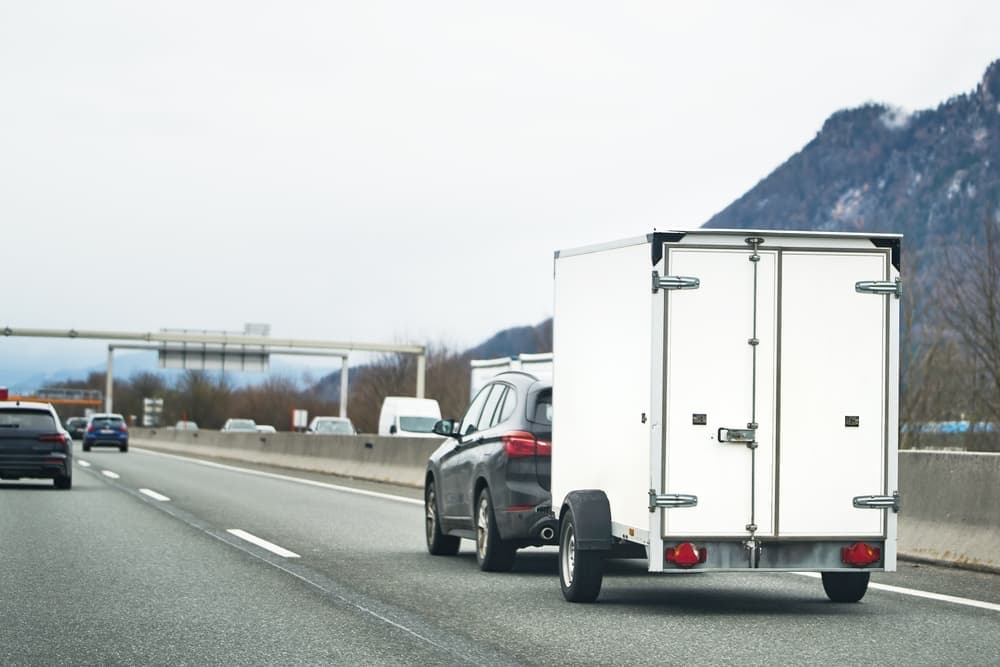
Renting a moving trailer can be a cost‑effective, flexible way to move—especially if you're moving by yourself, relocating on a budget, or already own a tow‑capable vehicle. From signing a rental agreement to choosing the right trailer and confirming towing capacity, here's everything you need to know about renting a moving trailer!
Know Your Trailer Options
There are multiple types of moving trailers—and depending on your needs—one might be better suited to your move. Here are the most common moving trailer options to help you get started.
Trailer Type | Typical Sizes | Best For | Key Benefits | Possible Drawbacks |
Cargo (Enclosed) | 4×8 ft to 6×12 ft | Furniture, boxes, electronics | Weatherproof, lockable, better aerodynamics | Slightly higher daily rate; limited height for tall items |
Utility (Open) | 5×8 ft to 8×28 ft | Oversized furniture, lawn gear, building supplies | Easy side loading, ramp access | Exposed to rain/theft; can reduce fuel economy |
Auto/Motorcycle | Tow dolly, car hauler, motorcycle trailer | Moving a vehicle with household goods | Lets you avoid an extra driver or shipping fees | Requires a powerful tow vehicle; heavier tongue weight |
Quick tips
Match trailer cubic footage to your home size. A 6×12 cargo trailer handles most 1‑ to 2‑bedroom moves, while smaller trailers suit studios or dorms.
Measure large pieces first (sectionals, mattresses, patio sets) so you don’t undersize.
If towing a car, verify curb weight and wheelbase against the auto carrier’s rating.
Check Vehicle Compatibility & Towing Capacity
It's important to understand how much your moving trailer weighs, and how much capacity it can hold to help keep you and your belongings safe on the road.
Confirm the Numbers: Look up your Gross Trailer Weight (GTW) limit in the owner’s manual, and compare to the trailer’s empty weight plus your estimated cargo load. The tongue weight (force on the hitch ball) should be 10-15% of the GTW. Low tongue weight causes sway; too high overloads rear suspension.
Hitch & Wiring Basics: A Class I or II hitch works for lighter trailers (<3,500 lb); Class III+ for heavier loads. The ball size must match the trailer coupler (usually 1-7/8 in, 2in, 2-5/16in or 3in). Plug a 4‑pin or 7‑pin wiring harness into your vehicle so trailer lights sync with your brakes and turn signals.
Braking & Stability: Surge or electric brakes are common on trailers above 2,000–3,000 lb. Test them in a parking lot before hitting the highway. If your SUV or truck has a tow/haul transmission mode, engage it to reduce “gear‑hunting,” where the towing vehicle is constantly searching for the right gear. Add clip‑on mirror extenders if the trailer is wider than your rear fenders.
Practice Makes Perfect: Spend 15 minutes practicing wide right turns, gradual stops, and gentle reversing. Use cones to learn backing up in a straight line—turn the steering wheel opposite the direction you want the trailer to travel.
Understand Moving Trailer Costs
Cost Component | Typical Range | Budget Tips |
Daily Base Rate (local) | $15–$35 for small trailers; $30–$45 for 6×12 | Reserve early—prices rise at month‑end and peak summer. |
One‑Way Package | Flat fee based on distance & trailer size; often includes 3–5 days | Unlimited mileage is common—return on time to avoid late fees. |
Insurance/Damage Waiver | From $15-28 | Personal auto policies rarely cover the rental trailer itself—consider the add‑on. |
Equipment Add‑Ons | Hitch install $200–$1200 (one time); tie downs $10–$30 | Borrow ratchet straps if possible and keep them for future moves. |
Fuel Impact | 5–20% drop in MPG, as fuel economy drops about 2% for every 100 pounds you tow. | Factor extra gas money into long hauls; keep tires fully inflated. |
Money‑Saving Strategies
Trailers vs. Truck Rentals: For loads under ~2,500 lb, a trailer is usually cheaper because you avoid per‑mile truck fees and premium truck fuel consumption.
Share Space: If you and a friend both have small loads, split a single large trailer and one tow vehicle.
Return Earl: Some companies refund unused days on local rentals—ask at pickup.
Grace Periods: Some locations allow a one‑hour buffer and key drops—confirm before pickup.
Keep Good Records: Photograph trailer position and mileage on your vehicle odometer in case of any discrepancies.
Don’t Overlook Dedicated Trailer Insurance
While trailer insurance may not always be required, it comes highly recommended. Dedicated insurance can help protect you from potential damages throughout the moving process.
Liability: Most states extend your auto liability to damage you cause with the trailer.
Physical Damage: Collision, theft, or tire blowouts on the trailer itself are rarely included in standard auto policies—buy the rental company’s waiver if you want certainty.
Cargo: Homeowners or renters insurance may cover personal property in transit, often with a deductible. Fragile or high‑value items might need specialty movers or declared value coverage.
Verification Call: Spending five minutes with your insurance agent can clarify exactly what’s covered and save you from duplicate fees.
Smartly Load Your Moving Trailer
No matter what kind of trailer you rent, you'll want to practice smart packing methods to use the space efficiently, making it easier to drive and help avoid damaging your belongings. Generally, the heaviest items should be placed first with moderate items towards the middle. Fill gaps with cushions or moving blankets to prevent shifting during transport, and attach ratchet straps to keep items in place. Here are some additional loading tips to try, too:
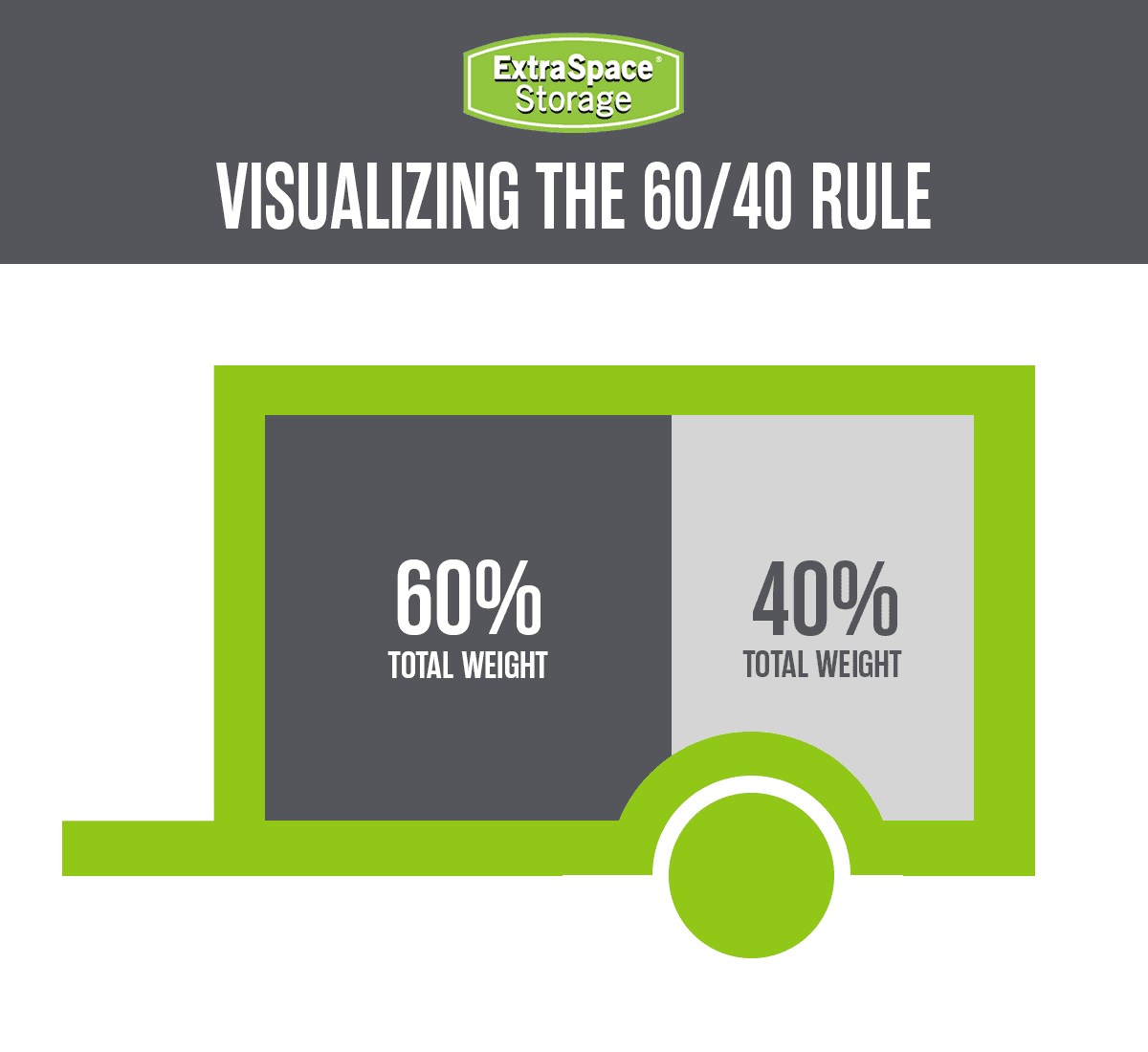
Follow the 60/40 Rule: Place about 60 % of total weight in the front half of the floor space, over or slightly ahead of the axle. If the trailer is too tail‑heavy, you might experience sway, but if it's too nose‑heavy, there will likely be a steering drag.
Driving on the road: Keep speeds ≤55 mph unless trailer tires are rated higher. Leave a five‑second following gap (double the normal car distance). Pull over every 100 miles to feel hubs (warm is OK; hot indicates bearing stress) and re‑tighten straps.
Complete Trailer Maintenance & Safety Checks Before Departure
Safety is one of the most important factors to keep in mind when renting and driving a moving trailer. Use these trailer maintenance tips to keep you and your belongings safe throughout your journey.
Hitch Secure: Coupler down, latch locked, safety pin in place.
Chains Crossed: If your trailer requires chains, form an “X” under the tongue; adjust length so they clear turns but never drag.
Lights & Signals: Test brake, turn, running lights with a buddy.
Tire Check: Inspect tread, lug nuts, valve stems; set pressure to the PSI on the sidewall.
Spare & Jack: Confirm the trailer has a spare tire and jack and that you have a lug wrench sized for its nuts.
Door & Ramp Locks: Close latches fully; padlock if you’ll leave the trailer unattended.
Review Licensing & State Laws
If you're new to hauling a moving trailer, or are relocating to another state, it will be important to review any licensing or state laws. Here are some common considerations to be aware of:
Standard Licenses: In nearly every U.S. state, a regular Class D license covers personal towing up to at least 10,000 pound trailer Gross Vehicle Weight Rating (GVWR).
Age Limits: Most companies allow trailer rental at 18+ with a valid license (drivers under 25 may see a young‑renter surcharge).
State‑Specific Speed Limits: Some interstates mandate 55 mph for any vehicle pulling a trailer. Watch highway signs and follow state regulations.
Lane Restrictions: In dense metro areas, trailers often must stay out of far‑left “car‑only” lanes—plan for slower lanes and exits.
No Hazmat Loads: Moving trailers cannot safely carry propane tanks unless valves are closed and tanks are upright; flammable liquids require proper containers.
Find Affordable Self Storage Near You
Extra Space Storage has over 4,000 locations across the U.S. with friendly customer service, advanced security features, and affordable month-to-month rates.
- Save up to 40% off online
Weigh the Pros & Cons of Renting a Moving Trailer
As with most moving-related decisions, you'll want to consider the pros and cons before deciding what's best for your relocation. Here are some advantages and drawbacks of renting a moving trailer.
Advantages of Renting a Moving Trailer
Lower Cost: No per‑mile truck fee, cheaper daily rates, friendlier fuel bill.
Use of Familiar Vehicle: Modern safety tech, comfort, and easier overnight parking.
Flexible Size Range: Pick exactly how much cubic footage you need.
Unlimited Miles on One‑Way, Flat Rate Moves: Ideal for cross‑country relocation without surprise surcharges.
Potential Drawbacks of Renting a Moving Trailer
Requires Tow‑Capable Vehicle: Hitch installation costs and towing skill needed.
Capacity Ceiling: A 6×12 trailer tops out around 2,500 lb of cargo—too small for large households.
Driving Challenges: Reversing and cross‑winds demand focus while speed limits lower trip pace.
Physical Labor: No hydraulic ramp on small units—heavy lifts must be muscled in.
If you lack a suitable tow vehicle or have a four‑bedroom house, consider a moving truck or portable container instead. Yet for apartments, dorm rooms, or downsized households, renting a moving trailer offers unmatched value.
***
Whether you’re moving cross-country or across town, Extra Space Storage has the moving resources you need! If you’re looking to help estimate your move, check out one of our moving calculators.

Top-Rated Moving Guides

Moving Out of Your Apartment Checklist
Moving out of an apartment can be stressful. Our checklist for moving out of an apartment can help guide through the entire process to ease the transition!

How to Calculate an Item's Linear, Square, & Cubic Feet
For help measuring linear feet, square feet, and cubic feet while moving, check out our helpful guide!

Your Guide to Find Free & Cheap Moving Boxes
Check out our guide to finding affordable moving boxes near you. Explore tips on choosing the right sizes as well as online and retail options.

Important Questions to Ask a Moving Company Before Hiring
Wondering what questions to ask moving companies? Review these helpful moving questions to avoid delays or damaged belongings for a smooth move.

8 Best Free Moving Apps to Help You Move
Preparing for an upcoming move? Whether you need help creating a moving checklist or hiring movers, these are the best free moving apps!
Author Profile
Quinn Johnson
Quinn Johnson is a moving expert and author for Extra Space Storage. He's moved over 15 times, including internationally, and helped countless others between their own homes. He's happy to lift some boxes for a friend as long as he's paid in pizza. As a writer and content creator for Extra Space Storage since 2019, Quinn shares helpful moving tips and info to alleviate the common stresses of moving.