Moving Guide
How to Move a Pool Table

Moving a pool table might seem overwhelming, but by taking the proper steps, you can move it efficiently and safely. To avoid common moving mistakes associated with moving large items, the process requires a careful approach, proper planning, and qualified helpers. From disassembly to reassembly in its new location, discover the best way to move a pool table to protect your investment.
Basic Tools You'll Need to Move a Pool Table:
Socket wrench set
Power drill with screwdriver bits
Staple remover
Heavy-duty moving blankets (x6)
Bubble wrap roll (approx. 50' to 75')
Furniture dollies (rated for 300+ lbs) (x2)
Lifting straps
Small plastic bags (x10)
Sheet of labels or masking tape & marker
Reliable transportation (pick-up truck or rental moving truck)
Moving a Pool Table Yourself vs. Hiring Professionals
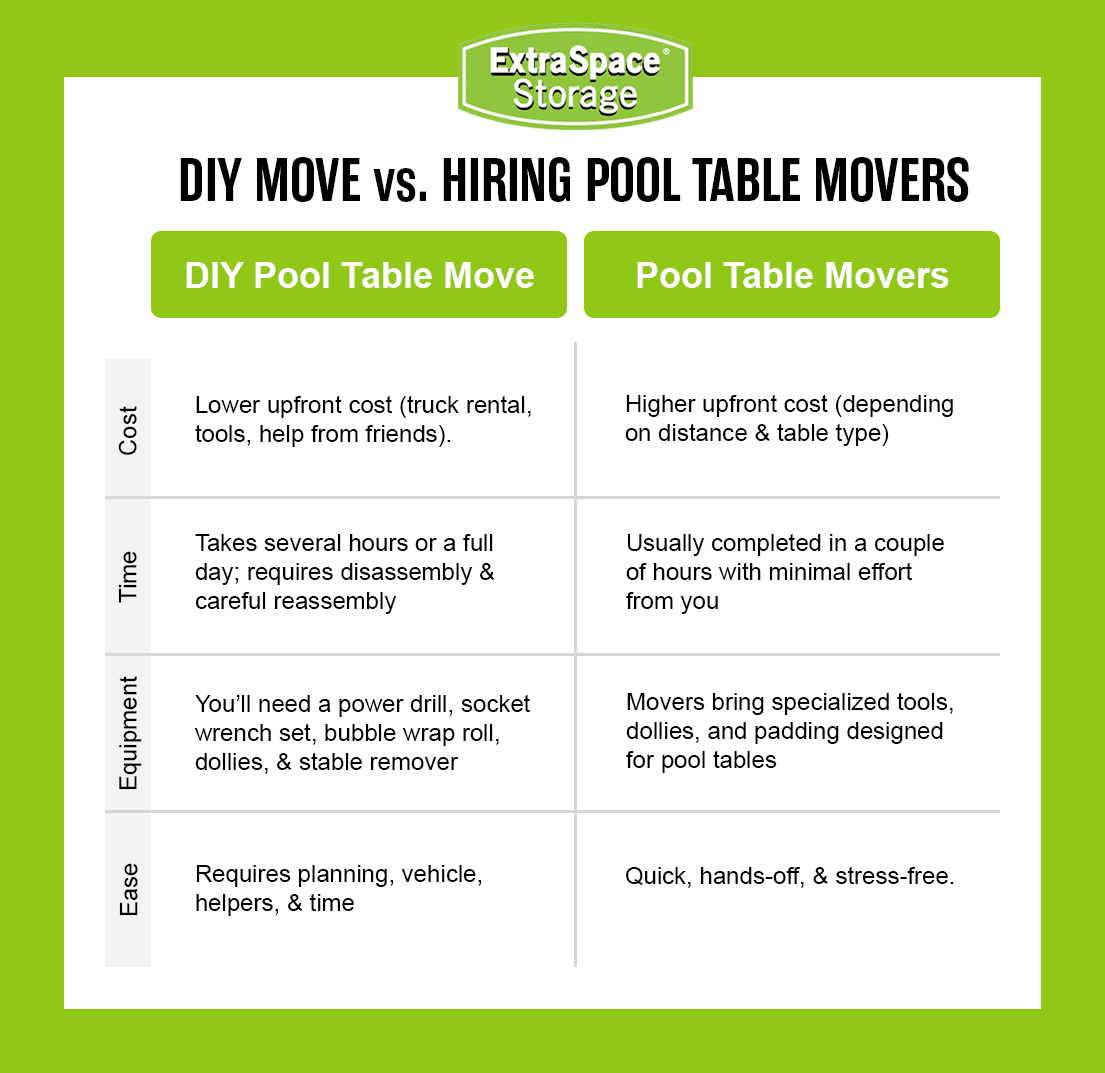
The first decision you'll want to make is whether to transport your pool table yourself or hire professional movers. This choice depends on several key factors that can heavily impact your moving experience.
Moving a pool table by yourself: This is a budget-friendly option that saves hundreds over professional moving services, especially if you're moving a short distance. However, if you don't have enough helpers or the necessary tools, it can be difficult and unsafe.
Hiring a pool table moving company: Professionals have specialized equipment and experience moving heavy items down stairs and through tight doorways. Especially if you don't want to risk damaging an expensive slate pool table or an antique pool table with sentimental value, professional movers can be a huge help.
Pool Table Moving Costs: DIY vs Professional
While DIY pool table moving is more affordable, professional pool table movers may provide useful services to make the process more convenient. Understanding the cost of moving your pool table will help you make the best decision for your needs and budget.
Moving Method | Cost Range | What's Included |
DIY Moving | $50 - $200 | Equipment and truck rental |
Disassembly Only | $200 - $400 | Professional breakdown for DIY transport |
Professional Local | $400 - $600 | Disassembly, transport, reassembly |
Professional Long-Distance | $600 - $1,500 | Full service with insurance coverage |
Additional costs to consider:
Moving truck rental: $30 - $400 depending on size and distance
Storage unit rental: $50 - $300 per month for climate-controlled units
New felt installation: $200 - $600 if existing felt can't be reused
How to Disassemble a Pool Table
Disassembling a pool table is the first step to take before moving it to a new location. This is a multi-step process that can be tricky, so it's important to follow each step carefully. While it's possible to move a pool table without disassembly, this method is only recommended for lighter MDF models or if it's within the same room or level in a house—it should never be attempted with typical slate pool tables. Taking photos throughout the disassembly process will also make reassembly easier at its new location. Follow these steps to taking apart a pool table when moving.
Step One: Remove the Ball Pockets
Start by removing the leather or plastic ball pockets from each corner and side. Most pockets are held in place with either screws or staples. Use a screwdriver for screws, or carefully pry out staples with a flat-head screwdriver. Place all pockets in a labeled bag to keep them together.
Step Two: Detach the Rails
The side rails are bolted to the table from underneath. You'll typically find three to four bolts per rail. Use a socket wrench to remove these bolts, placing each set in a labeled bag corresponding to its rail position. Rails are heavy, so have at least two people lift each rail away from the table.
Step Three: Remove the Felt (Optional)
Removing the pool table felt is optional and comes with risks, but it's a good choice if you're worried about it being damaged when moving. The felt is your table's playing surface and can often be reused if removed properly, but it requires careful handling.
To remove the pool table felt: Use a staple remover to carefully extract staples around the perimeter of the table, working slowly to avoid tearing. When you're done, roll the felt gently rather than folding it, and store it in a clean, protected area.
If you decide to leave the felt on: Protect it by covering the entire surface with moving blankets or plastic sheeting. Secure the covering with tape around the edges, but avoid taping directly to the felt surface. This approach reduces the risk of tearing the felt during removal while still protecting it during transport.
Step Four: Handle the Slate with Extreme Care
Slate pieces are the heaviest and most fragile parts of a pool table, making their removal the most critical step during disassembly. These are typically secured with screws along the edges—remove these carefully, keeping track of where each one goes. Label each pool slate piece with masking tape, indicating its original position and which side faces up. Due to their weight, lifting requires at least two to three people. Move slowly and keep the slate level during transportation to prevent cracks or other damage.
Step Five: Disassemble the Base
With the slate removed, you can access the table's base structure. Most pool tables have legs that bolt directly to the frame. Remove these bolts and carefully separate the legs from the frame. Some tables have additional aprons or support structures that also need to be removed.
Find Affordable Self Storage Near You
Extra Space Storage has over 4,000 locations across the U.S. with friendly customer service, advanced security features, and affordable month-to-month rates.
- Save up to 40% off online
How to Reassemble a Pool Table After Moving
Once your pool table has been moved, you'll want to reassemble it with care. Rushing through reassembly can create problems that affect your table's performance and condition, so take your time with this process.
Prepare Your New Space
Ensure your pool table's new location is completely ready. The floor should be level and clean, with adequate space around the table for comfortable play—standard spacing allows for five feet of clearance on all sides for proper cue movement. Ensure your ceiling height accommodates both the table and overhead lighting. Most pool tables require at least eight feet of ceiling clearance, which accounts for player stance and cue movement.
Ensure Professional Leveling
Proper leveling ensures accurate ball roll and prevents premature wear on your table. This step requires precise pool table measurement tools and experience adjusting leg heights or adding shims. Even small imperfections in leveling can significantly impact game quality. For DIY reassembly, invest in a quality level and take measurements from multiple points across the surface. Professional reassembly services typically include leveling as part of their standard service.
Test Your Setup
Once your pool table is put back together, test the table thoroughly before declaring the job finished. Roll balls in different directions across the surface, checking for consistent speed and straight tracking. Test all pockets to ensure proper ball collection, and verify that rails provide consistent bounce response.
Frequently Asked Questions
How much does a pool table weigh?
Pool table weights vary significantly by size and construction. Non-slate tables typically weigh 200 to 500 pounds, while slate tables can weigh 600 to 1,300 pounds. The slate alone accounts for 450 to 600 pounds and is usually split into three pieces for easier handling.
Can you move a pool table without taking it apart?
Yes, you can move some pool tables intact, but only for short distances within the same building and only if it's a lighter MDF model. Slate tables should always be disassembled for safety and to prevent damage. Moving an intact table requires at least 5-6 helpers and specialized equipment.
How much does it cost to hire professional pool table movers?
Professional pool table moving costs range from $300-$600 for local moves and $600-$1,500 for long-distance relocations. This includes disassembly, transport, and reassembly. Some companies offer disassembly-only services for $200-$400 if you plan to handle transport yourself.
What size storage unit do I need for a pool table?
If you're moving a pool table into a storage unit, a 10x10 climate-controlled storage unit works for most 7-foot and 8-foot tables with all components. A 10x15 storage unit may be best for 9-foot tables or if you want extra space for other pool table accessories. It's recommended to rent climate-controlled storage to help protect the wood and felt from extreme temperatures and high humidity.
Should I remove the pool table felt before moving?
Removing the pool table felt is optional and risky. Only remove it if you're concerned about damage during the move and feel confident in your ability to do it without tearing. Many people choose to leave the felt on and protect it with moving blankets instead.
***
Moving a pool table or other large items? Find helpful moving guides on the Extra Space Storage Moving Hub. Or, if you need self storage for your specialty items, we have convenient and secure locations across the U.S. Find a storage unit near you today!

Moving & Packing How-To Guides
How to Move: Your Complete Guide to an Easy Relocation
Planning a move? This moving guide includes everything you need for planning a smooth relocation, including checklists, packing tips, costs, and more.
How to Move Heavy Furniture
Need to move heavy furniture? From safe lifting to smart tools, here’s how to make moving large items easier.

Guide to Packing A Home Office for Moving
Moving your home office? Discover tips for packing electronics, securing data, furniture disassembly, and more.

How to Move a Refrigerator
Relocating a refrigerator without hired movers? Follow these helpful steps for a safe, proper fridge removal.
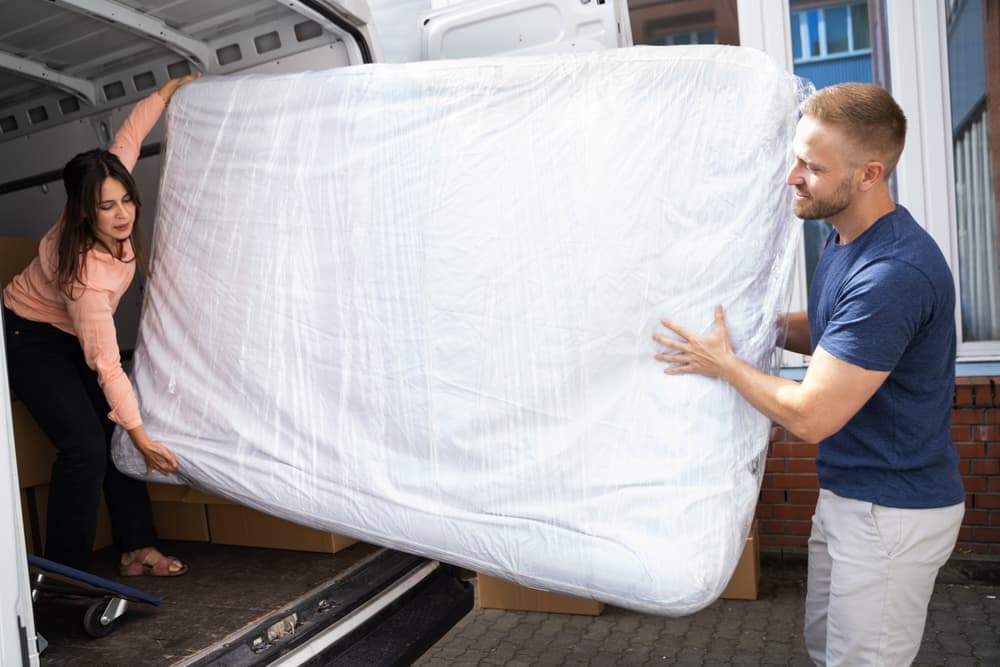
How to Move a Mattress by Yourself or With Help
Moving a mattress? Get expert tips for packing, loading, and transporting it to your new home. Plus advice for solo moves, cross-country moves, and more!

How to Pack a Moving Truck
Want to avoid damage while loading a moving truck rental? This is the best way to pack a moving truck.
Author Profile
Quinn Johnson
Quinn Johnson is a moving expert and author for Extra Space Storage. He's moved over 15 times, including internationally, and helped countless others between their own homes. He's happy to lift some boxes for a friend as long as he's paid in pizza. As a writer and content creator for Extra Space Storage since 2019, Quinn shares helpful moving tips and info to alleviate the common stresses of moving.