

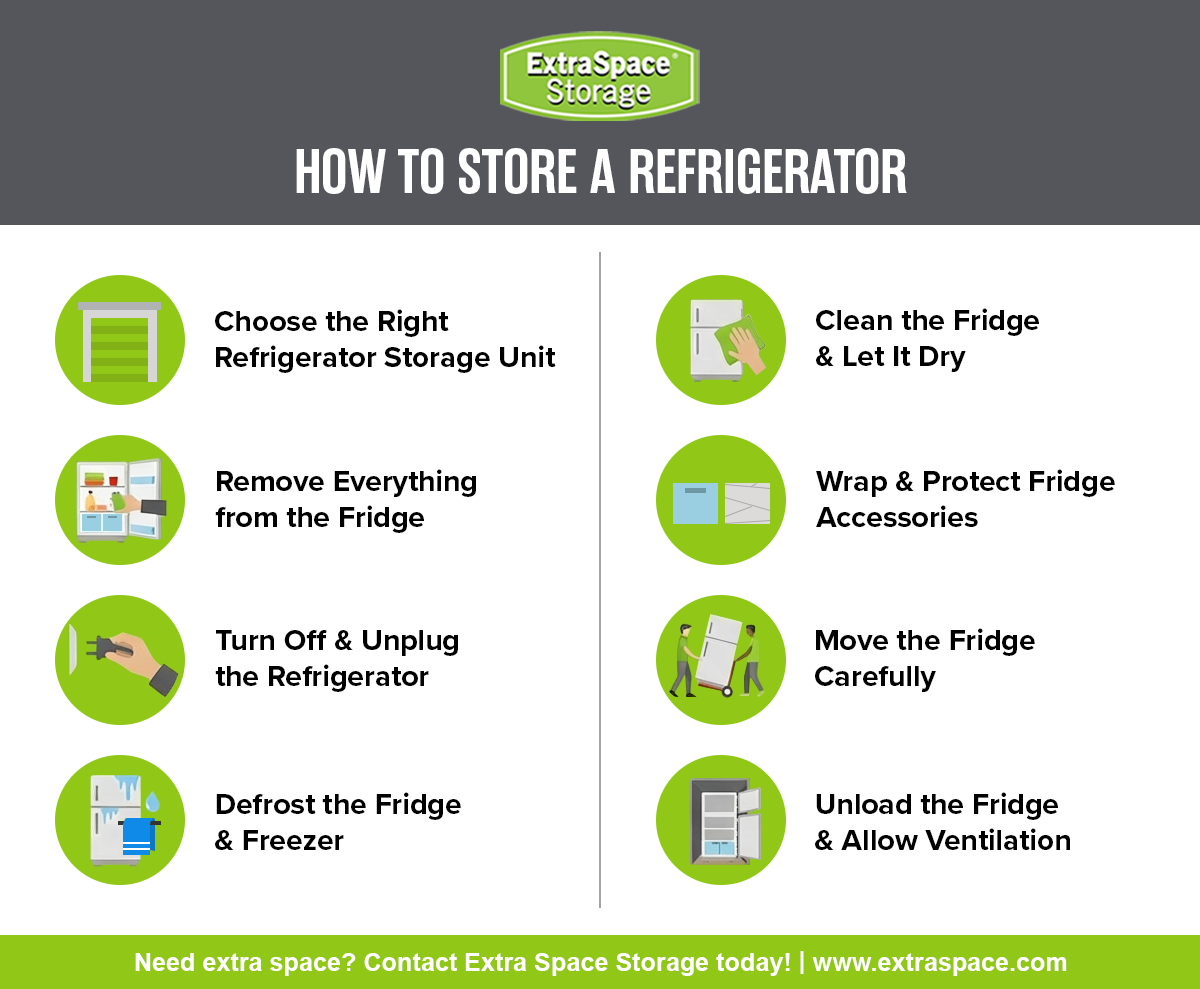
Whether you’re planning a move, renovating your home, or in need of temporary storage for appliances, learning how to store a refrigerator properly is key to maintaining its condition. For the best results, follow this step-by-step guide to storing a refrigerator in a storage unit.
Choose the Right Refrigerator Storage Unit
Before you start prepping your fridge for storage, make sure it has a safe place to go. Follow these tips for renting the best storage unit for a refrigerator:
- Climate-controlled storage is highly recommended for storing refrigerators, as this feature can protect internal components from damage caused by extreme temperatures or humidity.
- Consider renting a storage unit with drive-up access—this can help you more easily transport your refrigerator into the unit.
- When it comes to selecting the right storage unit size, measure to ensure it’s tall enough for you to store the refrigerator upright—keeping a fridge on its side can cause internal damage. A storage unit is typically around 96″ tall and can accommodate standard-height fridges (62″ to 72″), but check to ensure your specific model fits within the unit’s dimensions. Generally, a 5x5 unit can hold a refrigerator, but a larger unit—such as a 5x10 or 10x10—may be the better choice if you want to store other belongings alongside it.
Remove Everything from the Fridge
When preparing a fridge for storage, begin by removing all food and drink from the fridge and freezer compartments. Not only do most self storage units prohibit food, but these items could also spoil if left inside, attracting odors or potentially cause pest problems. That said, be sure to double-check all drawers and compartments so nothing is left behind. If possible, start this process a few days or weeks in advance so you can eat or donate your perishables rather than having to throw them out!
Turn Off & Unplug the Refrigerator
Once you’ve emptied your fridge, turn off the refrigerator and unplug it from the wall—if the outlet is located behind the unit, you may need to move it slightly in order to unplug it. If your fridge has a water line or built-in ice maker, disconnect and drain the water lines completely.
Defrost the Fridge & Freezer
Defrosting your fridge before storage helps prevent issues like water damage, mildew, and foul odors. To defrost a refrigerator, open the doors to both the fridge and freezer compartments and allow the ice to melt naturally. Place old towels inside the appliance and on the floor around it to help absorb dripping water. It’s best to start defrosting a few days before you want to move the unit, as this process can take multiple hours to an entire day to finish. However, you can also speed things up by setting a pot of boiling water inside to loosen the ice, then using an ice scraper to gently chip at any remaining chunks.
Clean the Fridge & Let It Dry
Taking time to clean—and dry—your fridge helps ensure you get rid of any food particles or moisture that could attract mold or cause odors during storage. Follow these tips for cleaning and drying a refrigerator properly:
- Remove the detachable shelving and drawers, wash them individually with soap and warm water, and leave them out to dry.
- Thoroughly sanitize and wipe down the interior, including the rubber door seals.
- Clean and sanitize the exterior of the fridge. Use a vacuum hose or soft brush to remove dust from the fridge coils located on the back or underneath the unit.
- Finally, wipe the unit down with a clean, dry cloth to remove excess moisture. Give it several hours to completely air dry.
Wrap & Protect Fridge Accessories
Before loading the refrigerator onto your moving truck, wrap all removable parts—like the shelves and drawers—in bubble wrap or towels, then pack them separately to prevent cracks or breakage. Gather any loose cords, hoses, or accessories and store them in a labeled bag—if the cord isn’t removable, coil it up and tape it to the side of the unit to prevent it from catching on anything during transport. After removing all accessories, tape or strap the refrigerator doors closed so they stay out of the way, then wrap the exterior with moving blankets for added protection.
Move the Fridge Carefully
Ready to move your refrigerator? It can be helpful to enlist the help of friends, family members, or even professional movers to safely move large items like refrigerators. First, check that your moving truck size gives you enough space to transport the fridge standing upright—be sure to measure all doorways, hallways, and stairwells along your route, too. Clear and prep your moving path by removing obstacles and laying down protective floor coverings. Use furniture pads to slide the unit onto the dolly and strap it in place. Gently tilt the appliance back to move it and pull it up the ramp, then secure it in the truck upright.
Unload the Fridge & Allow Ventilation
After safely transporting and unloading your fridge into your storage unit, remove any tape from the doors, then leave them slightly ajar. Using a towel or another small object to prop the doors open during storage allows for proper airflow, which can prevent moisture, odors, and mold. You can also place odor-absorbing materials inside the fridge—like baking soda, scented dryer sheets, or even coffee grounds—to keep the appliance from developing a musty smell. If possible, load the appliance onto a pallet to keep it off the floor and further protect it from moisture, water leaks, and pests.
Frequently Asked Questions
How long can you leave a fridge turned off?
You can leave your fridge turned off in storage indefinitely, as long as you take the proper steps to prepare it beforehand. To preserve your refrigerator’s condition in long-term storage, you’ll need to thoroughly defrost, clean, and air it out ahead of time to prevent mildew, mold, and odors.
How long can a refrigerator be stored without being used?
You can store a refrigerator in a storage unit for years at a time without using it—if it’s clean, dry, and kept in an upright position, the unit can maintain its integrity. However, note that to prevent extreme temperatures or humidity from causing rust, degradation of the seals, or other internal damage, the best way to store a refrigerator is in a climate-controlled storage unit.
How do you winterize a refrigerator?
When it comes to self storage over the winter, it’s important to protect your fridge from freezing conditions. Winterize your refrigerator by unplugging, emptying, and thoroughly cleaning and drying the interior. If your unit has an ice maker or water dispenser, disconnect and drain the water lines to avoid freezing damage. Then prop the doors open—or remove them entirely—to help with air circulation.
***
Find Climate-Controlled Storage Units Near You!
Extra Space Storage offers climate control at facilities across the nation, where you can safely store appliances, electronics, and other temperature-sensitive items.
Popular cities for climate-controlled storage units:
- Chandler, AZ Climate-Controlled Self Storage
- Hillsboro, OR Climate-Controlled Self Storage
- Huntington Beach, CA Climate-Controlled Self Storage
- Miami Gardens, FL Climate-Controlled Self Storage
- Mount Carmel, IL Climate-Controlled Self Storage
- St Louis Park, MN Climate-Controlled Self Storage
Find climate control near you now!

Hear what Extra Space Storage customers have to say: