Moving Guide
How to Move a Fish Tank or Aquarium to a New House

Whether you're moving locally or long distance, most belongings can be wrapped, boxed, and loaded into a moving truck with relative ease—but moving a fish tank or aquarium requires more careful planning and handling. From pre-move preparation to setting up your tank in its new home, this guide walks you through how to move an aquarium—and its inhabitants—the right way.
How to Prepare An Aquarium for Moving
Proper preparation is key to a stress-free aquarium move. Take these steps in advance of your relocation to help protect both your animals and their environment.
Gather All Necessary Supplies
Moving with a fish tank or aquarium requires the proper tools. Before getting started, collect the following supplies:
Clean 5-gallon buckets with tight-fitting lids
Fish bags and rubber bands or a clip sealer
Battery-powered air pump
Siphon hose
Appropriately sized, sturdy moving box for your tank
Towels or moving blankets
Bubble wrap or packing paper
Moving straps
Choose Appropriate Moving Containers for Your Animals
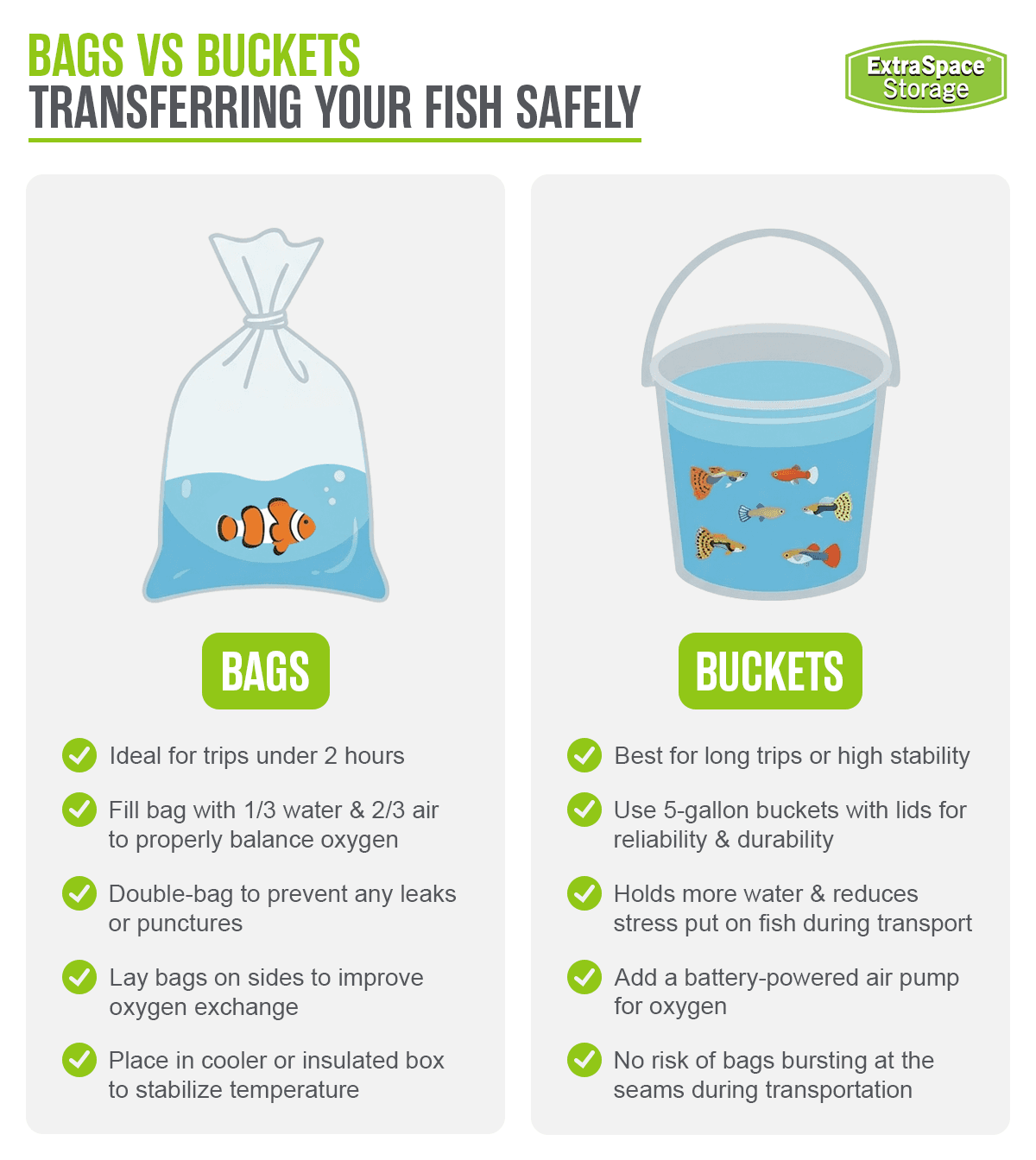
When moving an aquarium, all animals should be removed from the tank and transported separately. The right moving container will depend on the type of aquatic animal(s) you have.
Fish: For local moves under a few hours, fish bags are generally sufficient. For long-distance or cross-country moves, use 5-gallon buckets—with a battery-powered air pump—to maintain oxygen levels.
Other Aquatic or Semi-Aquatic Animals: Frogs, turtles, lizards, and other species all have different needs when outside of their aquariums temporarily—including ventilation, damp environments, or partial water. Be sure to research the best moving method for your specific animal.
Perform a Partial Water Change
Do a 25% water change a few days before the move. This improves water quality and reduces ammonia buildup during transport, when the filtration system won't be running.
Stop Feeding Fish Temporarily
If your aquarium houses fish, stop feeding them 24 to 48 hours before moving. This reduces waste in transport containers and helps maintain safe ammonia levels. Healthy, adult fish can go without food for several days, so this isn't cause for concern.
How to Move an Aquarium or Fish Tank
Moving day is all about protecting your animals, preserving your tank’s ecosystem, and preventing damage to the aquarium itself. Your tank should be one of the last things you move to minimize the amount of time your animals spend in temporary containers. Here's how to move an aquarium safely.
Unplug & Remove Equipment
Unplug the heater and let it cool for at least 30 minutes before handling to prevent damage from sudden temperature changes. Remove filters and pumps, keeping filter media in a bag or container filled with tank water to preserve beneficial bacteria.
Safely Transfer Animals to Transport Containers
Whether you're moving fish or other aquatic animals, transfer them into a designated container for safe transport at this time.
Fish: For short-distance moves, use a net to transfer fish into bags—filling them one-third with tank water and two-thirds with air. For long-distance moves, siphon tank water into a container first, then add the fish—and install the battery-powered air pump, if needed.
Other Aquatic or Semi-Aquatic Animals: Gently place your animal into a container with conditions appropriate for the species. Avoid overcrowding and separate animals if needed to prevent aggression.
Drain the Aquarium
To help preserve the established ecosystem, siphon 75% to 80% of the tank's water into labeled buckets—with some left over to fill the containers for your animals and plants. Transferring water that your animals are already adapted to will help the tank stabilize more quickly in your new home. Once you've siphoned enough water into your container, attach the lid securely. Simply drain and discard the remaining 20% to 25% of the water in the tank, as it likely contains sediment and debris.
Remove Decor, Plants, & Substrate
Place live plants into a bucket with tank water so they remain submerged throughout the move. Remove other decorations and substrate from the tank and pack them in a separate, lidded container to prevent shifting and damage during transport. Avoid rinsing or washing the substrate, as this could destroy beneficial bacteria and disturb the ecosystem.
Pack the Aquarium for Transport
When it comes to how to pack a fish tank or aquarium for moving, prioritize padding for protection. First, wrap the tank in moving blankets or thick towels, then place it upright in a box. Fill any gaps with packing paper or bubble wrap to prevent shifting during the move. Secure the box with packing tape, and label it clearly with "Fragile—This Side Up."
Load & Move the Aquarium
How you should load the tank depends on its size.
10- to 20-gallon tank: Set it in your car's back seat or cargo area with padding around it.
55-gallon tank: Tanks this size—or larger—will likely require a
Always keep the tank upright, secure it against shifting using moving straps, and never place anything on top.
Transport Animals Safely
Prioritize the safe transportation of your animals by keeping them in the cabin of your vehicle rather than a trunk or cargo area. If using fish bags, place them on their sides in a cooler to help maintain stable temperatures. During overnight stops, bring all animals indoors with you—rather than leaving them in the vehicle—for more protection.

Find Affordable Self Storage Near You
Extra Space Storage has over 4,000 locations across the U.S. with friendly customer service, advanced security features, and affordable month-to-month rates.
- Save up to 40% off online
How to Set Up an Aquarium in Your New Home
Once you arrive at your new home, focus on setting up your aquarium as soon as possible to help your animals adjust more easily. Follow these steps to rebuild their environment.
Place the Aquarium in a Smart Location
Before unloading anything else, find a permanent spot for your tank. Choose a level, sturdy surface near a power outlet, and ensure the surface can support the tank's weight.
Refill the Aquarium
Add saved water to the tank first, then top it off with fresh, dechlorinated water. If you're moving live fish to a new city, it's worth testing the tap water first to avoid pH or chemical imbalances.
Reinstall Equipment
Reconnect the filter, heater, and other equipment. Allow the system to stabilize for a few hours before reintroducing animals. Add plants and other decor back into the tank at this time.
Acclimate Animals Slowly
Reintroduce your animals to the tank slowly—and consider leaving the lights off for a few hours to help minimize stress.
Fish: Float fish bags or containers on the surface for 20 to 30 minutes to equalize temperatures, then gently net your fish into the tank.
Other Aquatic or Semi-Aquatic Animals: Gradually reintroduce your animals to their habitat once temperatures and conditions are stable.
Monitor Water Conditions
Over the next few weeks, keep a closer eye on your animals. Even with the proper precautions, the stress of a move can make them more susceptible to illness, so early detection of changes in behavior or water parameters is crucial.
Frequently Asked Questions About Moving an Aquarium
Can you move a fish tank with water in it?
Avoid moving an aquarium without emptying it first. Any turn, bump, or sudden stop can cause the water to slosh, raising the risk of cracks or leaks. A loaded tank is also more difficult to safely lift and carry. Instead, save 75% to 80% of the tank's water in buckets, then add it back once you arrive at your destination.
Can you move a fish tank with fish in it?
Never move a fish tank with fish inside—this poses structural risks to the tank and safety risks for the fish. It's best to transport them separately in bags or containers with tank water to protect both your fish and aquarium.
Are bags or buckets the best way to transport fish when moving?
The best way to transport fish when moving depends on how far you're going. For short-distance aquarium moves, fish bags work well. For long-distance moves, 5-gallon buckets with lids and a battery-powered air pump are more reliable.
***
For other helpful tips on packing and moving, check out our additional moving resources. And if you need a secure spot for your belongings or aquarium supplies during your move, Extra Space Storage has convenient locations across the U.S. to help. Find a storage unit near you!

Author Profile
Quinn Johnson
Quinn Johnson is a moving expert and author for Extra Space Storage. He's moved over 15 times, including internationally, and helped countless others between their own homes. He's happy to lift some boxes for a friend as long as he's paid in pizza. As a writer and content creator for Extra Space Storage since 2019, Quinn shares helpful moving tips and info to alleviate the common stresses of moving.