Moving Guide
How to Move a Lawn Mower: A Step-By-Step Guide for Safe Transport

Moving to a new home and bringing your lawn mower with you? No matter if you have a lightweight push model or a heavy lawn tractor, figuring out how to move a lawn mower can feel daunting. However, with the right prep, tools, and attitude, you can move a heavy item like a lawn mower without stress. No matter if you're relocating across town or moving cross country, use this guide to safely transport your lawn mower!
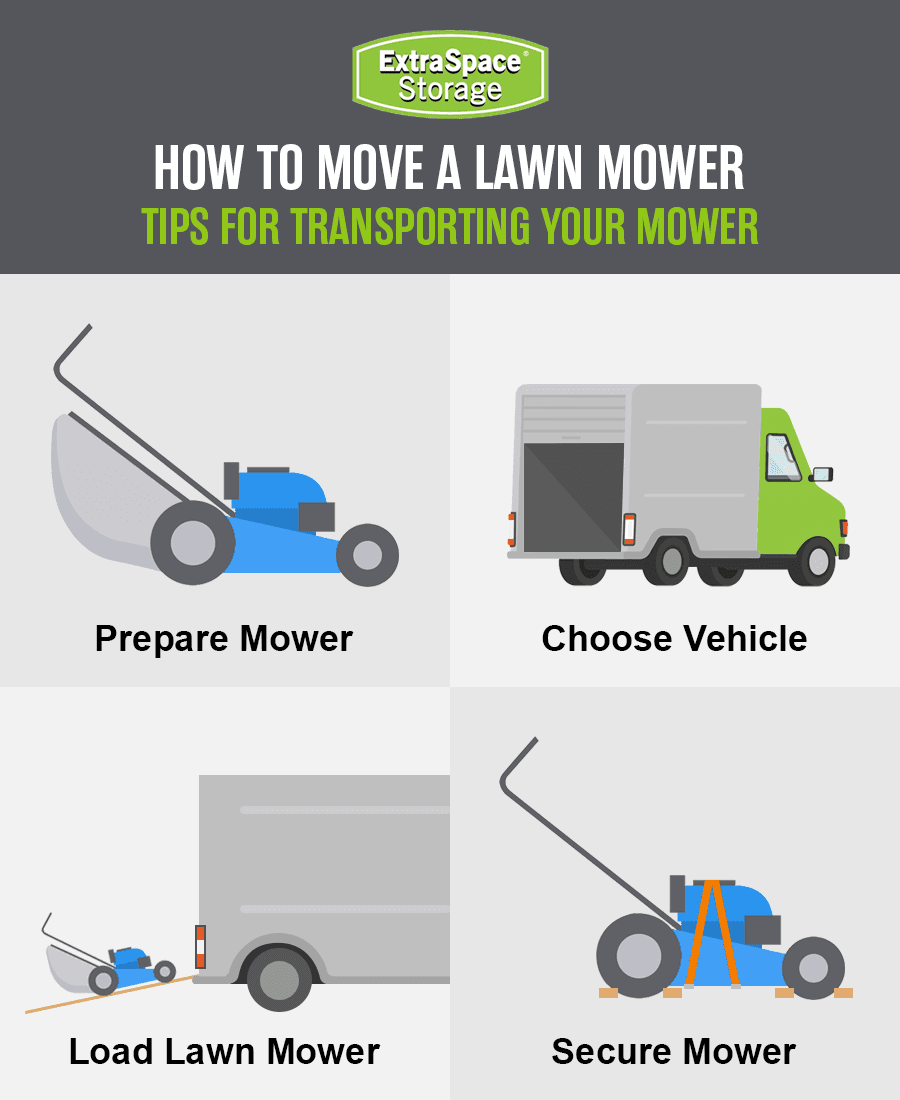
Choose the Right Moving Technique for Your Lawn Mower Type
When moving lawn mowers by yourself, it's important to use the proper moving techniques to prevent personal injuries and damage to your equipment. Here's everything you need to know about how to move a push lawn mower vs. how to move a riding lawn mower!
How to Move a Push Lawn Mower
Though push lawn mowers are typically lighter than riding mowers, they still need to be handled with care. From preparing your machine to stabilizing it in your vehicle, here are some key tips for moving a push lawn mower.
Prepare Your Mower for Transport
To prepare a lawn mower for moving, there are some important steps to take to prevent damage and other issues. Start by draining the oil, then run the fuel tank dry or siphon it to transfer it into another container. If you have a gas mower, disable the power by disconnecting the spark plug. For electric models, remove and pack the battery separately. Additionally, remove the mower blade and any other loose parts—such as handles, bags, and small hardware—labeling, wrapping, and packing them separately as well. Then thoroughly clean the mower to prevent pests, spray metal parts with light oil to avoid rust, and let the mower dry completely.
Choose the Right Moving Vehicle
Ensuring you have a vehicle that's large enough to hold and transport your mower is essential. If you're not already renting a truck for your move, a pickup or van typically provides enough space for a push lawn mower. A spacious SUV or hatchback can also work if the liftgate's opening is larger than the mower’s widest point.
Carefully Lift or Roll the Mower into Your Vehicle
When you're ready to move your mower, be sure to bend your knees and lift via the front handle and rear deck. If it feels too heavy to lift by yourself, consider getting a friend to help you or even hiring a moving company. Alternatively, set aluminum ramps or sturdy boards on the tailgate and slowly push the mower up. A hand truck can also work—slide it under the front wheels, strap it tight, and tilt back. Try to keep the mower upright while moving to avoid residual oil seepage.
Secure the Mower in Place
Once you get your mower into your vehicle, you'll want to secure it so it stays in place as you drive to your destination. Place the mower so all wheels sit flat. If it's traveling in a truck bed, position it close to the cab to minimize movement. Use wheel chocks or small blocks of wood in front and behind the wheels to prevent rolling, then secure the mower frame with ratchet straps—avoid tying only to the handle, as the pressure can cause it to bend or snap. Before taking off, tighten all straps and gently shake the mower—be sure it doesn't move more than an inch or so in any direction. Cushion the mower with a moving blanket for extra protection.

Find Affordable Self Storage Near You
Extra Space Storage has over 4,000 locations across the U.S. with friendly customer service, advanced security features, and affordable month-to-month rates.
- Save up to 40% off online
How to Move a Riding Lawn Mower
Ride-on lawn mowers typically demand more moving gear, muscle, and patience. Read below to learn how to safely transport a riding lawn mower.
Prepare Your Riding Mower for Transport
Preparing a riding lawn mower for moving begins with detaching any loose parts—like bags, chutes, or tow-behind accessories. Place all removed hardware in labeled bags, then tape them to their corresponding parts or pack them in a separate box. Clean the mower to avoid pests, spray exposed metal with light oil to prevent rust, and let all surfaces dry completely. Finally, raise the mower deck to its highest setting to provide maximum clearance.
Rent a Trailer or Tall Truck
When it comes to transporting a riding lawn mower, one of the easiest methods is to use a low utility trailer with built-in ramp gates. If you decide to rent a moving truck, trailer, or pickup, ensure the bed supports the mower’s weight and the door height clears the seat or steering wheel.
Use Proper Loading Ramps
If your moving vehicle doesn't come with an adequately built-in ramp, you'll need to purchase arched, heavy-duty ramps sized to your mower’s wheel width in order to load it. Position and secure them firmly to the tailgate with straps so they can't slip or shift. If possible, reduce the overall angle of the ramps by backing the truck up to a curb or slope—this can make it easier to load the mower later on.
Push the Mower or Reverse-Drive It Up
Now that your ramps are in place, it's time to load the mower onto your vehicle. Position the mower so its front tires align with the center of the ramps. If you have enough friends to help manually push the mower, place the transmission in neutral and steadily push it up the deck. Alternatively, power the mower up and slowly reverse-drive the mower up the ramp, ensuring you have at least one spotter on either side to keep you steady and aligned on the ramps. Reverse-driving keeps the heaviest part uphill, which helps prevent flipping over.
Position the Mower
Once you make it up the ramp and your mower is level, push or drive it as far forward as possible onto the trailer truck bed, ensuring its weight is distributed evenly. Engage the parking brake when the mower is in position.
Power Off, Drain Liquids, & Remove Blades
With your mower in place, it's time to power off, drain any liquids, and remove blades. Start by draining the engine oil, then run the fuel tank dry or siphon it to transfer it into another container. Next, remove the battery and spark plug, and pack in a small, labeled box. Finally, put on some gloves and carefully remove the blades, wrapping sharp edges in cardboard and placing them in a labeled bag with the bolts.
Secure the Mower in Place
To secure your mower in place, put wheel chocks or small wooden blocks in front and behind all wheels. Additionally, run heavy ratchet straps over the front, rear, and seat, then tighten them to limit movement. Be sure the mower cannot roll or rock in any direction before driving to your destination.
Maintain Your Mower After Moving
Now that you know how to safely pack and transport your lawn mower, it's important to learn how to properly unload it and get it back in working condition once you arrive. Here are some final steps and other lawn mower maintenance tips to complete the moving process:
Unload Safely: Unload your mower with as much care as you used to load it. Secure ramps firmly. Back riding mowers down slowly in low gear or neutral—have the brake ready and spotters to guide you. For push mowers, use a dolly, or lift carefully with proper form.
Reassemble Components: Locate your labeled parts box, then reattach all handles, blades, and other accessories—ensuring you firmly tighten the bolts.
Refill Oil & Gas: Add fresh oil and pour new gasoline into the tank so it's ready to use again.
Reconnect Spark Plug & Battery: Reattach the spark plug and reconnect the battery
Inspect Before Starting: Before powering on your mower, ensure everything looks the way it should—no dangling belts, a tight blade, and properly inflated tires.
Start in Open Space: Fire up the mower in an open, outdoor space. Let it idle for a minute, engage the blades, and listen for any odd noises. Test-cut a small patch to ensure even mowing and proper drive.
***
Preparing for a relocation? Get moving tips and resources to help with every part of the process. And if you need somewhere to store a lawn mower during the move, Extra Space Storage offers affordable storage units throughout the U.S. Find secure storage near you!

Moving & Packing How-To Guides
How to Move: Your Complete Guide to an Easy Relocation
Planning a move? This moving guide includes everything you need for planning a smooth relocation, including checklists, packing tips, costs, and more.

How to Move Heavy Furniture
Need to move heavy furniture? From safe lifting to smart tools, here’s how to make moving large items easier.

Guide to Packing A Home Office for Moving
Moving your home office? Discover tips for packing electronics, securing data, furniture disassembly, and more.

How to Move a Refrigerator
Relocating a refrigerator without hired movers? Follow these helpful steps for a safe, proper fridge removal.
How to Move a Mattress by Yourself or With Help
Moving a mattress? Get expert tips for packing, loading, and transporting it to your new home. Plus advice for solo moves, cross-country moves, and more!

How to Pack a Moving Truck
Want to avoid damage while loading a moving truck rental? This is the best way to pack a moving truck.
Author Profile
Quinn Johnson
Quinn Johnson is a moving expert and author for Extra Space Storage. He's moved over 15 times, including internationally, and helped countless others between their own homes. He's happy to lift some boxes for a friend as long as he's paid in pizza. As a writer and content creator for Extra Space Storage since 2019, Quinn shares helpful moving tips and info to alleviate the common stresses of moving.