Moving Guide
Moving Costs: Should You Hire Flat-Rate or Hourly Movers?

Moving to a new home nearby or relocating out of state? When hiring a professional moving company, one of the most important decisions you'll make is whether to choose flat-rate movers or hourly movers. These pricing models come with unique benefits and downsides, but understanding the differences between them can help you make the best choice for your situation and budget. Use this guide to figure out whether hourly movers or flat-rate movers are right for you.
What Are Flat-Rate Movers?
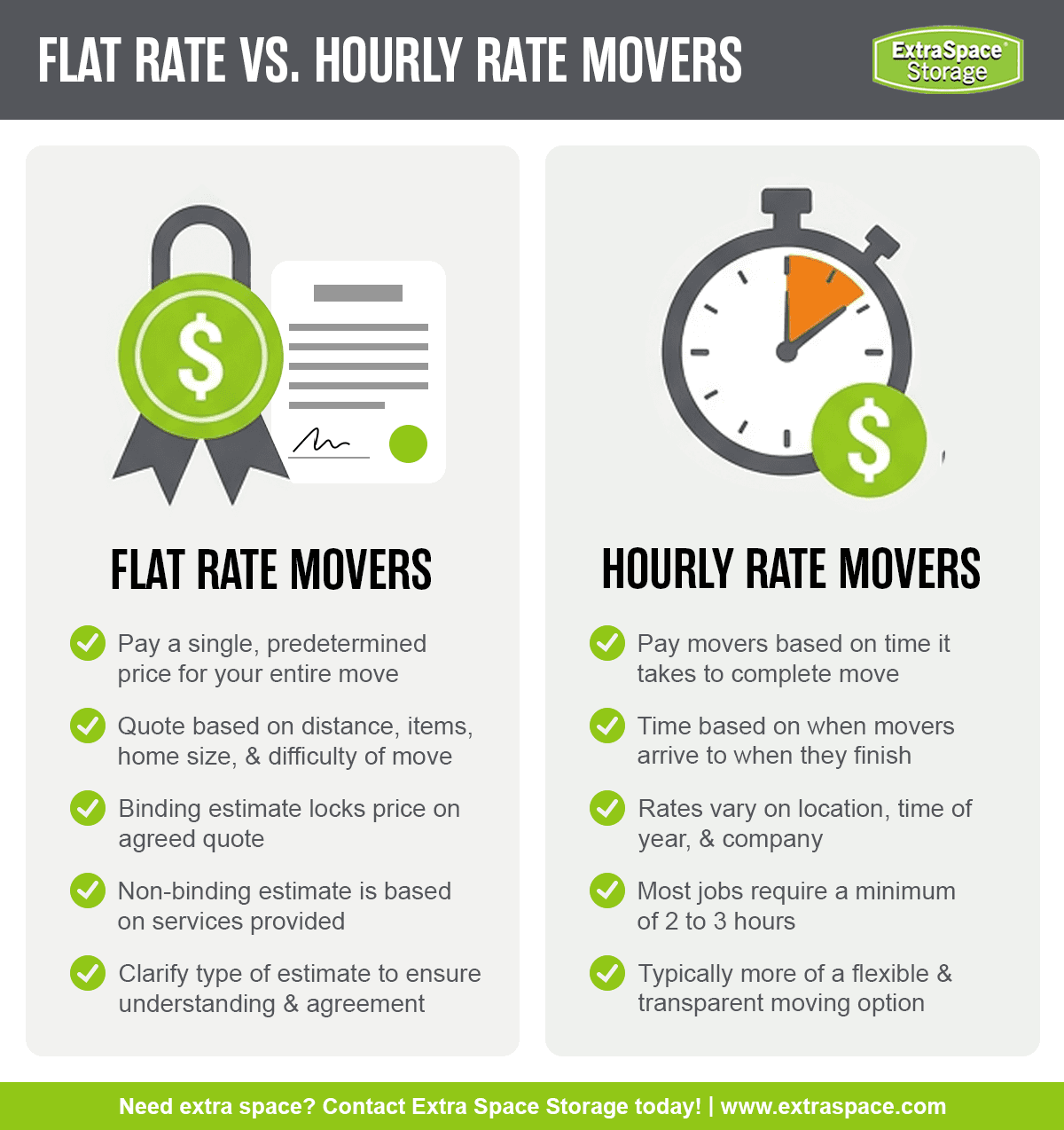
Flat-rate movers charge a single, predetermined price for your entire move. The moving company you choose will determine this price upfront based on a number of factors, including:
The distance of your move
The size and volume of your belongings
The number of rooms in your home
The complexity of your move—including stairs, elevators, or specialty items that require extra care
Before providing a flat-rate quote, most moving companies will ask for a detailed inventory of your home, conduct an in-person walkthrough, or request a virtual tour of your space. This allows them to build a quote that accounts for the full scope of the job.
Pros of Flat-Rate Movers
Advantages of hiring flat-rate movers include:
Cost Predictability: Once you agree to a price, it generally doesn't change regardless of
how long the move takes—unexpected delays like heavy traffic or a slow elevator typically won't affect your bill, making it easier to budget for your move.
Peace of Mind: Not having to worry about a time crunch or hidden fees can make for a
Mover Efficiency: Because movers are paid the same amount no matter how long the move takes, they're often incentivized to be as efficient as possible on moving day.
Cons of Flat-Rate Movers
While flat-rate movers can be a great choice for some situations, they're not right for everyone. Here are some potential downsides of hiring flat-rate movers:
Less Flexibility: Once your movers build out your quote, it can be difficult to add anything else to your inventory should you accumulate more items before moving.
Potential to Overpay: Movers often build a buffer into the quote to protect against worst-case scenarios—meaning if your move takes less time than expected, you might end up overpaying. Similarly, if you don't end up needing one or more of the services that were included in your moving quote, you usually have to pay for them anyway.
Increased Risk: The moving company may lose money if your relocation takes longer than expected, so they may prioritize moving quickly over moving carefully—which could result in damaged belongings.
What Are Hourly Movers?
Hourly movers charge based on the amount of time it takes to complete your move—from the moment they arrive to the moment they leave. Most moving companies require a minimum of two to three hours—even for smaller jobs—to cover the cost of dispatching a crew and truck.
Pros of Hourly Movers
Hourly pricing offers a variety of benefits, including:
Potential for Savings: You might end up saving money if your move turns out to be faster and easier than expected.
More Flexibility: If you need to add a stop or pick up any extra items along the way, hourly movers are more accommodating to adjustments on moving day since the cost is based on time rather than a pre-set item list.
Mover Carefulness: Movers that are paid for every minute of their labor and aren't on a time crunch may be more likely to be thorough and careful.
Cons of Hourly Movers
Despite the many advantages, hiring hourly movers can also come with drawbacks, such as:
Harder to Budget for: Since you won't know how much your move will cost until it's complete, hiring hourly movers can make it more difficult to budget for the rest of your move.
Potential to Overpay: Not being prepared for the move (e.g., poor packing) or running into unexpected delays (e.g., heavy traffic, extreme weather, slow elevators) can hike up costs.
Fewer Incentives for Efficiency: Because movers are paid by the hour, relocations that take more time make them more money—meaning they may not move as quickly.

Find Affordable Self Storage Near You
Extra Space Storage has over 4,000 locations across the U.S. with friendly customer service, advanced security features, and affordable month-to-month rates.
- Save up to 40% off online
Average Cost of Flat-Rate Movers vs. Hourly Movers
Hourly movers tend to be the more budget-friendly choice for well-managed local moves, whereas flat-rate movers are typically more cost-efficient for complex, long-distance moves. Here's a general idea of costs to expect with each pricing model.
With local movers' hourly rates averaging around $25–50 per hour, total moving costs typically land in these ranges:
Studio or 1-Bedroom Apartment: $200–$600
2-Bedroom Home: $700–$1,400
3- or 4-Bedroom Home: $1,000–$3,000+
Varying based on the volume of your belongings and total travel distance, here are average costs for flat-rate movers:
Short Interstate Move (100-250 miles): $600–$2,400 for 1-2 bedrooms, $1,300–$4,000 for 3-4 bedrooms
Mid-Range Move (250-500 miles): $900–$3,650 for 1-2 bedrooms, $1,600–$5,250 for 3-4 bedrooms
Long-Distance Move (500-1,000+ miles): $1,650–$6,150 for 1-2 bedrooms, $2,350–$7,750 for 3-4 bedrooms
Cross-Country Move (1,000-2,500+ miles): $3,150–$13,650+ for 1-2 bedrooms, $3,850–$15,250+ for 3-4 bedrooms
Keep in mind these ranges are estimates—your actual quote will depend on the specific distance, the size and weight of your belongings, the complexity of the move, the time of year and week, and any add-on services you request—like packing and unpacking, furniture disassembly and reassembly, and more. Consider using a moving cost calculator and obtaining quotes from multiple companies to estimate moving costs for your situation.
When to Hire Flat-Rate Movers vs. Hourly Movers
Not sure whether hourly pricing or flat-rate pricing is best for your situation? Here are some guidelines to help you decide:
Consider hiring a flat-rate moving company if...
You're planning a long-distance or cross-country move.
You have a large amount of belongings.
Your move will involve multiple flights of stairs, tight elevators, or challenging access areas.
You have a tight moving budget and need predictability.
Consider hiring an hourly moving company if...
You're planning a local move within the same city.
You're moving a studio apartment or one-bedroom home and don't have a lot of belongings.
You're organized and will have all your boxes packed, labeled, and ready near the door on moving day with clear pathways through your home.
Your move is straightforward and doesn't involve high-rise buildings or other accessibility issues.
You expect last-minute inventory changes, moving stops, or other needs to arise.
Tips for Getting an Accurate Moving Quote
Whether you decide to hire hourly movers or flat-rate movers, it's important to get an accurate moving quote. The following best practices can help you choose the right movers for your needs and avoid surprises on moving day:
Get Multiple Quotes: Getting quotes from at least three different companies gives you a realistic sense of the range you should expect for the services you need—and helps you spot any estimates that seem unusually low or high.
Ask Important Questions: Before hiring professional movers, ask questions about what's included, whether the estimate is binding or non-binding, and what circumstances could cause the final bill to change.
Check for Hidden Fees: Ask for an itemized list of potential add-ons (e.g., packing materials, fuel, stairs, oversized items, etc.) to avoid unexpected expenses.
Look for Green Flags: Ensure moving companies are reliable, licensed, and insured by verifying their USDOT number online and evaluating reviews and ratings.
Be Thorough & Honest: Providing a complete inventory, any access challenges at your current or new home, and information on distance can help movers give you an accurate quote based on your situation.
***
Preparing for an upcoming move? Check out the helpful tips and resources on Extra Space Storage's moving hub. And if you need a place to temporarily store your belongings during your relocation, we have convenient storage facilities throughout the U.S. to ease your transition. Find affordable self storage near you!

Author Profile
Quinn Johnson
Quinn Johnson is a moving expert and author for Extra Space Storage. He's moved over 15 times, including internationally, and helped countless others between their own homes. He's happy to lift some boxes for a friend as long as he's paid in pizza. As a writer and content creator for Extra Space Storage since 2019, Quinn shares helpful moving tips and info to alleviate the common stresses of moving.