moving guide
How Long Does It Take to Move?

Moving to a new home soon? Whether you’re renting an apartment or buying a house, you’ll want to plan ahead for a smooth move-in day. To help you prepare for your relocation, here are some moving timelines to consider when moving into an apartment or house.
How Long Does It Take to Move Into an Apartment?
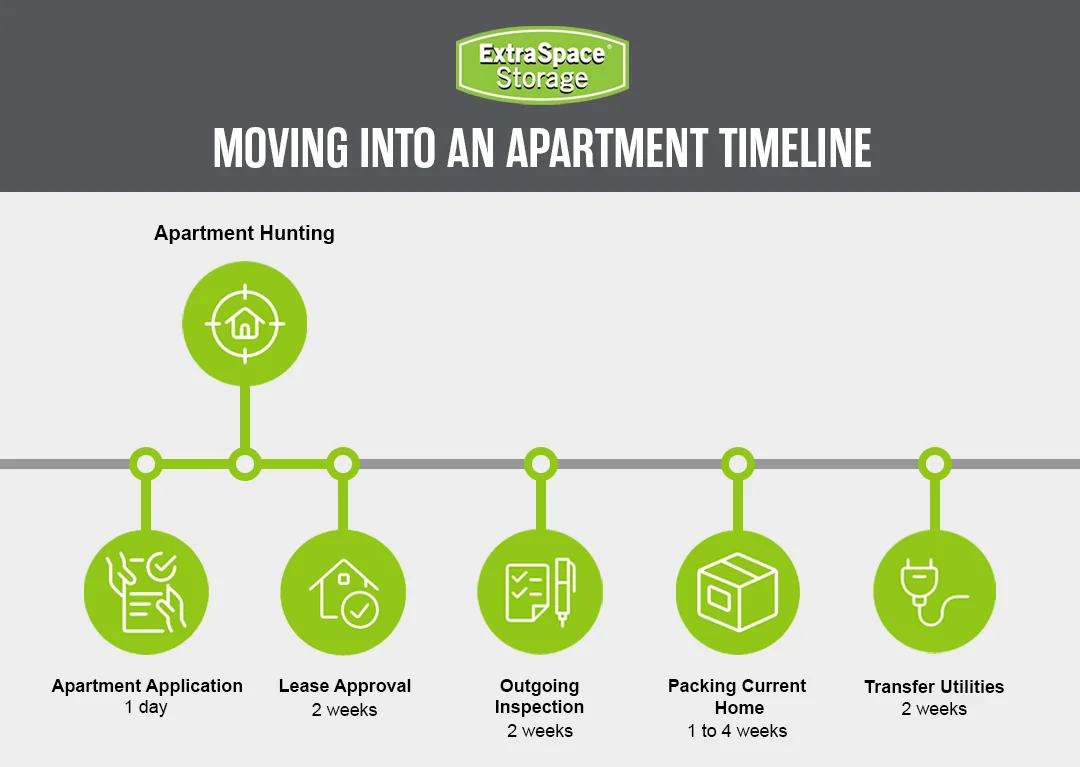
Moving into an apartment involves several key stages that vary in length:
Two to four weeks: Finding a new apartment that fits your needs in terms of budget, location, and apartment amenities.
One to three business days: Getting approved and signing your apartment lease.
One day to a week: Moving your belongings into the apartment.
The actual move-in process—including packing, transporting belongings, transferring utilities, and unpacking—can take anywhere from a few days to several weeks, depending on the size and amount of your belongings and the level of assistance you have. To avoid delays in moving into your apartment, keep your personal paperwork handy, and make sure to set utility transfer dates and hire movers—or enlist help from friends—as soon as you have a moving date.
How Long Does It Take to Move Into a House?
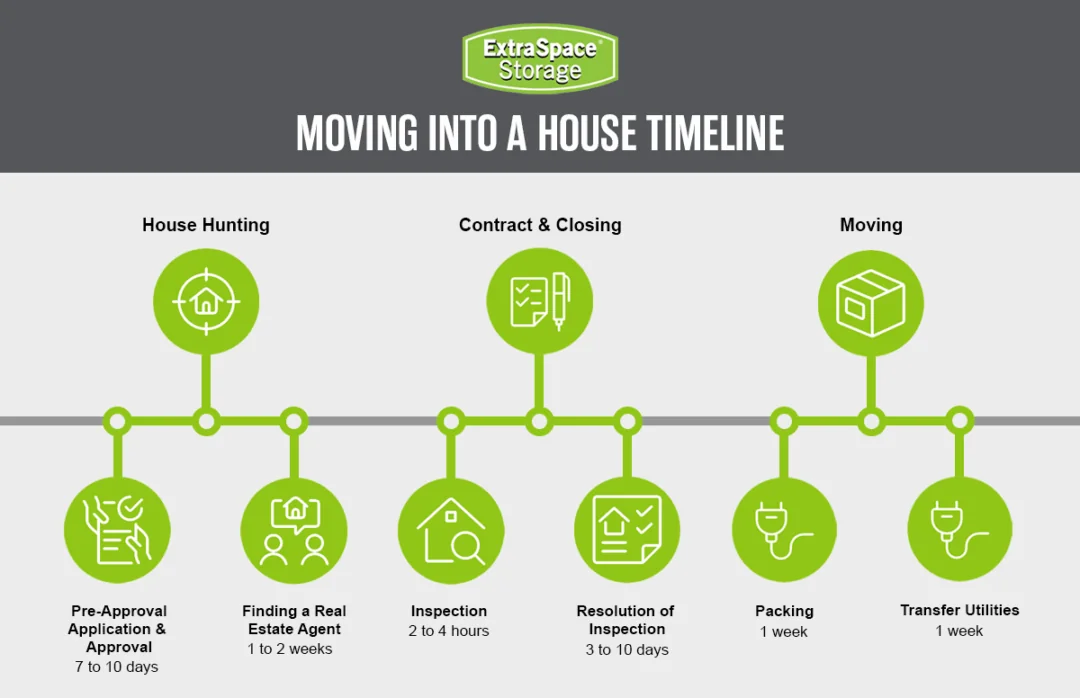
Depending on the market and distance of your move, the entire process of house hunting, buying a house, and moving into a house can take anywhere from a few weeks to a few months—and many of the steps happen simultaneously:
Seven to ten days: Pre-approval for mortgage loan, including
providing information to a lender about your income, assets, and debts to find your price range.
One week to two or more months: Closing on a home.
One day to a week: Moving into a house.
You may have to restart the process numerous times in your home-buying journey, depending on how competitive the market is and if you’ve found a real estate agent you trust. Additionally, the moving timeline for a house may be extended if the new home requires inspection repairs—leading to a closing delay or cost negotiations—or if your offer is turned down. Your actual home move-in day can take anywhere from a few hours to a full day or more, depending on the distance, amount of belongings you own, and how many people are helping.
Find Affordable Self Storage Near You
Extra Space Storage has over 4,000 locations across the U.S. with friendly customer service, advanced security features, and affordable month-to-month rates.
- Save up to 40% off online
Factors That Can Influence How Long It Takes to Move
Many factors can influence how long moving takes, including weather conditions, delays with movers, accessibility, amount of belongings, or the distance of the move. By considering these factors and planning accordingly, you can mitigate potential challenges to ensure a smoother moving timeline. Here are a few common factors that affect how long it takes to move into a house or apartment!
Packing Time
The amount of items you have to pack will impact how much time it takes to move—especially prior to moving day. Whether you’re packing in advance or moving on short notice, make sure to pack items properly to help minimize moving costs, avoid potential damages, and stay organized. Calculate how many moving boxes you’ll need based on the size of your home, and be sure to label each box by room so movers know where to place them—saving you time unpacking. If you’re wondering how long it takes to pack for a move, here’s a general timeline:
1-bedroom home or studio apartment: Four hours to one day
2-bedroom home: Six hours to two days
3-bedroom home: Three to five days
4-bedroom home: Three to seven days
Hiring Movers vs. Moving by Yourself
Whether or not you hire movers will often impact how long moving day will take. Ultimately, your moving timeline will take longer if you decide to move by yourself rather than hiring movers, but it can make for a more budget-friendly move and give you more control over your moving schedule and pace. Here are several options you may choose during your move:
Local Movers: Relocations within the same city or region can often be done with friends and family to cut costs, but hiring local movers for moving furniture and other large items can help mitigate stress and minimize your moving timeline.
Long-Distance Movers: Professional movers are trained to move weighty, bulky furniture and fragile items efficiently and safely, and you can cut down on the time it takes to move if someone else is driving the moving truck.
Professional Packing Services: Professional packers are equipped with the right materials and techniques to efficiently pack your belongings and protect them during transit.
Moving During Peak Seasons
While summer is one of the best times to move due to the likelihood of good weather, increased demand during this time may slow down your timeline and a potentially more expensive process to find and book movers. Moving during the holidays can also present challenges, since many people take time off or travel, making it harder to secure a moving company. To avoid scheduling issues that extend how long it takes to move, it’s crucial to book movers well in advance, ideally one to two months before your desired moving date. If you have to move during peak seasons, you may have better luck scheduling your move on weekdays rather than weekends, due to lower demand for movers and less traffic during working hours.
Amount of Belongings
The more belongings one has, the more time it’ll take to pack, load, unload, and unpack them in your new home. If you’re moving out of your parents' house for the first time, this usually isn’t much of a concern since you’ll likely be buying furniture essentials after you've arrived at your new home. In general, though, decluttering your belongings before packing for a move is one great way to make the moving process quicker and more budget-friendly. And if you aren’t renting a truck or hiring movers, you’ll need to account for how many things you can fit in your personal vehicle and how much time it takes to move everything in multiple trips back and forth.
Furniture Assembly or Disassembly
Depending on the circumstances, furniture assembly or disassembly can both shorten or lengthen moving time. Having to assemble furniture like beds, desks, or bookcases can add extra time to your moving process—especially for complex furniture that requires multiple steps and tools. However, disassembling large furniture pieces before moving to a new home can make for a quicker loading and unloading process since it makes lifting and carrying them easier. Be sure to keep any necessary tools and instructions handy—and organize small hardware by bagging and taping it to the corresponding furniture piece for quick assembly in your new home.
Moving Distance
The distance of your relocation—whether it’s a cross-country move, a move to another state nearby, or simply a move across town—can affect your moving timeline, as well as the availability of moving crews and trucks. In addition to more planning and moving time, long-distance moves often require more careful packing of your belongings—regardless of whether you plan to transport possessions in a moving truck or ship your items. Short-distance moves within the same city or to a nearby area can usually be completed within a few hours to a full day. No matter the distance, it’s important to plan out your route and factor in potential delays to help ensure a smooth and efficient relocation.
Weather Conditions
Adverse weather is another factor that can increase the time it takes to move. Inclement weather—such as heavy rain, snow, or extreme summer heat—can make loading and unloading difficult, increase the risk of damage to belongings, and present more safety risks for movers. If you’re going to be moving in unfavorable weather, moving slower is better than risking anyone’s safety—which is why it’s crucial to monitor weather forecasts and prepare for potential delays and challenges.
Time Between Your Move-Out Date & Move-In Date
You may find yourself with a gap between your move-out date and move-in date—which can extend the moving timeline. If your moving dates don’t overlap, consider short-term self storage for your belongings. While you’re waiting to move into your new home, reserve temporary housing, or save on accommodation costs by asking to stay with friends and family. By planning ahead and considering these options, you can minimize the stress and inconvenience of a moving time gap.
***
Need a secure storage solution while moving homes? Extra Space Storage proudly offers helpful moving resources and reliable self storage at conveniently located storage facilities throughout the nation. Find a storage facility near you!

Helpful Moving Tips & Tools

How to Set Up Utilities After Moving: Your Complete Guide
Moving to a new apartment or home soon? This guide takes you through how to set up utilities—including a step-by-step utility setup timeline.
Moving to a New Home? Use This 3-Month Moving Checklist
Moving to a new home? Whether it's to a new house or an apartment, moving can be difficult at times. Stay on track with our three-month moving to-do list!

Address Change Checklist: Who to Notify When You Move
Planning a move soon? Use this change of address checklist to notify the proper people and places that you're moving!

How Much Do Movers Cost?
Professional movers cost ~$550-$12,000. Learn the average cost of hiring a moving company for local and long-distance moves in this guide.

Best Tape for Moving Boxes
Planning a move? Buying the best packing tape for moving boxes is essential for a hassle-free move. Find out which tapes are best for moving boxes.
Author Profile
Quinn Johnson
Quinn Johnson is a moving expert and author for Extra Space Storage. He's moved over 15 times, including internationally, and helped countless others between their own homes. He's happy to lift some boxes for a friend as long as he's paid in pizza. As a writer and content creator for Extra Space Storage since 2019, Quinn shares helpful moving tips and info to alleviate the common stresses of moving.