Moving Guide
Guide to Moving Out for the First Time
Moving for the first time? Whether you're heading to college, relocating for a job, or simply ready to start living on your own, this milestone can be both exciting and nerve-racking. With the right preparation, you can enjoy a stress-free transition that sets you up for success. From budgeting tips to essentials checklists, here's a comprehensive guide to how to move out for the first time!
Start Planning Your First Move
The process of moving starts well before the actual moving day. Ideally, you should begin planning at least a month in advance so you have time to find a place and get organized without feeling overwhelmed. Here's what to focus on as you plan for your first time moving out!
Create a Realistic Timeline
Moving takes time—more than most people expect. It's important to give yourself several weeks to plan, and create a realistic timeline in order to coordinate logistics and keep your stress levels low. A month or so before your desired moving date, priorities should include determining your budget and apartment hunting. In the weeks that follow, you'll want to focus on signing a lease, scheduling movers, setting up utilities, and packing. For first-time movers, it can be especially helpful to consult an online moving checklist or calendar to stay on track and avoid last-minute surprises.
Set Your Moving Budget
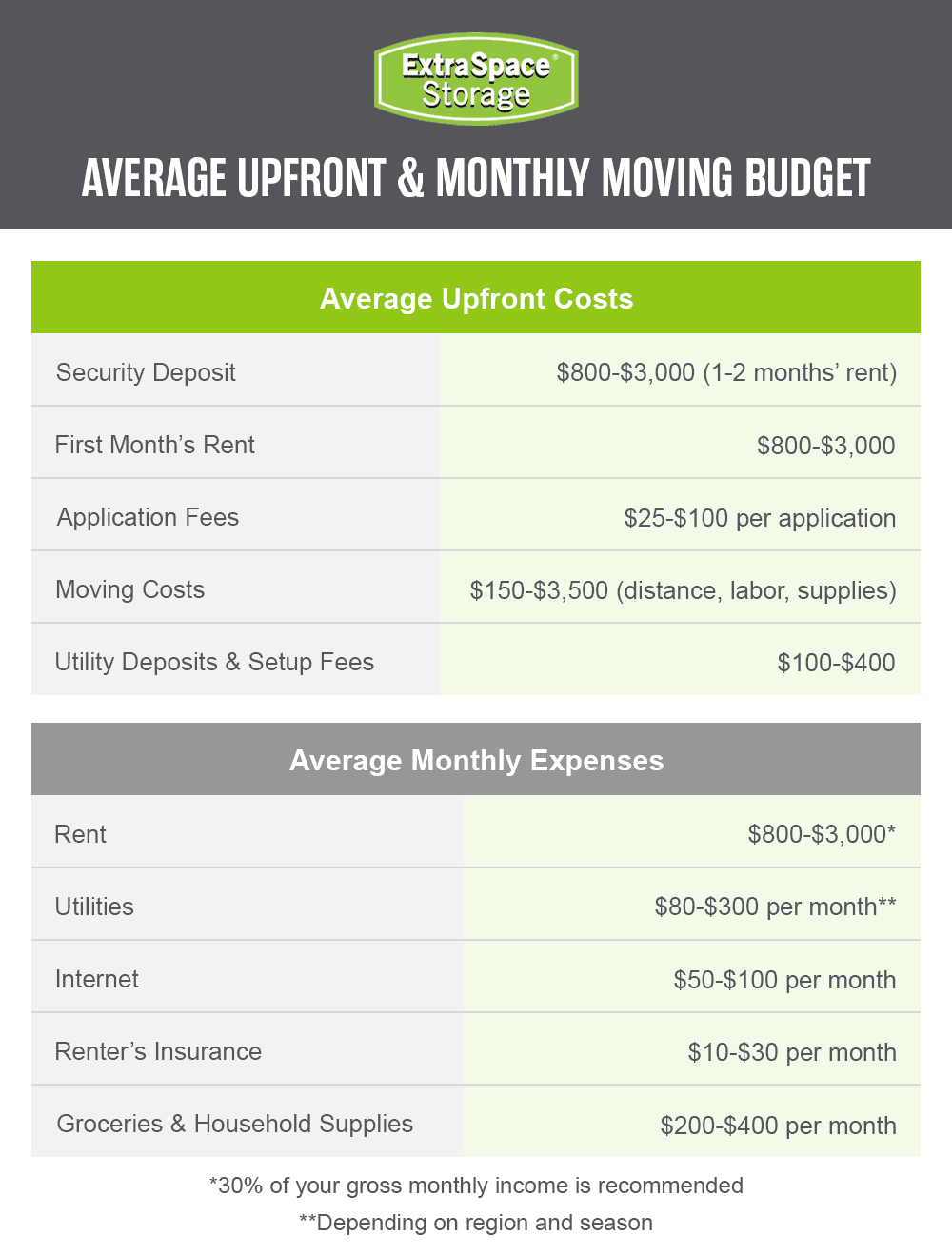
Moving out for the first time can get expensive quickly, and many people underestimate how much it costs to move. Planning your budget in advance can help first-time movers avoid financial issues. While it's important to prepare for expenses like rent, deposits, and utilities, be aware of unexpected expenses as well—including travel costs, moving supplies, and more. Whether you're opting for a DIY move or hiring professional movers will also impact how you plan and save. Either way, having an emergency moving fund of at least $500 can help cover surprises and reduce stress.
Find Your Ideal Home
Before diving into apartment or home listings, take time to figure out how much space you need and outline your priorities. Think about what matters most to you—such as budget-friendly rent, a safe neighborhood, short commute times, and whether basic appliances are included. Must-have features should take priority over nice-to-have extras, such as a balcony or gym access. Having a clear list can help you filter out distractions and focus on spaces that truly fit your lifestyle and financial goals.
Start the Application Process
In competitive markets, preparation is key to securing the living space you want. As you start applying, focus on demonstrating reliability and organization to make a positive impression on landlords. First-time renters can strengthen applications with a trusted co-signer. Additionally, having your paperwork ready will allow you to apply quickly when you find the right place. Here are some moving documents to have on hand:
Government-issued photo ID
Recent pay stubs or employment verification letter
Bank statements from the last 2-3 months
References with contact information
Take Care of Logistics
When moving out of your parents' house for the first time, there are lots of people and entities to notify. Knowing who to notify when moving is essential—such as your employer, banks, insurance providers, government agencies, and more. Other important things to update include your mailing address, billing information, medical records, and voter registration. A few weeks before your moving date, you'll also want to set up utilities in your new home—scheduling connections for electricity, gas, water, and internet.
Gather Items on Your Move-Out Checklist
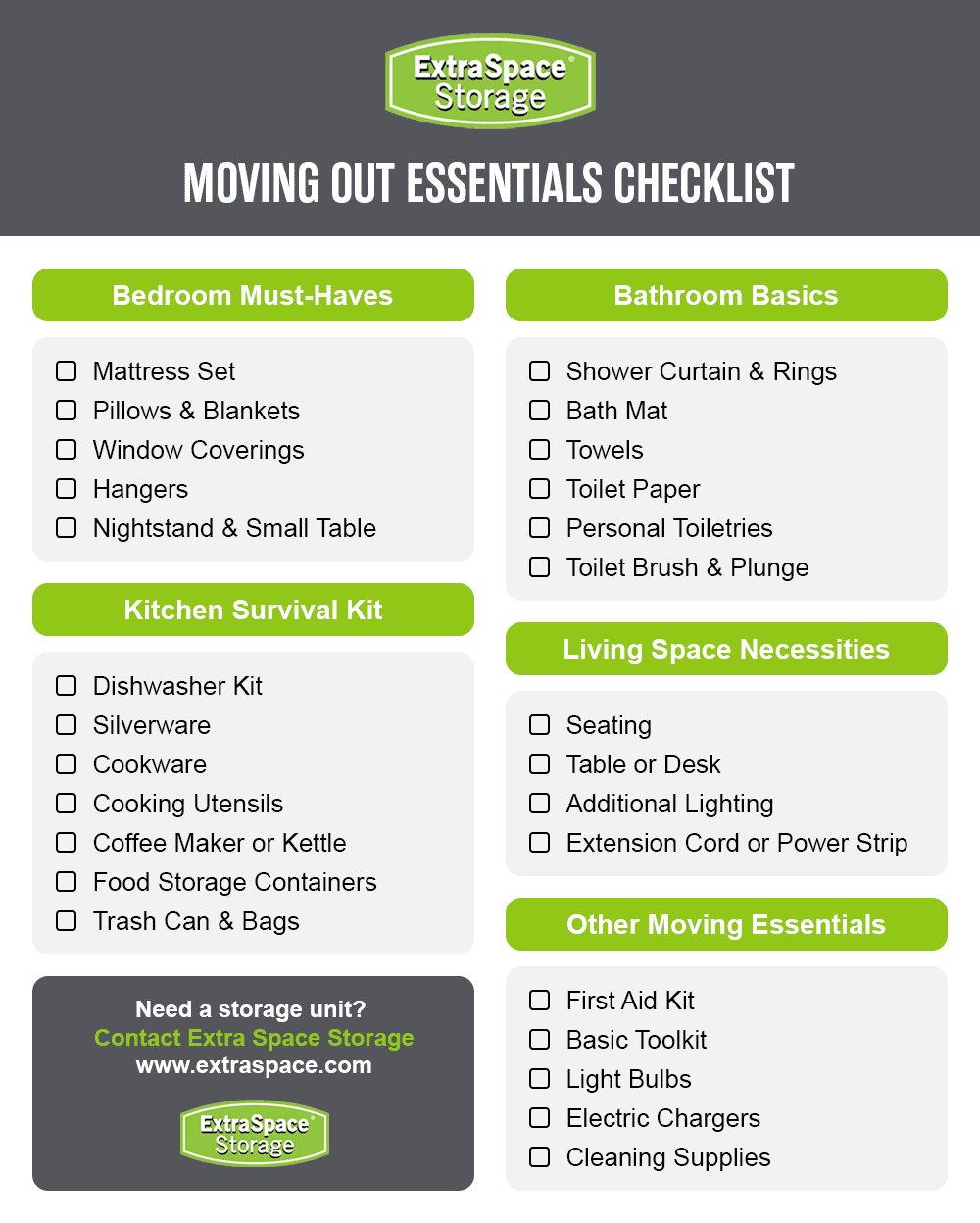
In addition to gathering moving boxes and essential moving supplies, moving into your first place often means starting from scratch with household items. This move-out checklist covers all the things you need when moving out for the first time—focusing on the absolute necessities.
Bedroom Must-Haves
Mattress Set: Purchase a comfortable mattress and basic bed frame, as well as sheets, a comforter, and pillowcases.
Pillows & Blankets: Have a few extra pillows and blankets on hand for guests or colder nights.
Window Coverings: Curtains or shades provide privacy and block out light for better sleep.
Hangers: Include hangers on your move-out list so you can organize your closet and prevent wrinkles.
Nightstand or Small Table: A bedside surface can help keep essentials—like your phone, a lamp, and water—within easy reach.
Kitchen Survival Kit
Dishware Set: One of the most important things to buy when moving out is dishware—start with a few plates, bowls, and cups to cover daily meals and guests.
Silverware: Get a basic set of forks, knives, and spoons to handle everyday meals.
Cookware: Invest in at least one medium pot and one large pan for simple meals.
Cooking Utensils: Keep essentials—like a spatula, wooden spoon, can opener, cutting board, and sharp knife—handy for basic food prep.
Coffee Maker or Kettle: Start your mornings right with an easy way to brew coffee or tea.
Food Storage Containers: Reusable containers help with leftovers and meal prep.
Trash Can & Bags: A kitchen trash bin with plenty of liners will help keep your new space tidy from day one.
Bathroom Basics
Shower Curtain & Rings: Most rentals don't come with these items—grab them early so you can shower anytime after moving.
Bath Mat: Prevent slips and keep your bathroom floor dry after showers.
Towels: Make sure you have a few bath towels, hand towels, and washcloths.
Toilet Paper: Buy more toilet paper than you think you'll need—this essential can go fast.
Personal Toiletries: Bring a stock of daily-use items like soap, shampoo, toothpaste, and deodorant.
Toilet Brush & Plunger: Keep your toilet fresh and functional for you and guests.
Living Room Necessities
Seating: A small couch, chair, or even floor cushions will work great until you expand your setup.
Table or Desk: A sturdy surface doubles as both a dining area and workspace.
Additional Lighting: Floor lamps, table lamps, candles, and string lights create a cozy atmosphere beyond overhead lights.
Extension Cord & Power Strips: Keep electronics charged and organized in rooms with limited outlets.
Other Essentials for Moving Out
First Aid Kit: Keep bandages, pain relievers, and basic supplies on hand for accidents.
Basic Toolkit: A hammer, screwdriver, and pliers will cover furniture assembly and simple repairs.
Light Bulbs: Many rentals don't come with replacement bulbs—buy extras to avoid late-night surprises.
Electronics Chargers: Don't forget to pack chargers for your phone, computer, and other electronics.
Cleaning Supplies: Stock up on essentials like dish soap, sponges, paper towels, and all-purpose cleaner to keep your new place in top shape.
Prepare for a Smooth Moving Day
A stress-free moving day starts with a plan. From packing an essentials box to navigating moving day itself, these tips will help you stay in control and avoid last-minute headaches.
Use Smart Packing Strategies
Packing smartly—and starting a few weeks ahead of time—will make moving and unpacking less of a hassle. Be sure to declutter before moving to avoid packing items you no longer need. Once you're finished, start packing room by room—this method allows you to break the project down into smaller tasks and keep stress at bay. Try to keep all boxes under 50 pounds, and pack heavy items—like books—in smaller boxes to help prevent strain and spills. Additionally, use clothing and towels as cushioning for fragile items, label boxes clearly and on multiple sides, and keep a master list for easy unpacking.
Pack an Essentials Box
One of the best tips for moving out for the first time is to pack a box or suitcase with essentials you'll need during the first 24-48 hours—as if you’re going on a short trip. This helps ensure necessities stay within easy reach. Be sure to include toiletries and medications, chargers, snacks, a change of clothes, important documents, basic cleaning supplies, and any tools needed for furniture assembly.
Set Yourself Up for Success
Being prepared on moving day is key. The night before, be sure you get enough sleep and double-check everything is packed. The day of, eat a good meal, have cash ready for tipping movers, and get started early to stay ahead of schedule. Keep your essentials box on hand—rather than in your moving truck or with your movers—in case anything comes up. And before moving any belongings in, don't forget to take photos of your new space's condition to help protect your security deposit down the line.
Find Affordable Self Storage Near You
Extra Space Storage has over 4,000 locations across the U.S. with friendly customer service, advanced security features, and affordable month-to-month rates.
- Save up to 40% off online
Get Settled In After Moving
Once the boxes are in, it's time to settle into your new space. From setting up essentials to exploring your neighborhood, the first few days and weeks are all about making your new environment feel like home.
Take Care of the Necessities
When you move in, start with the basics: set up your bed, unpack the bathroom, and get groceries for the first few days. Be sure to locate important features like circuit breakers and water shut-offs, and test all your appliances. Over the next week, focus on unpacking and organizing one room at a time. Additionally, be sure to look for essential services nearby—like pharmacies, hospitals, gas stations, and more.
Make Your Space Feel Like Home
A new space can feel bare at first—the good news is: you don’t need to break your budget in order to create a cozy space that lifts you up! Use what you already have, or check thrift stores or online marketplaces for affordable furniture and decor. Bring in table lamps or string lights for more warmth. Add personality by hanging up photos and other affordable prints. Incorporate throw pillows, blankets, and plants to freshen up the space. Decorating might not initially seem like a priority, but it can go a long way in helping you settle in!
Maximize Every Square Foot
First homes or apartments are often smaller than what you're used to living in, so you'll want to make the most of every square foot. Maximize vertical space by installing floating shelves, hooks, and door organizers for everyday items. Choose multi-functional or space-saving furniture—like storage ottomans that double as seating or bed frames with built-in drawers. For seasonal, bulky, or non-essential items, consider renting short-term storage to keep your living space open and organized.
Manage Your Routine & Finances
Moving out for the first time means taking on responsibilities you might not have managed before. To set yourself up for success, create systems that work—set up auto-pay for bills, establish a weekly cleaning schedule, track your monthly spending, and build an emergency fund bit by bit. It's also important to build good relationships with your landlord, be respectful of shared spaces, and know who to contact for maintenance issues.
Take Care of Yourself
No matter if you're moving out of state and adjusting to a new city or simply moving across town, this lifestyle change can feel overwhelming. Most people take a few months to fully settle in, so give yourself time to adjust. Try to build healthy routines and habits by establishing a sleep schedule, exercising regularly, and more. If you're far from home, be sure to stay connected with friends and family for support—and focus on building community and making friends in your new city as well. Above all, remember to be patient with yourself as you learn and adapt to this new chapter—and don't forget to celebrate this milestone!
***
Planning your first move? Extra Space Storage offers comprehensive moving resources and self storage facilities across the nation to help ease your transition. Find a storage unit near you!
Related Moving Resources
How to Choose the Right Moving Company
Whether you're on a budget, moving cross-country, or need full-service assistance, here's how to choose the right moving company for your relocation needs.

How Much Does it Cost to Move?
Learn the cost of moving, from hiring professional movers to cross-country moving costs and more, with our complete guide to moving costs.

Pros & Cons of Hiring a Moving Company
Preparing to move and considering hiring movers? Explore the pros and cons in this guide to determine whether you should hire movers or DIY your move.
Important Questions to Ask a Moving Company Before Hiring
Wondering what questions to ask moving companies? Review these helpful moving questions to avoid delays or damaged belongings for a smooth move.

How to Protect Your Furniture When Moving
Whether you're moving across the country or relocating to a nearby area, our tips to protecting your furniture can help you doing your move!
Author Profile
Quinn Johnson
Quinn Johnson is a moving expert and author for Extra Space Storage. He's moved over 15 times, including internationally, and helped countless others between their own homes. He's happy to lift some boxes for a friend as long as he's paid in pizza. As a writer and content creator for Extra Space Storage since 2019, Quinn shares helpful moving tips and info to alleviate the common stresses of moving.